Vigna frutescens subsp. frutescens
A Rich.
Wild sweetpea
gbif· cc-by
Meise Botanic Garden
gbif· cc-by-nc-sa
GBIF
gbif· cc-by-nc-sa
GBIF
Description
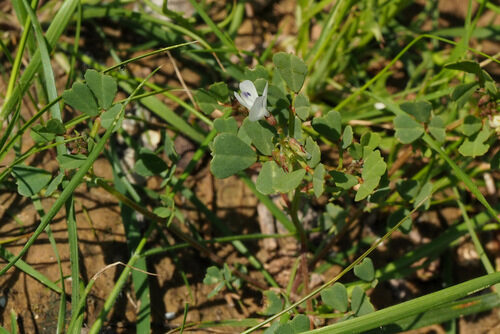
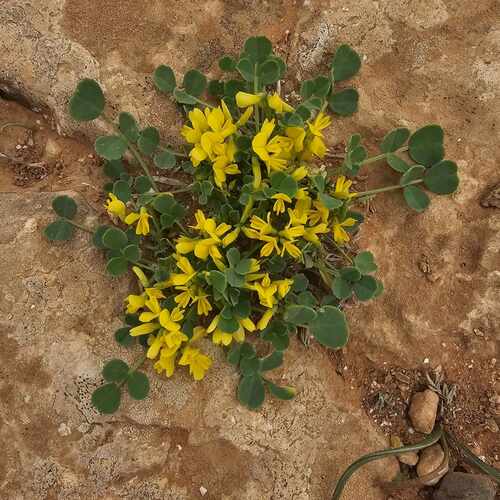
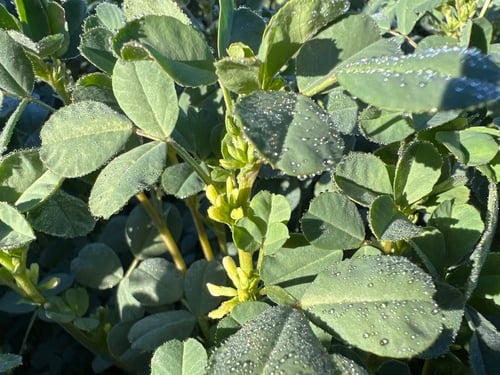
A bushy herb. it can lie along the ground or be climbing. It can grow 4 m long. It keeps growing from year to year. It has a woody rootstock. The leaves have 3 leaflets. These are 2-8 cm long by 1-5 cm wide. The flowers have a scent. The flowers are pale purple and appear when the plant is without leaves. The fruit is a pod that is round in cross section and tapers to both ends. It is pale green and hairy. It is 5-11 cm long. The fruit stalk can be 20 cm long.
Edible Uses
The root tuber is roasted and eaten. Seeds and roots are also edible.
Traditional Uses
The root tuber is roasted and eaten.
This uses section is brief — help expand it
Distribution
A tropical plant. It grows in hot arid areas with a marked dry season. The dry season can be 6-11 months. It can be in rocky or sandy soil. It grows between 6-1,650 m above sea level. It can grow in arid places.
Where It Grows
Africa, Angola, Botswana, Central Africa, Congo, East Africa, Eswatini, Ethiopia, Ghana, Kenya, Malawi, Mali, Mozambique, Namibia, Nigeria, Rwanda, South Africa, Southern Africa, Sudan, Swaziland, Tanzania, Togo, Uganda, West Africa, Zambia, Zimbabwe,
Notes
There are about 150 Vigna species. They are mostly in the tropics.
Synonyms
Also Known As
Ona
References (2)
- Jardin, C., 1970, List of Foods Used In Africa, FAO Nutrition Information Document Series No 2.p 30 (As Vigna esculenta)
- Royal Botanic Gardens, Kew (1999). Survey of Economic Plants for Arid and Semi-Arid Lands (SEPASAL) database. Published on the Internet; http://www.rbgkew.org.uk/ceb/sepasal/internet [Accessed 1st May 2011]