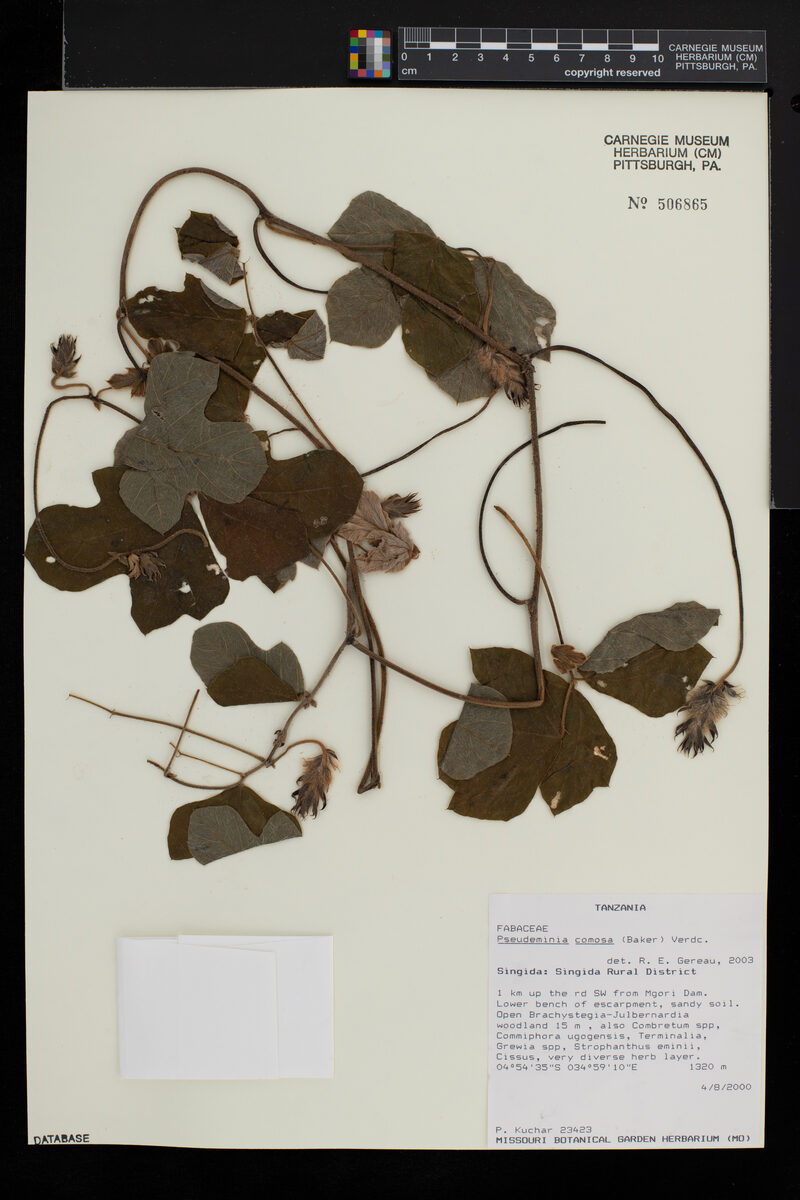
Vicia narbonensis
L.
French vetch, Narbonne vetch
iNaturalist· cc-by-nc
(c) Динасафина, some rights reserved (CC BY-NC), uploaded by Динасафина
iNaturalist· cc-by-nc
(c) jmneiva, some rights reserved (CC BY-NC)
iNaturalist· cc-by-nc
(c) jmneiva, some rights reserved (CC BY-NC)
Summary
Source: WikipediaVicia narbonensis, called Narbon bean, Narbon vetch, Narbonne vetch and moor's pea, is a widely distributed species of flowering plant in the family Fabaceae. It is native to Madeira and the Mediterranean countries through to Central Asia and the western Himalayas, and has been introduced to central and eastern Europe, and scattered other locations. It has some palatability issues, but has potential as a green manure and forage crop, and for its beans. It is the namesake of the Vicia narbonensis species complex.
Description
A herb. It is similar to broad bean. It is a short hairy annual plant. The stems are robust but not climbing. The leaves have 2-3 pairs of oblong leaflets. The lower leaves do not have tendrils. The leaflets and stipule may or may not have teeth. The flowers are white with purple veins or all purple. They are 20-30 mm long. The flowers occur singly or in pairs. The pods are black or brown and 30-70 mm long.
Edible Uses
Seeds are cooked and considered to be of excellent quality, used as a vegetable. An additional use is reported though the plant part involved is not specified — it is likely to be the leaves.
Traditional Uses
The seeds are cooked as a snack and are also eaten raw or roasted. The fresh pods are eaten raw.
This uses section is brief — help expand it
Medicinal Uses
None known.
Distribution
It is a Mediterranean climate plant. It grows in both cultivated and waste places.
Where It Grows
Afghanistan, Africa, Algeria, Asia, Australia, Britain, Central Asia, East Africa, Egypt, Europe, France, Greece, India, Iran, Iraq, Israel, Italy, Jordan, Kenya, Lebanon, Libya, Mediterranean, Middle East, Morocco, New Zealand, North Africa, North America, Pakistan, Palestine, Portugal, Russia, Sicily, Spain, Syria, Tajikistan, Tunisia, Turkey, Türkiye, USA,
Cultivation
Succeeds in any well-drained soil in a sunny position if the soil is reliably moist throughout the growing season, otherwise it is best grown in semi-shade. This species is probably the parent of the cultivated broad bean, V. faba. This species has a symbiotic relationship with certain soil bacteria, these bacteria form nodules on the roots and fix atmospheric nitrogen. Some of this nitrogen is utilized by the growing plant but some can also be used by other plants growing nearby. When removing plant remains at the end of the growing season, it is best to only remove the aerial parts of the plant, leaving the roots in the ground to decay and release their nitrogen.
Propagation
Pre-soak the seed for 24 hours in warm water, then sow in situ in spring or autumn.
Other Uses
Can be grown as a green manure. Functions as a nitrogen fixer.
Other Information
It is cultivated.
Notes
There are about 140 Vicia species. They are mostly temperate.
Synonyms
Also Known As
Bakile jispa, Burraideh, Collik, Colliki genni, Ful iblis, Kalikakoz, Lovike hispa, Moor's pea, Narbon bean, Sakil, Sokile ga
References (19)
- Ali-Shtayeh, M. S., et al, 2008, Traditional knowledge of wild edible plants used in Palestine (Northern West Bank): A comparative study. J Ethnobiol Ethnomed. 4: 13
- Al-Qura'n, S. A., 2010, Ethnobotanical and Ecological Studies of Wild Edible Plants in Jordan. Libyan Agriculture Research Center Journal International 1(4):231-243
- Blamey, M and Grey-Wilson, C., 2005, Wild flowers of the Mediterranean. A & C Black London. p 90
- Demir, I. & Ayaz, N., 2022, Wild edible plants contributing to the traditional foods of Mardin (Turkey) Province. Indian Journal of Traditional Knowledge Vol 21(3), July 2022, pp 569-582
- Ertug, F., 2000, An Ethnobotanical Study in Central Anatolia (Turkey). Economic Botany Vol. 54. No. 2. pp. 155-182
Show all 19 references Hide references
- Ertug, F, Yenen Bitkiler. Resimli Türkiye Florası -I- Flora of Turkey - Ethnobotany supplement
- Flora of Pakistan. www.eFloras.org
- Galalaey, A. M. K., et al, 2021, Ethnobotanical study of some wild edible plants in Hujran Basin, Kurdistan Region of Iraq. ZANCO Journal of Pure and Applied Sciences. Salahaddin University-Erbil p 27
- Hedrick, U.P., 1919, (Ed.), Sturtevant's edible plants of the world. p 678
- Hermandez Bermejo, J.E., and Leon, J. (Eds.), 1994, Neglected Crops. 1492 from a different perspective. FAO Plant Production and Protection Series No 26. FAO, Rome. p 263, 281
- Hinnawi, N. S. A., 2010, An ethnobotanical study of wild edible plants in the Northern West Bank "Palestine". An-Najah National University. p 94
- ILDIS Legumes of the World http:www:ildis.org/Legume/Web
- Kaya, O. M., et al, 2020, An ethnobotanical research in Sanhurfa central district and attached Villages (Turkey). Indian Journal of Traditional Knowledge. Vol. 19(1) pp 7-23
- Kermath, B. M., et al, 2014, Food Plants in the Americas: A survey of the domesticated, cultivated and wild plants used for Human food in North, Central and South America and the Caribbean. On line draft. p 909
- Mahklouf, M. H., 2019, Ethnobotanical Study of Edible Wild Plants in Libya. European Journal of Ecology. 5(2): 30-40
- Pasta, S., et al, 2020, An Updated Checklist of the Sicilian Native Edible Plants: Preserving the Traditional Ecological Knowledge of Century-Old Agro-Pastoral Landscapes. Frontiers in Plant Science. Volume 11|Article 388
- Plants for a Future database, The Field, Penpol, Lostwithiel, Cornwall, PL22 0NG, UK. http://www.scs.leeds.ac.uk/pfaf/
- Sp. pl. 2:737. 1753
- Zeven, A. C. & de West, J. M. J., 1982, Dictionary of cultivated plants and their regions of diversity. Wageningen. p 98, 116