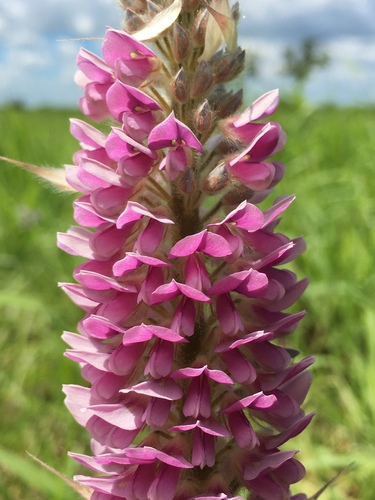
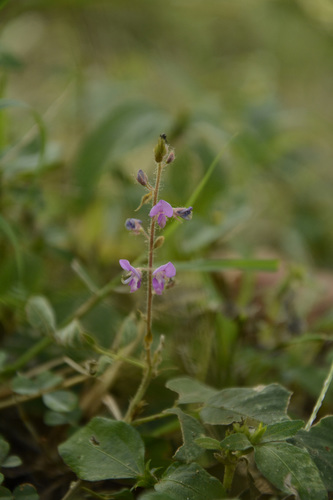
Desmanthus virgatus
(L.) Willd.
Wild tantan
iNaturalist· cc0
no rights reserved, uploaded by 葉子
iNaturalist· cc-by-nc
(c) Jed Aplaca, some rights reserved (CC BY-NC), uploaded by Jed Aplaca
iNaturalist· cc-by-nc
(c) Linda K, some rights reserved (CC BY-NC), uploaded by Linda K
Summary
Source: WikipediaDesmanthus virgatus is a species of flowering plant in the legume family that is known by many common names, including wild tantan, prostrate bundleflower, dwarf koa, desmanto, acacia courant, acacia savane, pompon blank, adormidera, brusca prieta, frijolillo, ground tamarind, guajillo, guashillo, huarangillo, langalet, petit acacia, petit cassie, petit mimosa, virgate mimosa, and slender mimosa, as well as simply desmanthus. It is native to the American tropics and subtropics but is present elsewhere as an introduced species. In some areas it is cultivated as a fodder and forage crop.
Description
A shrub. It grows 2 m tall. It has long slender branches. The twigs are green and ribbed. The leaves are alternate and twice divided. There is a large gland at the base of the leaf stalk. The leaves have 2-5 pairs of pinnae and these have 12-18 pairs of leaflets. These are 3-4 mm long.
Edible Uses
The seeds are eaten.
Known Hazards
Prostrate bundleflower is palatable to livestock and non-toxic, and it contains ample protein. It has been found to put weight on cows. While it makes a good food plant for cattle, it is not as promising a feed for pigs. The plant appears to help control erosion and fixes nitrogen, improving the soil. It may be cut for fodder or grown in a field, as it is very tolerant of grazing. The action of grazing animals actually stimulates the plant and more seedlings survive under the pressure of grazing. Livestock, such as sheep, help disperse the plant's seeds throughout the rangeland, as they survive passage through the gut. Several cultivars have been commercially released, including 'Marc' and 'Balli Germplasm'.
Distribution
It is a tropical plant.
Where It Grows
Africa, American Samoa, Anguilla, Argentina, Asia, Brazil, Chile, Dominican Republic, Guiana, Guianas, Guyana, Haiti, Indochina, Mexico*, North America, Pakistan, Paraguay, Sao Tome and Principe, SE Asia, South America, Suriname, Uruguay, Vietnam, West Indies,
Notes
Also as Mimosaceae.
Synonyms
Also Known As
Dau-dui, Dienkeo, Guajito de gabito
References (4)
- Casas, A., et al, 1996, Plant Management Among the Nahua and the Mixtec in the Balsas River Basin, Mexico: An Ethnobotanical Approach to the Study of Plant Domestication. Human Ecology, Vol. 24, No. 4 pp. 455-478
- Flora of Pakistan. www.eFloras.org
- Plants of Haiti Smithsonian Institute http://botany.si.edu/antilles/West Indies
- Rangel-Landa, S., et al, 2017, Sociocultural and ecological factors influencing management of edible and non-edible plants: the case of Ixcatlan, Mexico. Journal of Ethnobiology and Ethnomedicine. 13:59