Vicia faba
L.
Broad bean, Faba bean
wikimedia· cc-by
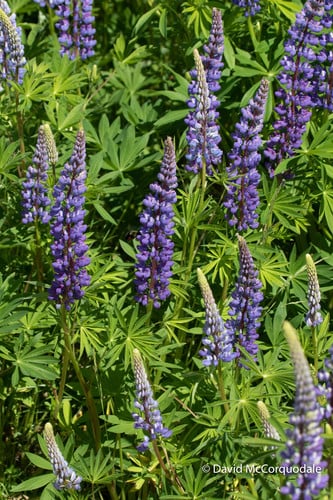
Marek Ślusarczyk (Tupungato) Photo portfolio (via Wikimedia Commons)
wikimedia· cc-by-sa
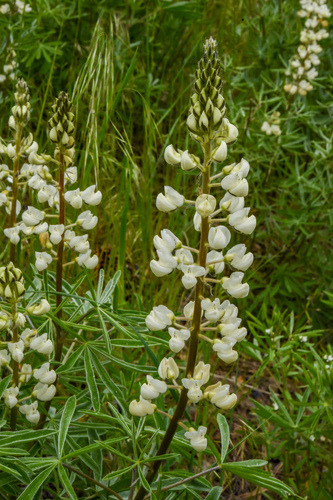
Rasbak (via Wikimedia Commons)
wikimedia· cc0
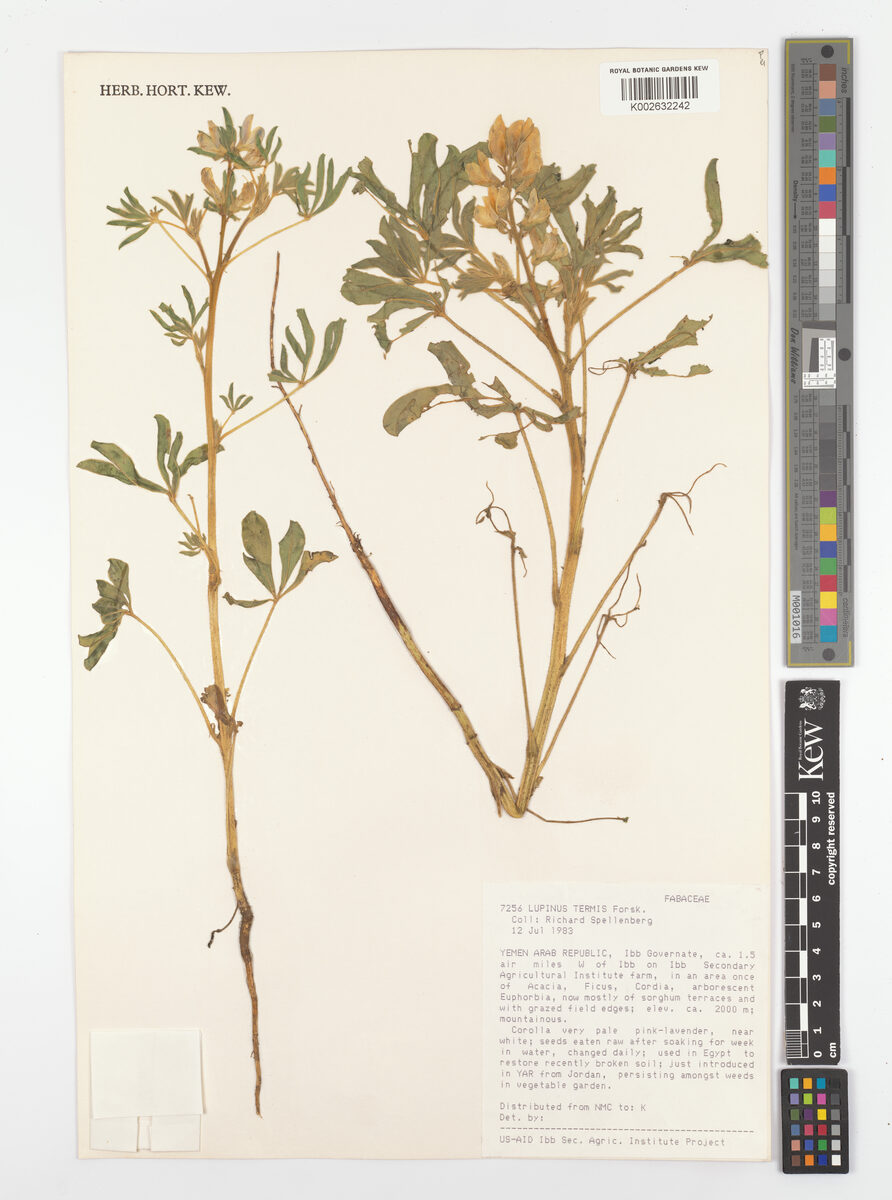
No machine-readable author provided. Richard W.M. Jones~commonswiki assumed (based on copyright claims). (via Wikimedia Commons)
iNaturalist· cc-by-nc-sa
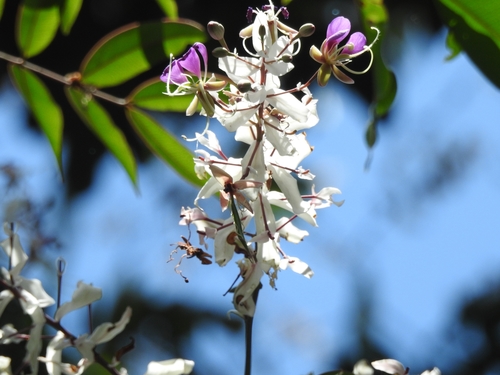
(c) John Poulakis, some rights reserved (CC BY-NC-SA)
iNaturalist· cc-by-sa
(c) Lies Van Rompaey, some rights reserved (CC BY-SA)
iNaturalist· cc-by-sa
(c) pamsai, 200K views, thank you, some rights reserved (CC BY-SA)
Summary
Source: WikipediaVicia faba, commonly known as the broad bean, fava bean, or faba bean, is a species of vetch, a flowering plant in the pea and bean family Fabaceae. It is widely cultivated as a crop for human consumption, and also as a cover crop. Varieties with smaller, harder seeds that are fed to horses or other animals are called field bean, tic bean or tick bean. This legume is commonly consumed in many national and regional cuisines. Some people have favism, a hemolytic response to the consumption of broad beans, a condition linked to a metabolic disorder known as G6PDD. Otherwise the beans, with the outer seed coat removed, can be eaten raw or cooked. With young seed pods, the outer seed coat can be eaten, and in very young pods, the entire seed pod can be eaten.
Description
An upright plant up to 1 m tall. Plants vary in height from 30 cm to 180 cm. It has a well developed taproot. It has square stems which are hollow. They have wings at the angles. There can be 1-7 branches from near the base of the plant. The leaves have leaflets along the leaf stalk and ending in a short point. There are 2-6 leaflets. These are 5-10 cm long. Flowers occur in the axils of leaves and there are 1-6 flowers on a stalk. The flowers are white with black spots. Pods are large and fat and contain several large beans inside. The pods are 5-10 cm long in field varieties and can be 30 cm long in garden varieties. They are fleshy with a white velvety lining. They become tough and hard at maturity. The seeds can vary a lot in shape and size. They can be flat or rounded and white, green, brown, purple or black. They are 1-2.6 cm long. The hilum along the seeds is prominent.
Edible Uses
Raw mature broad beans are 11% water, 58% carbohydrates, 26% protein, and 2% fat. A 100-gram reference amount supplies 1,425 kJ (341 kcal; 341 Cal) of food energy and numerous essential nutrients in high content (20% or more of the Daily Value, DV). Folate (26% DV), and dietary minerals, such as manganese, phosphorus, magnesium, and iron (range of 52 to 77% DV), have considerable content. B vitamins have moderate to rich content (19 to 48% DV). Broad beans present the highest protein-to-carbohydrate ratio among other popular pulse crops, such as chickpea, pea and lentil. Moreover, their consumption is recommended along with cereals as both foods are complementary in supplying all essential amino acids. Broad beans are generally eaten while still young and tender, enabling harvesting to begin as early as the middle of spring for plants started under glass or overwintered in a protected location, but even the main crop sown in early spring will be ready from mid to late summer. Horse beans, left to mature fully, are usually harvested in the late autumn, and are then eaten as a pulse. The immature pods are also cooked and eaten, and the young leaves of the plant can also be eaten, either raw or cooked as a pot herb (like spinach). Preparing broad beans involves first removing the beans from their pods, then steaming or boiling the beans, either whole or after parboiling them to loosen their exterior coating, which is then removed. The beans can be fried, causing the skin to split open, and then salted and/or spiced to produce a savory, crunchy snack.
Traditional Uses
It is mostly the young beans that are eaten. The ripe beans and leaves are also edible. The leaves are used for sarma in Turkey. They are rolled around a filling of rice or minced meat. The dried beans can be boiled, ground into flour and added to soups or used for making tofu. Sprouted seeds are cooked and eaten. The tender pods are eaten as a vegetable. CAUTION: Some people, mainly of Mediterranean origin can get a disease called Favism from these beans. The beans should be well cooked. Also they can react with some people using some antidepressant drugs.
Medicinal Uses
The seedpods are diuretic and lithotripic. The inside of the green pods is rubbed on warts to remove them.
Known Hazards
Beans generally contain phytohaemagglutinin, a lectin that occurs naturally in plants, animals, and humans. Most of the relatively low toxin concentrations found in V. faba can be destroyed by boiling the beans for 10 minutes. Broad beans are rich in levodopa, and should thus be avoided by those taking irreversible monoamine oxidase inhibitors to prevent a pressor response.
Distribution
A temperate plant. It is only suitable for the highlands over about 1200 m. in the tropics. It mainly occurs between 1900 and 2700 m altitude in equatorial zones. It is frost tolerant. It is resistant to drought. It can grow with temperatures down to 4°C. In the lowland hot tropics it often flowers but does not set seed. It requires fertile soils. It does best with adequate lime. It needs a pH of 6.4-7.2. It can tolerate some salinity. In Nepal they grow to 1800 m altitude. It suits hardiness zones 8-10. In Yunnan.
Where It Grows
Afghanistan, Africa, Algeria, Andorra, Argentina, Asia, Australia, Austria, Balkans, Bangladesh, Belgium, Bolivia, Brazil, Britain, Bulgaria, Canada, Caucasus, Central Africa, Central America, Central Asia, Chad, Chile, China, Colombia, Comoros, Cook Islands, Costa Rica, Croatia, Cuba, Czech Republic, Denmark, Dominican Republic, East Africa, East Timor, Ecuador, Egypt, Eritrea, Estonia, Ethiopia, Europe, Fiji, Finland, France, Georgia, Germany, Greece, Guatemala, Haiti, Himalayas, Hungary, Iceland, India, Indochina, Indonesia, Iran, Iraq, Ireland, Israel, Italy, Japan, Kenya, Kuwait, Kyrgyzstan, Lebanon, Libya, Macedonia, Madagascar, Malta, Mauritius, Mediterranean, Mexico, Middle East, Mongolia, Morocco, Mozambique, Myanmar, Nepal, Netherlands, New Zealand, North Africa, North America, Norway, Pacific, Pakistan, Palestine, Papua New Guinea, PNG, Paraguay, Peru, Philippines, Poland, Portugal, Puerto Rico, Romania, Russia, Rwanda, Scandinavia, SE Asia, Serbia, Sikkim, Slovenia, South Africa, Southern Africa, South America, Spain, Sri Lanka, Sudan, Sweden, Switzerland, Syria, Taiwan, Tajikistan, Tasmania, Thailand, Timor-Leste, Tunisia, Turkey, Türkiye, Uganda, Uruguay, USA, Vietnam, West Indies, Yemen, Yugoslavia,
Cultivation
The crop is grown from seed. Seeds are sown at 15 to 40 cm spacing. If the seed pod formation is poor, it can be improved by pinching out the tops of the plants when in flower. Hand pollination also helps. Plants are self pollinated but also cross pollinated by insects.
Propagation
Seed - pre-soak for 24 hours in warm water and then sow in situ in succession. Germination should take place in about 7 - 10 days. By making fresh sowings every 3 weeks you will have a continuous supply of fresh young seeds throughout the growing season.
Other Uses
A fibre is obtained from the stems. The burnt stems are rich in potassium and can be used in making soap. The dried stems can be burnt as a fuel. The stems and leaves are sometimes used as a green manure. Broad beans grow well with carrots, cauliflowers, beet, cucumber, cabbages, leeks, celeriac, corn and potatoes, but is inhibited by onions, garlic and shallots.
Production
Time to maturity is 12-16 weeks. Yields in the cool tropics vary between 1 and 2 tons per hectare.
Other Information
It is a commercially cultivated vegetable. Moderately common in some highland areas of Papua New Guinea but does not produce well. It is a major crop in China.
Notes
There are about 140 Vicia species. They are mostly temperate.
Nutrition
| Part | Moisture | kJ | kcal | Protein | Vit A | Vit C | Iron | Zinc |
|---|---|---|---|---|---|---|---|---|
| Dried Seeds | 10 | 1448 | 346 | 26.2 | 130 | 16 | 6.7 | — |
| Fresh Seeds raw | 76 | 315 | 75 | 7.1 | 35 | 140 | 1.9 | 0.6 |
| Fresh Seeds boiled | 83.7 | 259 | 62 | 4.8 | 27 | 20 | 1.5 | 0.5 |
Synonyms
Also Known As
Anhuri, Bakala, Bakla, Bakulaa simi, Bakulla, Balka sem, Bob, Bosa-pe, Can dou, Chas tang, Chastang raiun, Chilow, Dau rang-ngua, Dicke boohne, Fava, Favas, Fave, Faveira, Feve, Field bean, Haba, Hende matar, Horse bean, Kabli bakla, Kadu huralikayee, Kala matar, Katun, Makhon shim, Mattz-rewari, Nakshan, Pe-let-ma, Pervatha, Raj-rawan, San-du-si, San-to-pe, Sau bohne, Sora mame, Tau-ke, Tayok-pe, Thua yang, Tick bean, Tsaam dou, Tsertsvi
References (68)
- Abbet, C., et al, 2014, Ethnobotanical survey on wild alpine food plants in Lower and Central Valais (Switzerland). Journal of Ethnopharmacology 151 (2014) 624–634
- Ahmad, K., et al, 2018, Ethnobotanical investigation of wild vegetables used among local communities in northwest Pakistan. Acta Soc Bot Pol. 2019;88(1):3616.
- Ambasta, S.P. (Ed.), 2000, The Useful Plants of India. CSIR India. p 675
- Anderson, E. F., 1993, Plants and people of the Golden Triangle. Dioscorides Press. p 224
- Bianchini, F., Corbetta, F., and Pistoia, M., 1975, Fruits of the Earth. Cassell. p 38
Show all 68 references Hide references
- Bond, D.A., 1979, Field bean, in Simmonds N.W.,(ed), Crop Plant Evolution. Longmans. London. p 179
- Bussman, R. W., et al, 2016, A comparative ethnobotany of Khevsureti, Samtskhe-Javakheti, Tusheti, Svaneti, and Racha-Lechkhumi, Republic of Georgia (Sakartvelo), Caucasus. Journal of Ethnobiology and Ethnomedicine (2016) 12:4
- Bussman, R. W. et al, 2017, Ethnobotany of Samtskhe-Javakheti, Sakartvelo (Republic of Georgia), Caucasus. Indian Journal of Traditional Knowledge Vol. 16(1) pp 7-24
- Bussman, R. W., et al, 2021, Unity in diversity—food plants and fungi of Sakartvelo (Republic of Georgia), Caucasus. Journal of Ethnobiology and Ethnomedicine (2021) 17:72 p 9
- Cheifetz, A., (ed), 1999, 500 popular vegetables, herbs, fruits and nuts for Australian Gardeners. Random House p 106
- Creasy, R., 2000, The Edible Asian Garden. Periplus p 26
- Cundall, P., (ed.), 2004, Gardening Australia: flora: the gardener's bible. ABC Books. p 1470
- Dogan, Y., et al, 2015, Of the importance of a leaf: the ethnobotany of sarma in Turkey and the Balkans. Journal of Ethnobiology and Ethnomedicine, 11:56
- Ertug, F., 2004, Wild Edible Plants of the Bodrum Area. (Mugla, Turkey). Turk. J. Bot. 28 (2004): 161-174
- Facciola, S., 1998, Cornucopia 2: a Source Book of Edible Plants. Kampong Publications, p 104 (As Faba vulgaris)
- Farfan, B., et al, 2007, Mazahua Ethnobotany and Subsistence in the Monarch Butterfly Biosphere Reserve, Mexico. Economic Botany 61(2) 2007, pp 173-191
- Flora of Pakistan. www.eFloras.org
- Hadfield, J., 2001, The A-Z of Vegetable Gardening in South Africa. Struik p 76
- Haq, N., Anthony, K., Sarwar, M., and Ahmad, Z. (eds.), 1998, Underutilized Crops of Pakistan. Plant Genetic Resources Institute. p 12
- Hedrick, U.P., 1919, (Ed.), Sturtevant's edible plants of the world. p 674
- Hermandez Bermejo, J.E., and Leon, J. (Eds.), 1994, Neglected Crops. 1492 from a different perspective. FAO Plant Production and Protection Series No 26. FAO, Rome. p 294
- Hibbert, M., 2002, The Aussie Plant Finder 2002, Florilegium. p 306
- http://palaeoworks.anu.edu.au/Nuno_PhD/04.pdf re Timor
- http://www.botanic-gardens-ljubljana.com/en/plants
- Hu, Shiu-ying, 2005, Food Plants of China. The Chinese University Press. p 486
- Irving, M., 2009, The Forager Handbook, A Guide to the Edible Plants of Britain. Ebury Press p 241
- Jardin, C., 1970, List of Foods Used In Africa, FAO Nutrition Information Document Series No 2.p 30, 109
- Jarso, M. & Keneni, G., 2006. Vicia faba L. [Internet] Record from Protabase. Brink, M. & Belay, G. (Editors). PROTA (Plant Resources of Tropical Africa), Wageningen, Netherlands. < http://database.prota.org/search.htm>. Accessed 23 October 2009
- Jha, P. K., et al, 1996, Plant genetic resources of Nepal: A guide for plant breeders of agricultural, horticultural and forestry crops. Euphytica 87:189-210
- Kalle, R. & Soukand, R., 2012, Historical ethnobotanical review of wild edible plants of Estonia (1770s-1960s) Acta Societatis Botanicorum Poloniae 81(4):271-281
- Kays, S. J., and Dias, J. C. S., 1995, Common Names of Commercially Cultivated Vegetables of the World in 15 languages. Economic Botany, Vol. 49, No. 2, pp. 115-152
- Khanal, R., et al, 2014, Documenting abundance and use of underutilized plant species in the mid hill region of Nepal. ECOPRINT 21: 63-71, 2014
- Kiple, K.F. & Ornelas, K.C., (eds), 2000, The Cambridge World History of Food. CUP p 1772
- Lembogi Biologi Nasional, 1980, Sayur-sayuran. Balai Pustaka, Jakarta. p 48
- Liu, Yi-tao, & Long, Chun-Lin, 2002, Studies on Edible Flowers Consumed by Ethnic Groups in Yunnan. Acta Botanica Yunnanica. 24(1):41-56
- Luczaj et al, 2013, Wild vegetable mixes sold in the markets of Dalmatia (southern Croatia). Journal of Ethnobiology and Ethnomedicine. 8:2
- Macmillan, H.F. (Revised Barlow, H.S., et al), 1991, Tropical Planting and Gardening. Sixth edition. Malayan Nature Society. Kuala Lumpur. p 360
- Manandhar, N.P., 2002, Plants and People of Nepal. Timber Press. Portland, Oregon. p 475
- Martin, F.W. & Ruberte, R.M., 1979, Edible Leaves of the Tropics. Antillian College Press, Mayaguez, Puerto Rico. p 45
- Miguel, E., et al, 1989, A checklist of the cultivated plants of Cuba. Kulturpflanze 37. 1989, 211-357
- Miya, M. S. & Gautum, D., 2021, Checklist of floral species at the Institute of Forestry, Pokhara Campus, Pokhara, Nepal. Journal of Institute of Forestry, Nepal 18 (2021) 133-177
- Moerman, D. F., 2010, Native American Ethnobotany. Timber Press. p 595
- Molares, S. & Ladio, A., 2012, The Usefulness of Edible and Medicinal Fabaceae in Argentine and Chilean Patagonia: Environmental Availability and Other Sources of Supply. Evidence-Based Complementary and Alternative Medicine. Volume 2012, Article ID 901918, 12 pages, Hindawi Publishing Corporation.
- Molla, A., Ethiopian Plant Names. http://www.ethiopic.com/aplants.htm
- Pascual-Mendoza, S. et al, 2021, Traditional knowledge of edible plants in an indigenous community in the Sierra Norte of Oaxaca, Mexico. Plant Biosystems - An International Journal Dealing with all Aspects of Plant Biology
- Penafield Anchundia, D. D., 2017, Traditional food consumption and its nutritional contribution in Guasaganda, Central Ecuador. PhD Ghent University p 72
- Pham-Hoang Ho, 1999, An Illustrated Flora of Vietnam. Nha Xuat Ban Tre. p 977
- Plants of Haiti Smithsonian Institute http://botany.si.edu/antilles/West Indies
- Purseglove, J.W., 1968, Tropical Crops Dicotyledons, Longmans. p 319
- Ruiters-Welcome, A. K., 2019, Food plants of southern Africa. Ph.D. thesis. Univ. of Johannesburg p 62
- Schneider, E., 2001, Vegetables from Amaranth to Zucchini: The essential reference. HarperCollins. p 64
- Shah, S. K., 2014, Dietary contribution of underutilized minor crops and indigenous plants collected from uncultivated lands and forests in Nepal. in Promotion of Underutilized Indigenous Food Resources for Food Security and Nutrition in Asia and Pacific. FAO. Bangkok p 64
- Sharma, B.B., 2005, Growing fruits and vegetables. Publications Division. Ministry of Information and broadcasting. India. p 150
- Small, E., 2009, Top 100 Food Plants. The world's most important culinary crops. NRC Research Press. p 136
- Solomon, C., 2001, Encyclopedia of Asian Food. New Holland. p 208
- Sp. pl. 2:737. 1753
- Terra, G.J.A., 1973, Tropical Vegetables. Communication 54e Royal Tropical Institute, Amsterdam, p 80
- Tindall, H.D., 1983, Vegetables in the Tropics, Macmillan p 291
- Torre, de la, L., et al, 2008, Enciclopedia de las Plantas Útiles del Ecuador. Herbario QCA. Pontificia Universidad Católica del Ecuador. p 363
- Urgamal, M., Oyuntsetseg, B., Nyambayar, D. & Dulamsuren, Ch. 2014. Conspectus of the vascular plants of Mongolia. (Editors: Sanchir, Ch. & Jamsran, Ts.). Ulaanbaatar, Mongolia. “Admon“ Press. 334pp. (p. 121-143).
- USDA, ARS, National Genetic Resources Program. Germplasm Resources Information Network - (GRIN). [Online Database] National Germplasm Resources Laboratory, Beltsville, Maryland. Available: www.ars-grin.gov/cgi-bin/npgs/html/econ.pl (10 April 2000)
- Vickery, M.L. and Vickery, B., 1979, Plant Products of Tropical Africa, Macmillan. p 22
- Welcome, A. K. & Van Wyk, B.-E., 2019, An inventory and analysis of the food plants of southern Africa. South African Journal of Botany 122 (2019) 136–179
- Wiersema, J. H. & Leon, B., 2013, World Economic Plants. A Standard Reference CRC Press. 2nd Ed. p 718
- Wilson, J.M. & Witcombe, J.R., Crops for Arid lands, in Wickens, G.E., Goodin, J.R., and Field, D.V.,(Eds.) 1985, Plants for Arid Lands. Unwin Hyman, London, p 41
- World Checklist of Useful Plant Species 2020. Royal Botanic Gardens, Kew
- Zeven, A. C. & de West, J. M. J., 1982, Dictionary of cultivated plants and their regions of diversity. Wageningen. p 83, 116
- Zhang, L., et al, 2016, Ethnobotanical study of traditional edible plants used by the Naxi people during droughts. Journal of Ethnobiology and Ethnomedicine. 12:39