Desmodium velutinum
(Willd.) DC.
iNaturalist· cc0
no rights reserved
iNaturalist· cc0
no rights reserved
iNaturalist· cc0
no rights reserved
Description
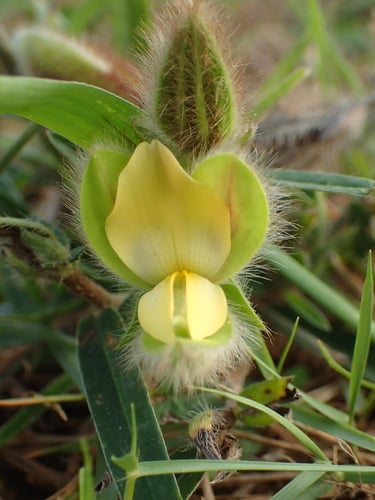
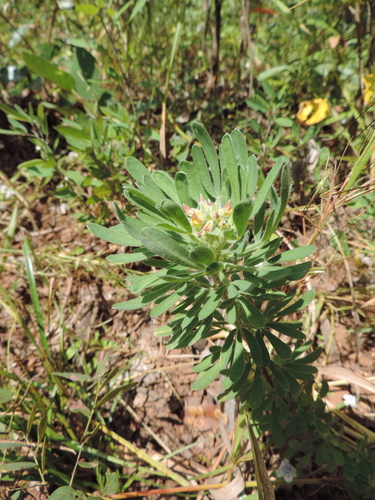
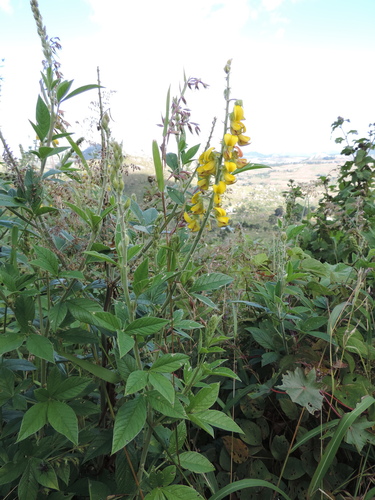
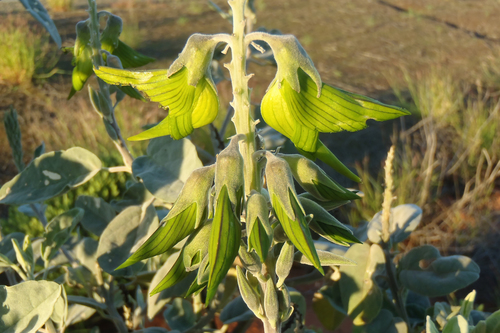
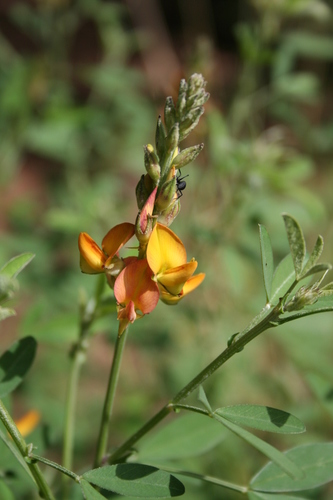
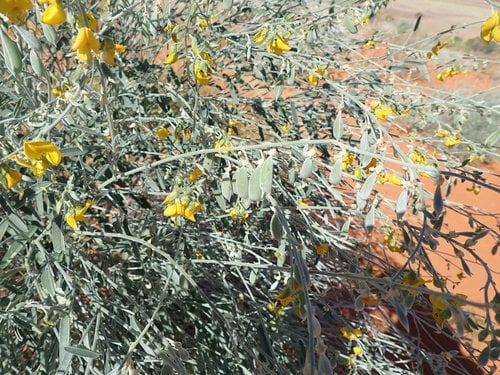
A woody shrub. It grows from 0.5-2 m high. The stems are densely covered with pale hairs when young. The leaves normally have one leaflet but occasionally 3. The leaflet is 2.5-19 cm long by 1.1-13 cm wide. It is bluntly rounded at the tip. There a hairs which are more rough on top and velvety underneath. The flowers are 5 mm long in clusters either at the ends of branches or in the axils of leaves. These flower clusters are 2-30 cm long. They are covered with hooked hairs. The flowers are mauve, red or blue. The fruit are pods 1.2-2.4 cm long and with 2-7 segments.
Edible Uses
The leaves are eaten.
Distribution
A tropical plant. It tends to grow in grassland and drier areas. In Papua New Guinea is occurs from 2 m to 600 m altitude. In Zimbabwe it grows between 100-1,320 m above sea level.
Where It Grows
Africa, Asia, Australia, Benin, Burkina Faso, Cambodia, Central Africa, China, Congo DR, East Africa, Guiana, Guinea, Guinée, Guinea-Bissau, Himalayas, India, Indochina, Indonesia, Laos, Madagascar, Malaysia, Mozambique, Myanmar, Nepal, Nigeria, Pacific, Papua New Guinea, PNG, Philippines, Sao Tome and Principe, SE Asia, Sierra Leone, South America, Sri Lanka, Thailand, Vietnam, West Africa, Zimbabwe,
Notes
There are about 350 Desmodium species. They are mostly in the tropics.
Synonyms
Also Known As
'Danka ' dafi, Damgere, Kulenhimaba, Macabreu, Nhacanama, Nangata-tchenche, Rap-rap, Tamron, Tam, Thoclep, Trangqua long
References (10)
- Bonou, A., et al, 2013, Valeur economique des Produits Forestiers Non Ligneux (PFNL) au Benin. Editions Universitaires Europeennes p 96
- East African Herbarium records, 1981,
- Latham, P., 2004, Useful Plants of Bas-Congo province. Salvation Army & DFID p 108
- MORTIMORE,
- Peekel, P.G., 1984, (Translation E.E.Henty), Flora of the Bismarck Archipelago for Naturalists, Division of Botany, Lae, PNG. p 235, 234
Show all 10 references Hide references
- Peters, C. R., O'Brien, E. M., and Drummond, R.B., 1992, Edible Wild plants of Sub-saharan Africa. Kew. p 133
- Pham-Hoang Ho, 1999, An Illustrated Flora of Vietnam. Nha Xuat Ban Tre. p 928
- Prodr. 2:328. 1825
- Verdcourt, B., 1979, Manual of New Guinea Legumes. Botany Bulletin No 11, Division of Botany, Lae, Papua New Guinea. p 411
- World Checklist of Useful Plant Species 2020. Royal Botanic Gardens, Kew