Viburnum lentago
L.
Nanneyberry
iNaturalist· cc-by-nc
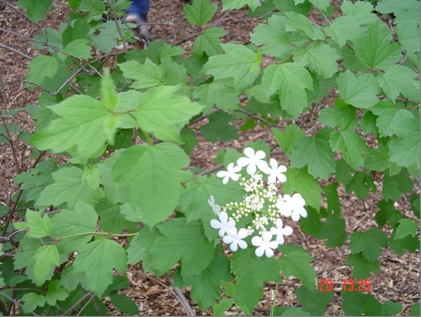
(c) Alain Maire, some rights reserved (CC BY-NC), uploaded by Alain Maire
iNaturalist· cc-by-nc
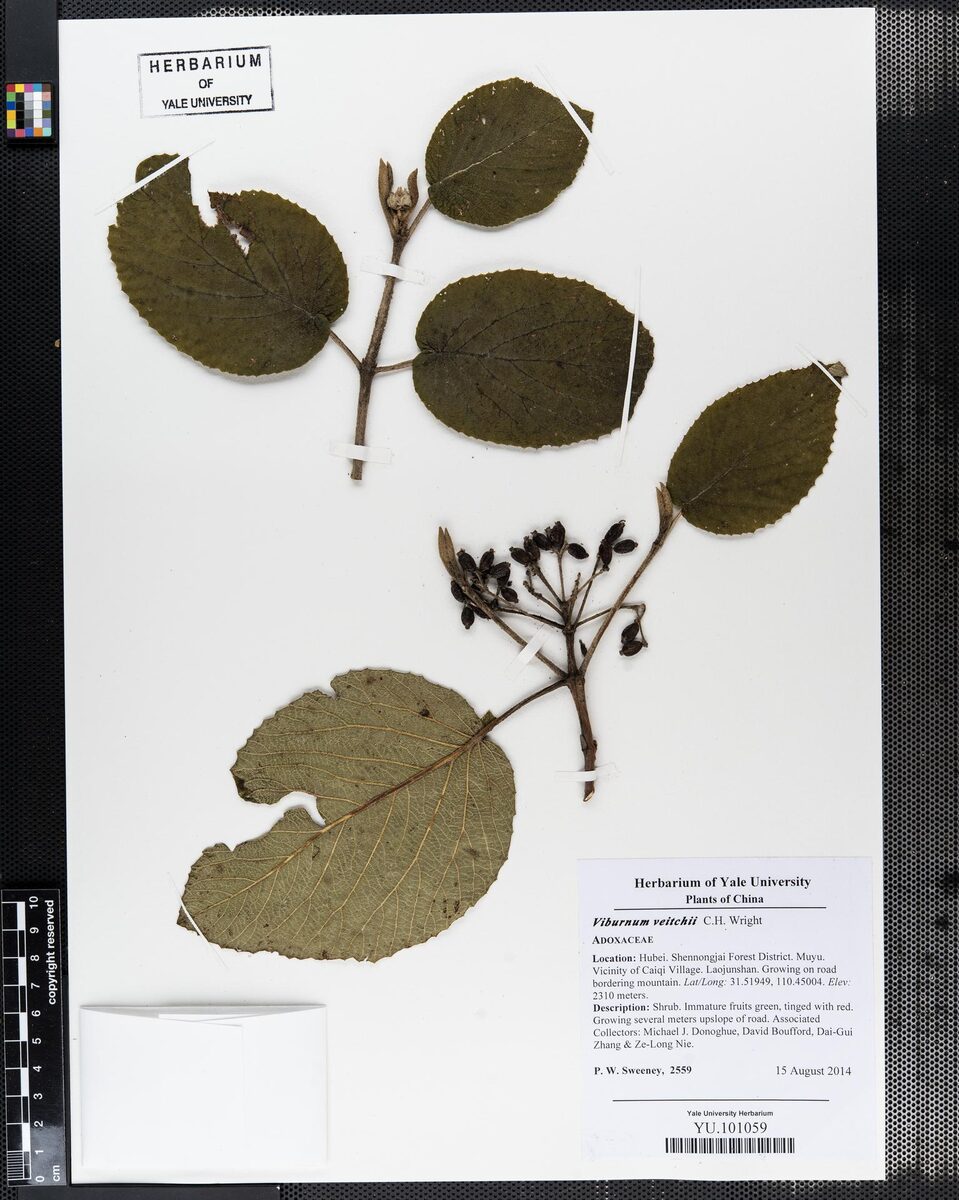
(c) George, some rights reserved (CC BY-NC)
Summary
Source: WikipediaViburnum lentago, the nannyberry, sheepberry, or sweet viburnum, is a species of Viburnum native to North America.
Description
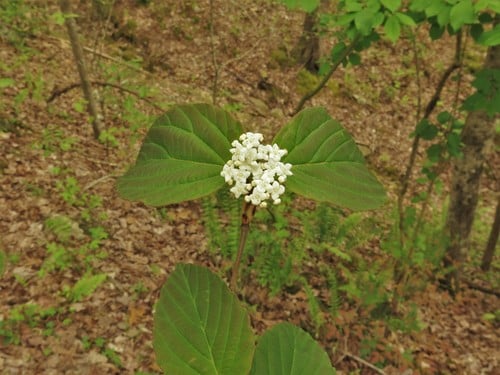
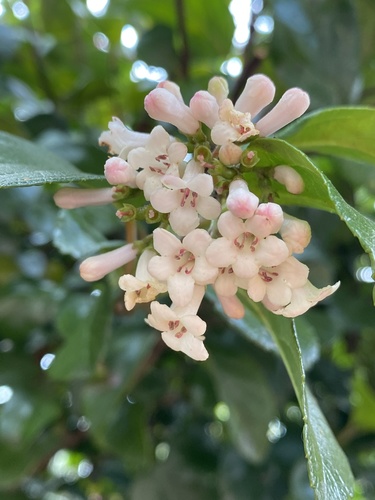
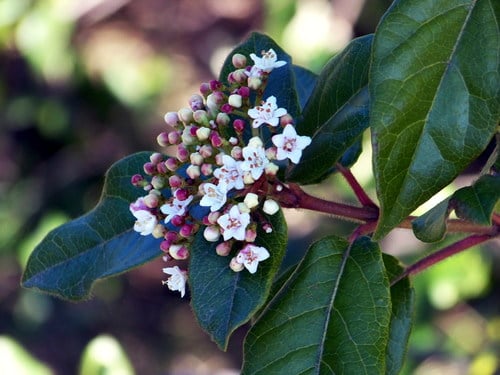
A flowering shrubby tree. It can be 10 m high and have a trunk 15 cm across. The trunk is slender and crooked. The bark is greyish-brown. It has very small irregular scales. The leaves are 5-10 cm long. They are narrow and oval. The tip is slender and sharp. They taper to a short tip. The base is rounded. There are fine sharp teeth along the edge. The upper surface is yellowish green. There are tiny dark brown dots underneath. The leaf stalk is 1-2 cm long. It is grooved. There are wings along each side due to the leaf blade extending into the stalk. The twigs have an unpleasant smell when bruised. The flowers are creamy white. The occur in round topped clusters. These are 5-10 cm wide. Several branches radiate out from the shoot tip. The fruit are bluish-black and 8-12 mm long. They have a thin sweet edible flesh.
Edible Uses
The fruit can be eaten raw or cooked, or dried for winter use. Quality and size vary; the best fruits are about 15mm long, pulpy, very sweet, somewhat juicy, and pleasant tasting, though they have a thick skin and a single large seed. The fruit is said to be best after a frost, though it is sometimes dry.
Traditional Uses
The fruit can be eaten fresh. After the seeds are removed the berries are used in puddings and fruit salad.
This uses section is brief — help expand it
Medicinal Uses
The bark is antispasmodic. A decoction of the roots has been used to treat irregular menstruation and the spitting of blood. An infusion of the leaves has been used to treat measles, and the same infusion has been drunk — or a poultice of leaves applied — to treat dysuria.
Distribution
It is a cool temperate plant. It grows along river banks and on the edges of forests. Melbourne Botanical gardens. It suits hardiness zones 2-5.
Where It Grows
Australia, Canada, North America, USA,
Cultivation
An easily grown plant, it succeeds in most soils but is ill-adapted for poor soils and for dry situations. It prefers a deep rich loamy soil in sun or semi-shade. Best if given shade from the early morning sun in spring. A very hardy plant, tolerating temperatures down to about -30°c. A fast-growing but short-lived species in the wild. It readily sprouts from the roots and forms thickets, a habit that is undesirable in small gardens. The plants grow well, but do not usually fruit well in Britain. This is probably because they are self-incompatible and need to grow close to a genetically distinct plant in the same species in order to produce fruit and fertile seed.
Propagation
Seed is best sown in a cold frame as soon as it is ripe. Germination can be slow, sometimes taking more than 18 months. Seed harvested green — fully developed but not yet fully ripe — and sown immediately in a cold frame should germinate the following spring. Stored seed needs 2 months of warm stratification followed by 3 months of cold stratification, and may still take 18 months to germinate. Prick seedlings into individual pots when large enough to handle and grow on in a cold frame or greenhouse, planting out in late spring or early summer the following year. Softwood cuttings taken in early summer in a frame should be potted individually once rooting begins and planted out the following late spring or early summer. Half-ripe cuttings, 5–8cm long with a heel if possible, taken in July or August in a frame, should be potted as soon as they root. These can be difficult to overwinter and are best kept under glass until spring before planting out. Mature wood cuttings taken in winter in a frame should root in early spring; pot when large enough and plant out in summer if sufficient new growth has formed, otherwise overwinter in a frame and plant out the following spring. Layering of the current season's growth in July or August takes 15 months.
Other Uses
The plant is grown as a hedge in North America. The wood is heavy, hard, close-grained, and malodorous, and is of no commercial value due to the small size of the trees.
Notes
There are about 150 Viburnum species. Also put in the family Caprifoliaceae.
Also Known As
Sheepberry, Sweet Viburnum, Wild Raisin
References (20)
- Beckstrom-Sternberg, Stephen M., and James A. Duke. "The Foodplant Database." http://probe.nalusda.gov:8300/cgi-bin/browse/foodplantdb.(ACEDB version 4.0 - data version July 1994)
- Brickell, C. (Ed.), 1999, The Royal Horticultural Society A-Z Encyclopedia of Garden Plants. Convent Garden Books. p 1050
- Cundall, P., (ed.), 2004, Gardening Australia: flora: the gardener's bible. ABC Books. p 1467
- Elias, T.S. & Dykeman P.A., 1990, Edible Wild Plants. A North American Field guide. Sterling, New York p 227
- Esperanca, M. J., 1988. Surviving in the wild. A glance at the wild plants and their uses. Vol. 2. p 102
Show all 20 references Hide references
- Facciola, S., 1998, Cornucopia 2: a Source Book of Edible Plants. Kampong Publications, p 72
- Farrar, J.L., 1995, Trees of the Northern United States and Canada. Iowa State University press/Ames p 176
- Fisk, J. R. & Hoover, E., 2015, Wild Fruits of Minnesota. A Field Guide. University of Minnesota p 37
- Flowerdew, B., 2000, Complete Fruit Book. Kyle Cathie Ltd., London. p 172
- Grandtner, M. M., 2008, World Dictionary of Trees. Wood and Forest Science Department. Laval University, Quebec, Qc Canada. (Internet database http://www.wdt.qc.ca)
- Hedrick, U.P., 1919, (Ed.), Sturtevant's edible plants of the world. p 673
- Heywood, V.H., Brummitt, R.K., Culham, A., and Seberg, O. 2007, Flowering Plant Families of the World. Royal Botanical Gardens, Kew. p 331
- Kermath, B. M., et al, 2014, Food Plants in the Americas: A survey of the domesticated, cultivated and wild plants used for Human food in North, Central and South America and the Caribbean. On line draft. p 906
- Little, E.L., 1980, National Audubon Society Field Guide to North American Trees. Alfred A. Knopf. p 671
- MacKinnon, A., et al, 2009, Edible & Medicinal Plants of Canada. Lone Pine. p 126
- Moerman, D. F., 2010, Native American Ethnobotany. Timber Press. p 594
- Plants for a Future database, The Field, Penpol, Lostwithiel, Cornwall, PL22 0NG, UK. http://www.scs.leeds.ac.uk/pfaf/
- Sp. pl. 1:268. 1753
- Toupal, R. S. & Hollenback, K., 2009, An Ethnobotany of Indiana Dunes National Lakeshore: Plant Uses of the Ojibwa People. Bureau of Applied Research in Anthropology. University of Arizona
- www.desert-tropicals.com