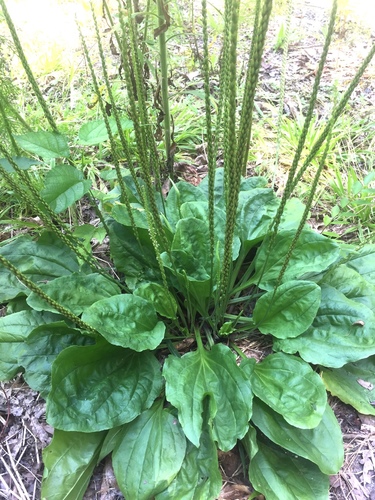
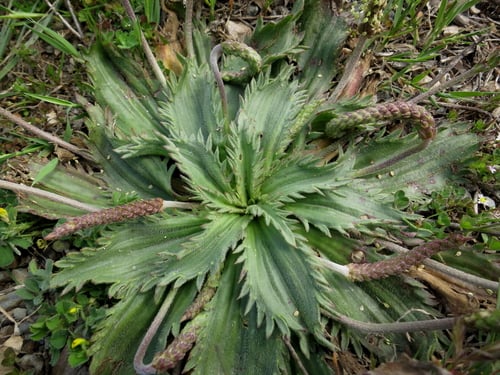
Veronica undulata
Wall.
Undulate Speedwell
iNaturalist· cc0
no rights reserved, uploaded by 葉子
iNaturalist· cc-by-nc
(c) Wan-hsuan Kao, some rights reserved (CC BY-NC)
Summary
A perennial herb reaching 1 meter tall with hermaphroditic flowers. Blooms May through September with seeds ripening July to October. Grows in light sandy, medium loamy, or heavy clay soils with good drainage. Tolerates mildly acidic, neutral, and mildly alkaline pH. Requires full sun and prefers moist or wet conditions.
Description
A herb. It keeps growing from year to year. It is hairy. It grows 10-100 cm tall. The leaves do not have leaf stalks. The leaves are narrowly oval and 2-10 cm long by 1-4 cm wide. There are usually teeth along the edge. There are many flowers ina group. They are pale blue, pale purple or white.
Edible Uses
Leaves and young shoots can be eaten raw or cooked.
Medicinal Uses
Plants bearing galls are used to stimulate blood circulation, relieve pain, promote menstrual flow, and stop bleeding.
Known Hazards
None listed.
Distribution
It is a subtropical plant. It grows near water and in swamps below 2,800 m above sea level.
Where It Grows
Afghanistan, Asia, China, Himalayas, India, Indochina, Japan, Korea, Laos, Nepal, Pakistan, SE Asia, Thailand, Tibet, Vietnam,
Cultivation
We have very little information on this species and do not know if it will be hardy in Britain, though judging by its native range it should succeed outdoors in most parts of this country. It is closely related to V. anagallis-aquatica. The following notes are based on the general needs of the genus. Easily grown in a moderately fertile moisture retentive well drained soil. Prefers cool summers.
Propagation
Sow seed in autumn in a cold frame. Prick seedlings out into individual pots once large enough to handle, then plant out during summer. Where seed is plentiful, sow directly outdoors in situ in autumn or spring. Divide plants in autumn or spring. Larger divisions can go straight into their permanent positions; smaller ones are best potted up and grown on in light shade in a greenhouse or cold frame until establishing well, then planted out in summer or the following spring.
Other Uses
None known
Notes
There are about 250 Veronica species. Also put in the family Scrophulariaceae.
References (2)
- Plants for a Future database, The Field, Penpol, Lostwithiel, Cornwall, PL22 0NG, UK. http://www.scs.leeds.ac.uk/pfaf/
- W. Roxburgh, Fl. ind. 1:147. 1820