Parapolydora fastigiata
(Oliv. et Hiern.) H. Rob.
iNaturalist· cc-by-nc
(c) Troos van der Merwe, some rights reserved (CC BY-NC), uploaded by Troos van der Merwe
iNaturalist· cc-by-nc
(c) Michael Schrenk, some rights reserved (CC BY-NC), uploaded by Michael Schrenk
iNaturalist· cc-by
(c) Wynand Uys, some rights reserved (CC BY), uploaded by Wynand Uys
Description
A herb. It grows each year from seed. It has slender branches. These are spreading and slightly woody. It can grow up to about 1 m high. The leaves narrow towards the base. The tip is pointed. There are a few teeth along the edge. The lower leaves are sword shaped. They are 5 cm long by 1 cm wide. The upper leaves are more narrow. The flower heads are on slender stalks. They are purple.
Edible Uses
The young leaves are cooked and eaten as a potherb and are also added to soups.
Traditional Uses
The young leaves are cooked and eaten as a potherb. They are also added to soups.
This uses section is brief — help expand it
Distribution
A subtropical plant. In Swaziland it is in the low veld only. It grows in hot arid places. It grows between 3-1,800 m above sea level. It grows in well-drained soils. It can grow in arid places.
Where It Grows
Africa, Botswana, East Africa, Eswatini, Malawi, Mozambique, Namibia, South Africa, Southern Africa, Swaziland, Worldwide, Zimbabwe,
Synonyms
Also Known As
Lehlanye, Vitola
References (15)
- Fox, F. W. & Young, M. E. N., 1982, Food from the Veld. Delta Books. p 127 (As Vernonia fastigiata)
- Grivetti, L. E., 1980, Agricultural development: present and potential role of edible wild plants. Part 2: Sub-Saharan Africa, Report to the Department of State Agency for International Development. p 75 (As Vernonia fastigiata)
- Jardin, C., 1970, List of Foods Used In Africa, FAO Nutrition Information Document Series No 2.p 109 (As Vernonia fastigiata)
- Long, C., 2005, Swaziland's Flora - siSwati names and Uses http://www.sntc.org.sz/flora/ (As Vernonia fastigiata)
- Martin, F.W. & Ruberte, R.M., 1979, Edible Leaves of the Tropics. Antillian College Press, Mayaguez, Puerto Rico. p 186 (As Vernonia fastigiata)
Show all 15 references Hide references
- Matlhare, T., et al, Vegetables in Botswana. p 21 Bioversity website. (As Vernonia fastigiata)
- D. Oliver, Fl. trop. Afr. 3:282. 1877 (As Vernonia fastigiata)
- Peters, C. R., O'Brien, E. M., and Drummond, R.B., 1992, Edible Wild plants of Sub-saharan Africa. Kew. p 93 (As Vernonia fastigiata)
- Quin, 1959, (As Vernonia fastigiata)
- Royal Botanic Gardens, Kew (1999). Survey of Economic Plants for Arid and Semi-Arid Lands (SEPASAL) database. Published on the Internet; http://www.rbgkew.org.uk/ceb/sepasal/internet [Accessed 14th April 2011] (As Vernonia fastigiata)
- Ruiters-Welcome, A. K., 2019, Food plants of southern Africa. Ph.D. thesis. Univ. of Johannesburg p 36
- Swaziland's Flora Database http://www.sntc.org.sz/flora (As Vernonia fastigiata)
- Terra, G.J.A., 1973, Tropical Vegetables. Communication 54e Royal Tropical Institute, Amsterdam, p 80 (As Vernonia fastigiata)
- Welcome, A. K. & Van Wyk, B.-E., 2019, An inventory and analysis of the food plants of southern Africa. South African Journal of Botany 122 (2019) 136–179
- World Checklist of Useful Plant Species 2020. Royal Botanic Gardens, Kew
More from Asteraceae
Siegesbeckia orientalis pubescens
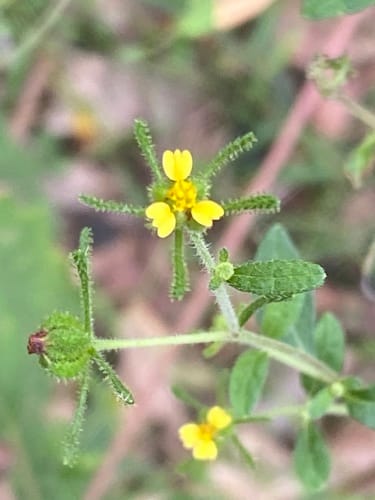
Sigesbeckia orientalis
Indian weed, St Paul's wort
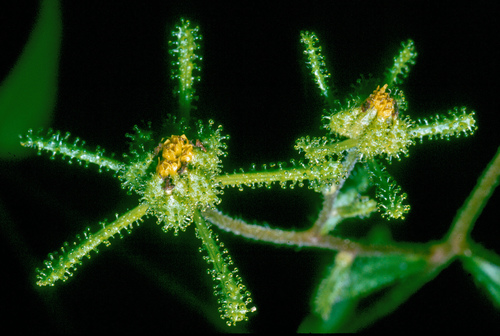
Sigesbeckia orientalis subsp. pubescens
Hsi Lien, Menamomi
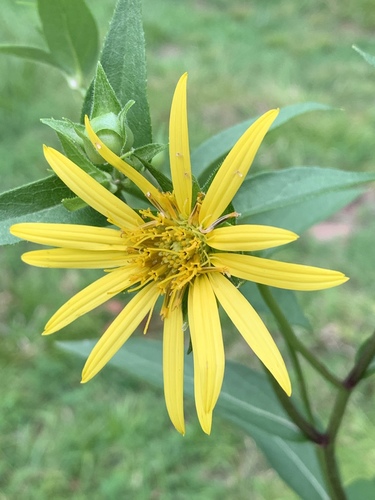
Silphium asteriscus var. trifoliatum
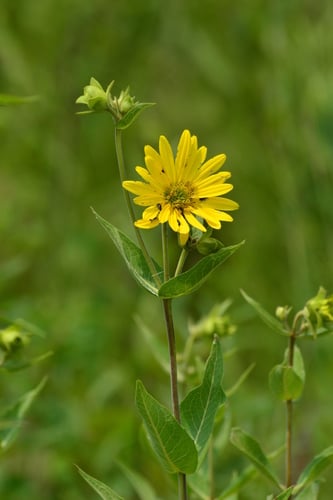
Silphium integrifolium var. laeve
Compass plant, Rosin-weed
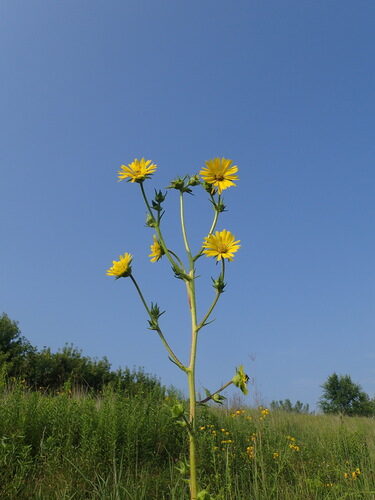
Silphium laciniatum
Compass Plant, Robinson's compassplant