Sigesbeckia orientalis
L.
Indian weed, St Paul's wort
iNaturalist· cc0
no rights reserved
iNaturalist· cc-by-nc
(c) 羅忠良, some rights reserved (CC BY-NC), uploaded by 羅忠良
iNaturalist· cc0
no rights reserved
Summary
Source: WikipediaSigesbeckia orientalis, commonly known as Indian weed or common St. Paul's wort, is a species of flowering plant in the family Asteraceae. It is a small, upright, sparsely branched shrub with yellow flowers and widespread in Asia, Africa and Australia.
Description
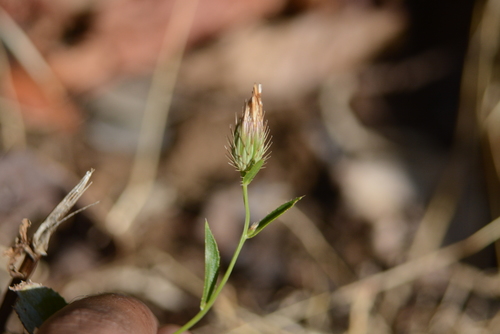
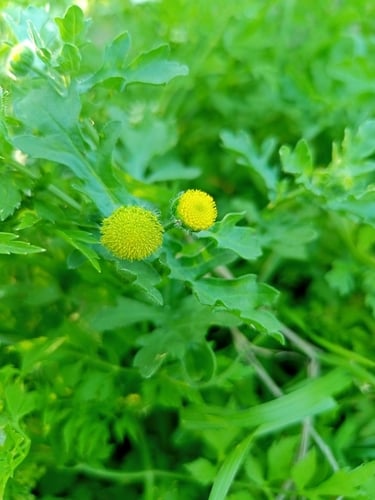
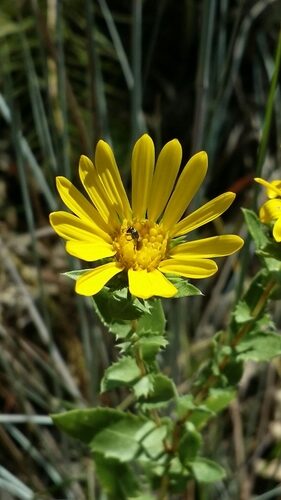
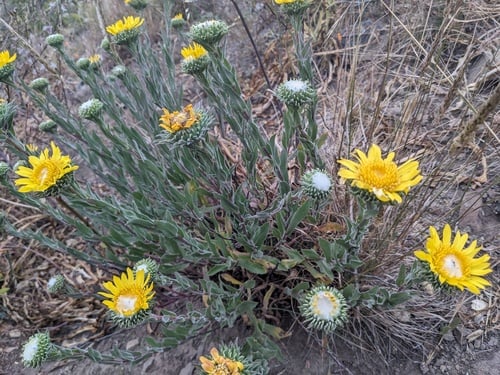
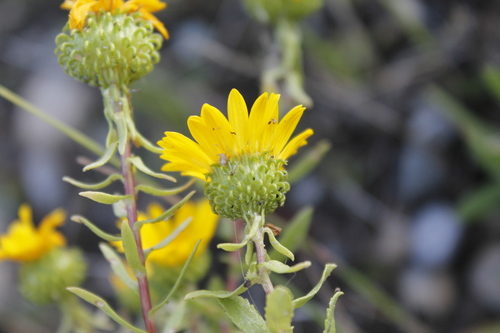
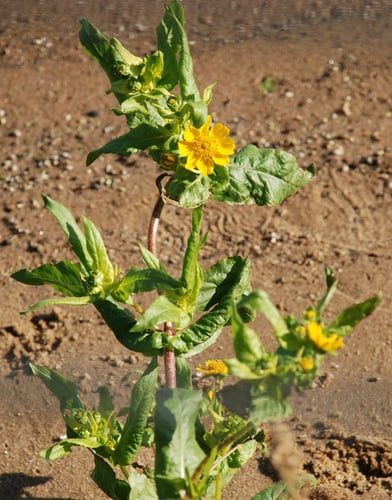
A herb. It often has many branches. It grows about 1 m tall. The leaves have winged leaf stalks about 0.5-6 cm long. The leaf blade is D shaped or sword shaped and 3-12 cm long by 1.5-9 cm wide. It narrows into the leaf stalk at the base. The flower head is loose and 0.6-1 cm across. The flowers are yellow.
Edible Uses
The leaves and shoots are eaten after boiling and washing to remove bitter substances. The flowers are used to scent coconut oil.
Traditional Uses
Leaves and shoots are eaten after boiling and washing to remove the bitter substance. The flowers are used to scent coconut oil.
This uses section is brief — help expand it
Medicinal Uses
The plant is used in traditional medicine and is employed as a famine food.
Known Hazards
The leaves contain a bitter, possibly toxic element (darutin) that must be removed by boiling and washing before consumption.
Distribution
It grows in warm temperate places. It grows in fields and forests between 100-2,800 m above sea level. Tasmania Herbarium. In Sichuan and Yunnan.
Where It Grows
Africa, American Samoa, Asia, Australia, Bhutan, Central Asia, China, Dominican Republic, East Africa, Fiji, French Polynesia, Hawaii, Himalayas, India, Indochina, Indonesia, Japan, Korea, Laos, Malaysia, Marquesas, Mauritius, Mozambique, Myanmar, Nepal, Norfolk Island, Pacific, Papua New Guinea, PNG, Reunion, Russia, SE Asia, Slovenia, Tahiti, Taiwan, Tajikistan, Tasmania, Thailand, Tibet, Tonga, Vietnam, West Indies,
Cultivation
Plants can be grown from seeds.
Propagation
Seed - sow in situ
Other Uses
A fatty oil is obtained from the seed[310. It contains about 20% epoxy acids (16% coronary-epoxyacid, 4% vernolic-epoxyacid), these are of potential interest as replacements for synthetic epoxy compounds, used as stabilizers for plastic materials. The aerial parts contain an essential oil, that has been recommended for use in perfumery. An extract of the plant has shown significant antifeedant and insecticidal properties on the larvae of Crocidolomia binotalis, an important pest on cruciferous crops in Mauritius. An extract of the leaves is used as an ingredient in skin conditioners and tonics.
Other Information
It is a famine food.
Notes
Used after boiling and washing to remove the bitter, possibly toxic element darutin. It is used in medicine. There are about 10 Siegesbeckia species.
Synonyms
Also Known As
Gawal bahalgani, Herb de Flacq, Jabung, Kadambu, Katampam, Latlatia, Lichkura, Marangkalmegh, Pilibadkadi, Senikaka, Soh-barthud-lib, Sticky weed, Umeiheiba, Yellow crown beard
References (20)
- Ambasta, S.P. (Ed.), 2000, The Useful Plants of India. CSIR India. p 574
- Burkill, I.H., 1966, A Dictionary of the Economic Products of the Malay Peninsula. Ministry of Agriculture and Cooperatives, Kuala Lumpur, Malaysia. Vol 2 (I-Z) p 2063
- Cooper, W. and Cooper, W., 2004, Fruits of the Australian Tropical Rainforest. Nokomis Editions, Victoria, Australia. p 84
- Famine foods
- Flora of Australia Volume 49, Oceanic Islands 1, Australian Government Publishing Service, Canberra. (1994) p 398
Show all 20 references Hide references
- Franklin, J., Keppel, G., & Whistler, W., 2008, The vegetation and flora of Lakeba, Nayau and Aiwa Islands, Central Lau Group, Fiji. Micronesica 40(1/2): 169–225, 2008
- Geng, Y., et al, 2016, Traditional knowledge and its transmission of wild edibles used by the Naxi in Baidi Village, northwest Yunnan province. Journal of Ethnobiology and Ethnomedicine. 12:10
- Henty, E.E., & Pritchard, G.S., 1973, Weeds of New Guinea and their control. Botany Bulletin No 7, Division of Botany, Lae, PNG. p 81
- http://www.botanic-gardens-ljubljana.com/en/plants
- Hussey, B.M.J., Keighery, G.J., Cousens, R.D., Dodd, J., Lloyd, S.G., 1997, Western Weeds. A guide to the weeds of Western Australia. Plant Protection Society of Western Australia. p 104
- Jackes, B.R., 2001, Plants of the Tropics. Rainforest to Heath. An Identification Guide. James Cook University. p 43
- Lazarides, M. & Hince, B., 1993, Handbook of Economic Plants of Australia, CSIRO. p 219
- Paczkowska, G. & Chapman, A.R., 2000, The Western Australian Flora. A Descriptive Catalogue. Western Australian Herbarium. p 176
- READ
- Smith, A.C., 1991, Flora Vitiensis Nova, Lawaii, Kuai, Hawaii, Volume 5 p 269
- Sp. Pl. 2:900. 1753
- Sukarya, D. G., (Ed.) 2013, 3,500 Plant Species of the Botanic Gardens of Indonesia. LIPI p 714
- Tasmanian Herbarium Vascular Plants list p 14
- World Checklist of Useful Plant Species 2020. Royal Botanic Gardens, Kew
- Yuncker, T.G., 1959, Plants of Tonga, Bernice P. Bishop Museum, Hawaii, Bulletin 220. p 267