Adonidia merrillii
(Becc.) Becc.
Manila Palm, Chinese betel nut
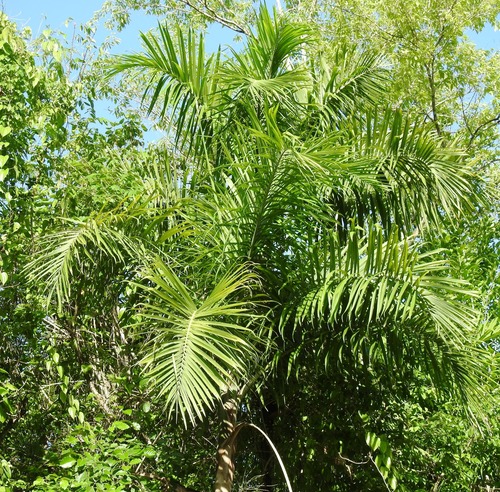
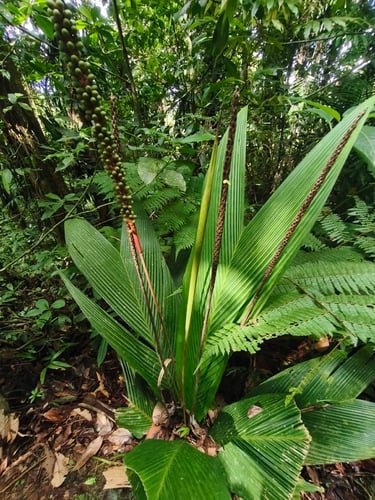
iNaturalist· cc-by-nc
(c) nydia-rivera, some rights reserved (CC BY-NC)
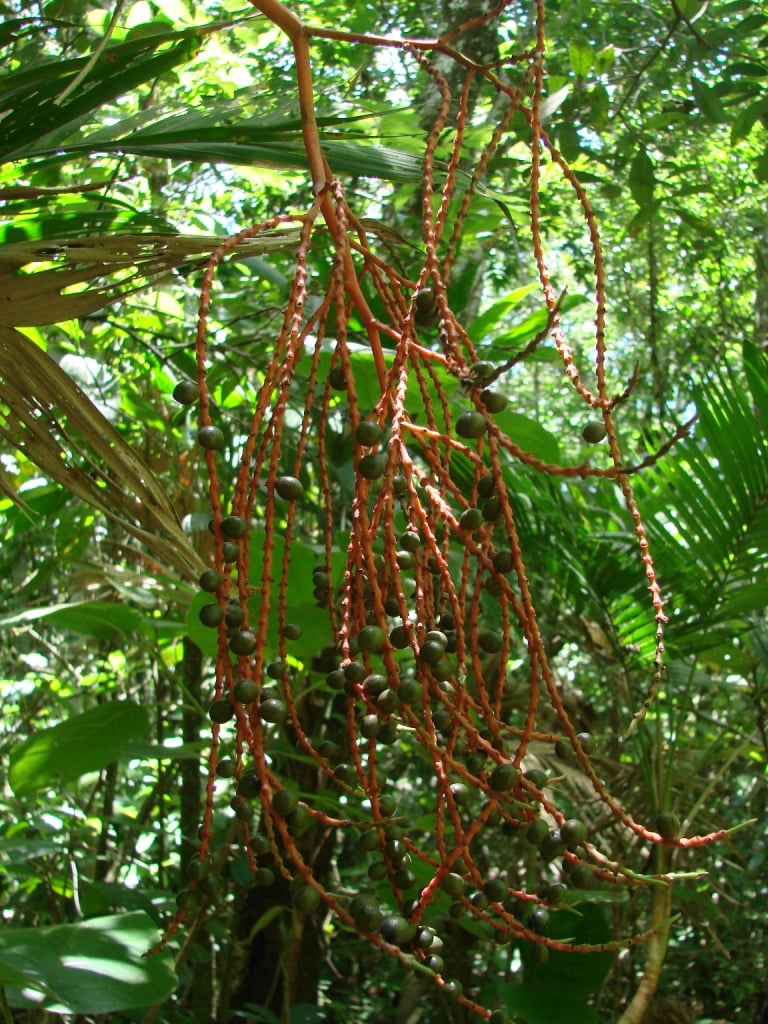
iNaturalist· cc-by-nc
(c) Janice Ramírez Castro, some rights reserved (CC BY-NC), uploaded by Janice Ramírez Castro
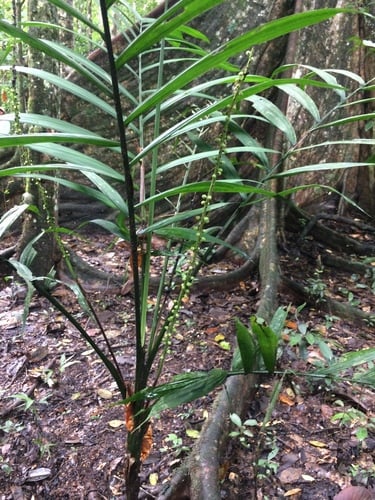
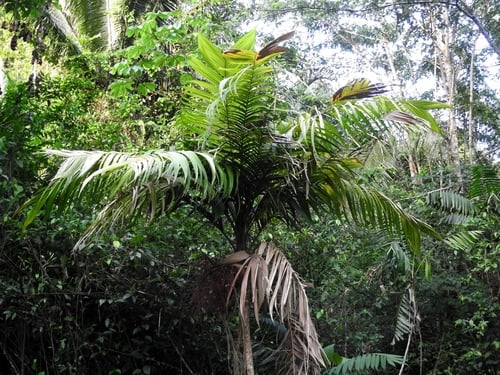
iNaturalist· cc-by-nc
(c) A Emmerson, some rights reserved (CC BY-NC), uploaded by A Emmerson
Summary
Source: WikipediaAdonidia merrillii, the Manila palm, is a palm tree species endemic to the Philippines (Palawan and Danjugan Island). This palm was cultivated for centuries in the Philippines before becoming a staple in the West. It is reportedly naturalized in the West Indies and Florida. It is commonly known as the "Christmas palm" because its fruits become bright scarlet and tend to be that color in winter. This palm is typically fairly small and slender, normally attaining 25 feet or 8 meters in height but has attained over 40 feet in some instances. Most plants maintain 5-7 fronds when young, gradually building up the crown as the palm ages, and sometimes reaches 10-12 fronds when mature.
Description
A palm resembling the betel nut palm but not as tall. It is a solitary palm but often planted in twos. The trunk is slim and single. It often tapers. It can be 5-7 m high. The leaves are strongly arched. They are feather shaped. They are dull green above and whitish below. They curl in on each other. The leaf scars are clearly visible. The crown shaft is prominent and green. The fruiting stalk is about 40-50 cm long. The flower cluster differs from betel nut. The flowers are greenish-white. The bright crimson fruit are on whitish fruit stalks and with ornamental sheaths. The fruit are about 3 cm long and occur in large numbers below the crown shaft.
Edible Uses
The buds are eaten raw or cooked. The nuts are chewed as a substitute for betelnut. The palm heart and cabbage are also edible portions.
Traditional Uses
The bud is eaten raw or cooked. The nut is chewed instead of betelnut.
This uses section is brief — help expand it
Distribution
It is a tropical plant. Abundant in limestone formations in Palawan and the Calamianes Islands (Coron) in the Philippines. It will not tolerate frost. Plants are cold sensitive. They will grow easily in a sunny position. They are usually in coastal areas. In Townsville palmetum.
Where It Grows
Africa, Asia, Australia, Belize, Central America, Comoros, Cook Is., Dominican Republic, East Africa, Fiji, Guam, Haiti, Hawaii, India, Indochina, Indonesia, Leeward Is., Marquesas, North America, Pacific, Philippines*, Puerto Rica, SE Asia, Solomon Islands, Thailand, Trinidad-Tobago, USA, Winward Is.,
Cultivation
Plants can be grown from seeds. Fresh seeds germinate readily.
Other Uses
The brown seed is marked by a network of light grooves. It is used, generally in combination with other seeds, to make ornamental necklaces. The tree is prized by beekeepers for its high quality nectar.
Production
Seedling growth is rapid.
Notes
There are 20 Adonidia species.
Synonyms
Also Known As
Adonidia palm, Bunga, Bungang Jolo, Christmas palm, Dwarf royal palm, Maak nuan, Merrill's palm, Oringoring, Palem putri
References (17)
- Alegado, A. M. & De Guzman, R. B., 2014, Indigenous food crops of the Aetas tribe in the Philippines and their traditional methods of food preparation. in Promotion of Underutilized Indigenous Food Resources for Food Security and Nutrition in Asia and Pacific. FAO. Bangkok p 160
- Blomberry, A. & Rodd, T., 1982, Palms. An informative practical guide. Angus & Robertson. p 176
- Bodkin, F., 1991, Encyclopedia Botanica. Cornstalk publishing, p 1006
- Brickell, C. (Ed.), 1999, The Royal Horticultural Society A-Z Encyclopedia of Garden Plants. Convent Garden Books. p 1041
- Dharani, N., 2002, Field Guide to common Trees & Shrubs of East Africa. Struik. p 297
Show all 17 references Hide references
- French, B.R., 2010, Food Plants of Solomon Islands. A Compendium. Food Plants International Inc. p 287
- Gentes Herb. 8:501. 1957
- Gibbons, M., 2003, A pocket guide to Palms. Chartwell Books. p 30
- Haynes, J., & McLaughlin, J., 2000, Edible palms and Their Uses. University of Florida Fact sheet MCDE-00-50-1 p 2 (As Adonidia merrillii)
- Hibbert, M., 2002, The Aussie Plant Finder 2002, Florilegium. p 305
- Jacquat, C., 1990, Plants from the Markets of Thailand. D.K. Book House p 110
- Jones, D.L., 1994, Palms throughout the World. Smithtonian Institution, Washington. p 56, 372
- Kew Plants of the World Online
- Menninger, E.A., 1977, Edible Nuts of the World. Horticultural Books. Florida p 143
- Monsalud, M.R., Tongacan, A.L., Lopez, F.R., & Lagrimas, M.Q., 1966, Edible Wild Plants in Philippine Forests. Philippine Journal of Science. p 517
- Staples, G.W. and Herbst, D.R., 2005, A tropical Garden Flora. Bishop Museum Press, Honolulu, Hawaii. p 626 (Drawing)
- Sukarya, D. G., (Ed.) 2013, 3,500 Plant Species of the Botanic Gardens of Indonesia. LIPI p 748