Veitchia joannis
H. Wendl.
Niusawa
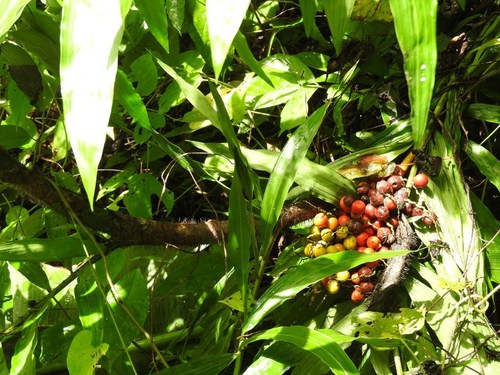
iNaturalist· cc-by
(c) Forest & Kim Starr, some rights reserved (CC BY)
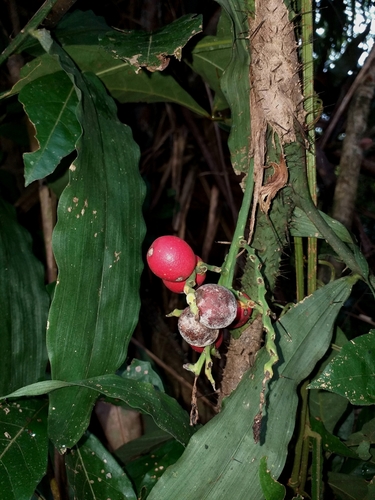
iNaturalist· cc-by-nc
(c) Nkululeko Mkhize, some rights reserved (CC BY-NC)
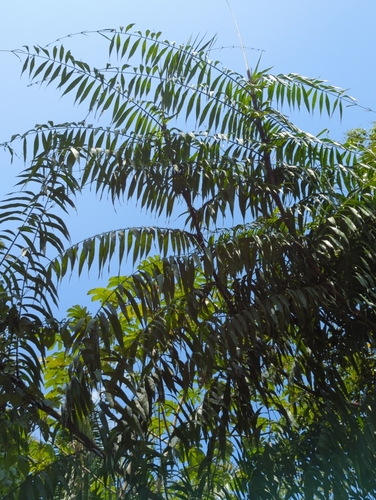
iNaturalist· cc-by-nc
(c) Nkululeko Mkhize, some rights reserved (CC BY-NC)
Summary
Source: WikipediaVeitchia joannis, the Joannis palm, is a species of flowering plant in the family Arecaceae. It is native to Fiji and reportedly naturalised in Tonga.
Description
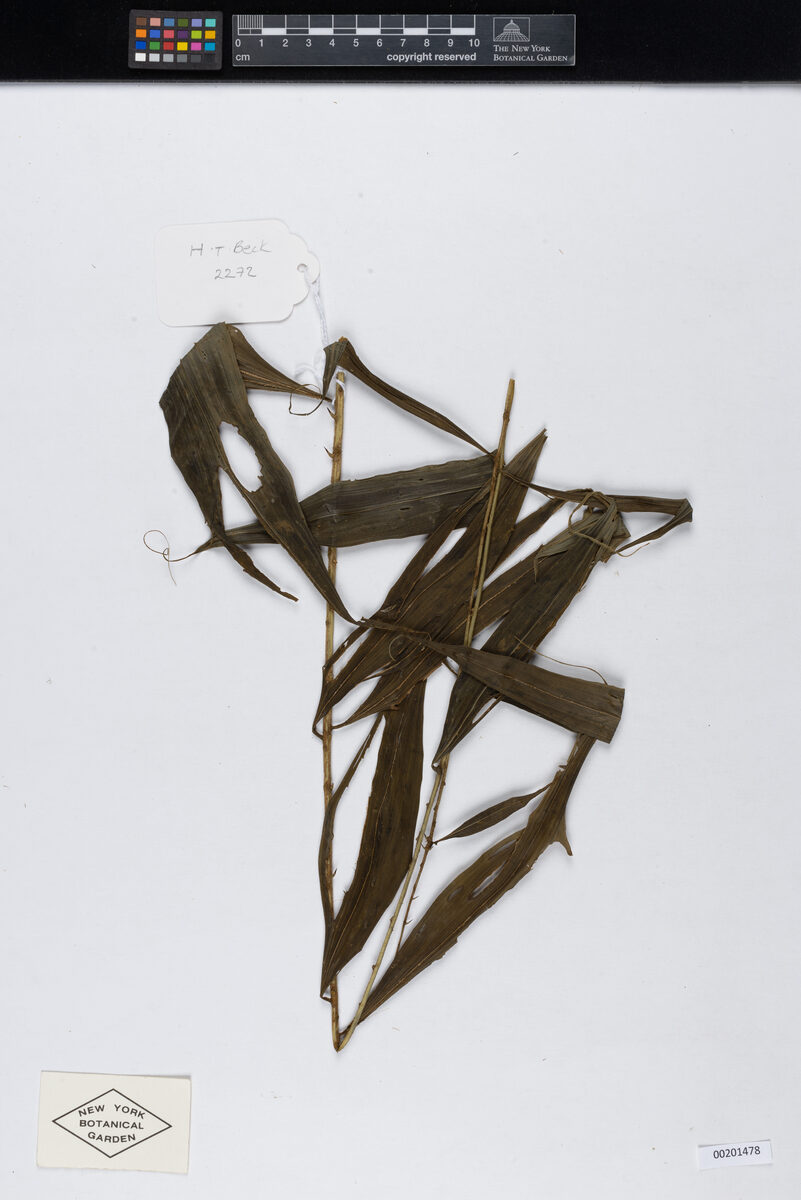
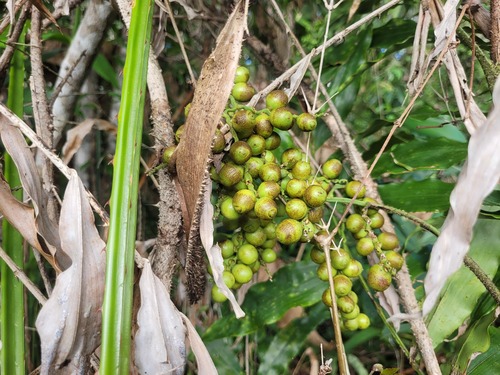
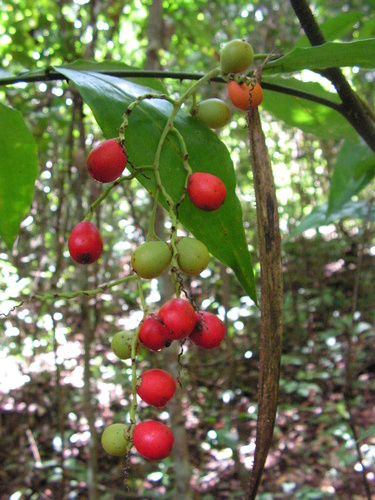
A solitary palm. It can grow to 30 m high. The trunk is slender and grey. It is about 35 cm across. The fronds are dark green and shiny and arch over. They are 3 m long. The leaves are feather like. The leaflets droop. The plant does not have thorns. It has a prominent crown-shaft. The flowering stalk is at the base of the crown-shaft. The flowers are of one sex but both sexes occur on the one plant. The fruit are in dense clusters. The fruit are red and sharply beaked. The fruit are 5-6 cm long.
Edible Uses
The seeds are edible when eaten immature. The palm heart is edible and eaten raw.
Traditional Uses
The seeds are edible. They are eaten immature. The palm heart is edible and eaten raw.
This uses section is brief — help expand it
Distribution
A tropical plant. They grow in forests and rainforests from sea level to moderate altitudes. It is relatively cold tolerant. It cannot survive frost. Young plants are best is a lightly shaded position. Mature plants can grow in full sun. They need an organically rich, well drained soil. In Fiji they grow from sea level to 800 m altitude. In Townsville palmetum.
Where It Grows
Australia, Fiji, Pacific, SE Asia, Singapore,
Cultivation
Mature seed germinate easily. Germination can take 4-6 weeks or several months. Seedlings should not be allowed to dry out.
Production
It is fast growing. They respond to side dressings of nitrogen fertiliser.
Other Information
The seeds are eaten especially by children.
Notes
There are 8 Veitchia species.
Synonyms
Also Known As
Niuroro, Saqiwa, Taqwa
References (20)
- Balick, M.J. and Beck, H.T., (Ed.), 1990, Useful palms of the World. A Synoptic Bibliography. Colombia p 204
- Blomberry, A. & Rodd, T., 1982, Palms. An informative practical guide. Angus & Robertson. p 175
- Bodkin, F., 1991, Encyclopedia Botanica. Cornstalk publishing, p 1006
- Brickell, C. (Ed.), 1999, The Royal Horticultural Society A-Z Encyclopedia of Garden Plants. Convent Garden Books. p 1041
- Clarke, W.C. & Thaman, R.R., 1993, Agroforestry in the Pacific Islands: Systems for sustainability. United Nations University Press. New York. p 89
Show all 20 references Hide references
- Dowe, J.L., 1989, Palms of the South-West Pacific. Palm and Cycad Society of Australia. p 76
- Haynes, J., & McLaughlin, J., 2000, Edible palms and Their Uses. University of Florida Fact sheet MCDE-00-50-1 p 13
- Hedrick, U.P., 1919, (Ed.), Sturtevant's edible plants of the world. p 672
- Hibbert, M., 2002, The Aussie Plant Finder 2002, Florilegium. p 305
- Johnson, D.V., 1998, Tropical palms. Non-wood Forest products 10. FAO Rome. p 79
- Jones, D.L., 1994, Palms throughout the World. Smithtonian Institution, Washington. p 56, 372
- Menninger, E.A., 1977, Edible Nuts of the World. Horticultural Books. Florida p 143
- Reis, S. V. and Lipp, F. L., 1982, New Plant Sources for Drugs and Foods from the New York Botanical Garden herbarium. Harvard. p 19
- Riffle, R.L. & Craft, P., 2003, An Encyclopedia of Cultivated Palms. Timber Press. p 469
- B. Seemann, Fl. vit. 271. 1868
- Smith, A.C., 1979, Flora Vitiensis Nova: A New flora of Fiji, Hawai Botanical Gardens, USA Vol 1 p 421
- Watling, D., 2005, Palms of the Fiji Islands. Environmental Consultants (Fiji) Ltd. p 134, 169
- Whistler, W. A., in Cox. P. A. et al (Ed.), 1991, Islands, Plants and Polynesians. Dioscorides Press Portland, Oregon. p 60
- Wickens, G.E., 1995, Edible Nuts. FAO Non-wood forest products. FAO, Rome. p171
- World Checklist of Useful Plant Species 2020. Royal Botanic Gardens, Kew