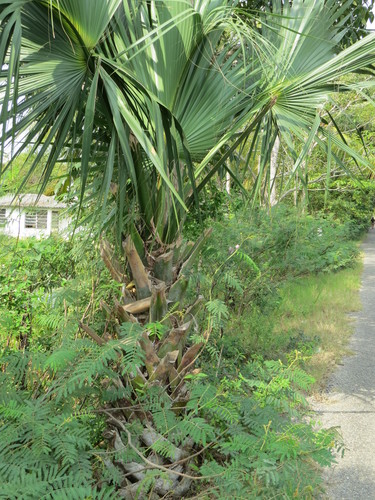
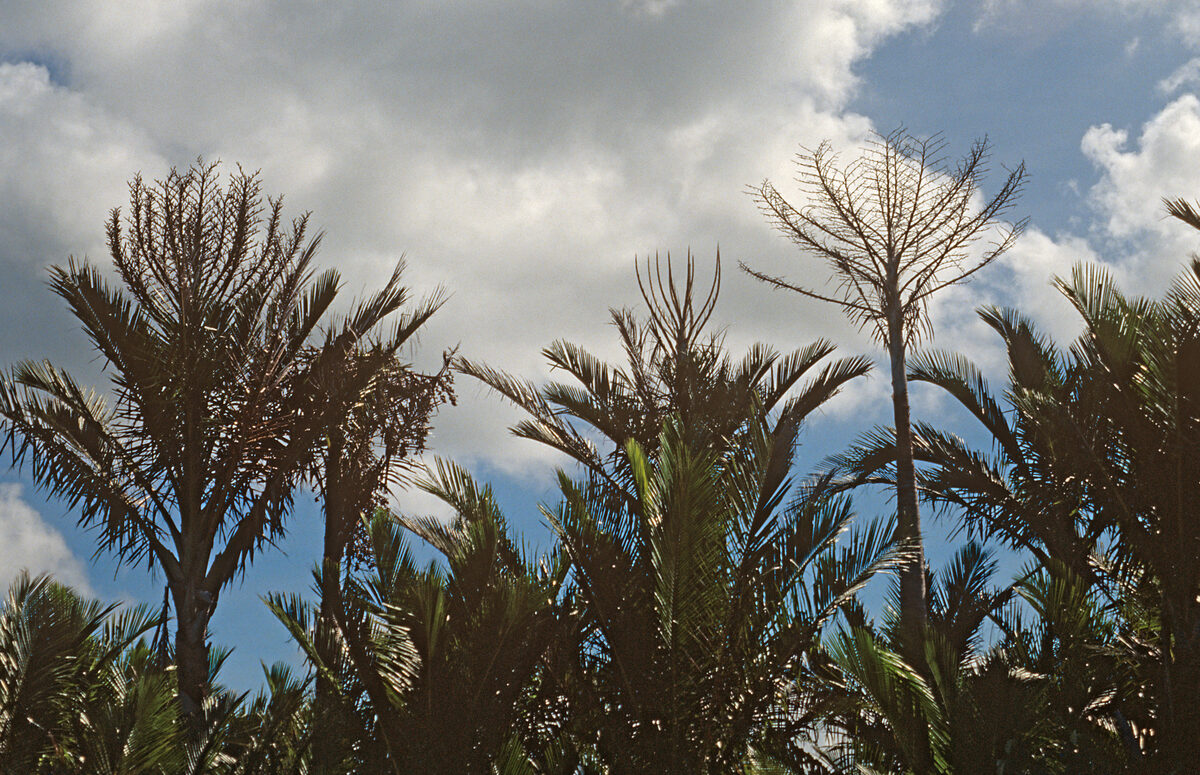
Calamus flagellum
Griff.
Wai lao, Wai mon
wikimedia· cc-by-sa
Wikimedia Commons - Steve Fitzgerald
Summary
Source: WikipediaCalamus flagellum is an Asian species of tropical forest rattan liana in the family Arecaceae, with a native range from Assam to southern China and Indo-China. Its name in Vietnamese is mây song, while the Lepcha of Sikkim call it rim.
Description
A rattan. It is a tall thin cane. It climbs to 30 m tall. It is 4-5 cm across. The stems are black coloured. They have prickles. The leaf sheaths are greenish yellow with dark brown hairs. It has flattened spines 6 cm long. The leaf stalks ate 3 m long and there are 27-35 narrow leaflets on each side. The middle ones are 60-70 cm long by 4-5 cm wide. The flowering shoot is 7 m long. The fruit are yellow to brown and oval. They are 3 cm long by 2 cm wide.
Edible Uses
The soft inner young shoots are eaten as a vegetable or made into chutney. The ripe fruits are eaten fresh or chewed as a masticatory.
Traditional Uses
The soft inner young shoots are eaten as a vegetable. They are also used for chutney. The ripe fruit are eaten. They are also chewed as a masticatory.
Distribution
It is a tropical plant. In Laos it grows between 800-950 m altitude. In Thailand it grows between 1,400-1,500 m altitude. In Yunnan.
Where It Grows
Asia, Bangladesh, Bhutan, China, Himalayas, India, Indochina, Laos, Myanmar, Northeastern India, SE Asia, Sikkim, Thailand, Tibet, Vietnam,
Cultivation
Most species in this genus are more or less vigorous climbing plants in rainforests. Leaves of young plants are normally damaged if exposed to too much light, though leaves of older plants will usually tolerate full sun. In general, plants are likely to grow best with their roots in the shade but with enough gap in the canopy to encourage their stems to grow up towards the light. They are also likely to grow best in a humus-rich soil. Many of the species require fairly moist conditions for good growth, in fact several of them grow in wet soils or in areas with seasonal inundation - where we have the information it will be included under the plant’s habitat. Overhead shade should be manipulated at about 6-monthly intervals for the first 2 - 3 years of a young plant’s life to ensure they receive sufficient light to grow vigorously. About 40 - 50% light penetration is generally considered to be ideal for promoting stem growth. Little care is needed once the seedlings are established. It is important, however, to weed the area surrounding the seedlings occasionally until the plants are more than 2 metres tall. A dioecious species, both male and female forms need to be grown if fruit and seed are required.
Propagation
Seed - it has a fairly short viability and is best sown as soon as it is ripe.
Other Uses
Although the stems are long and flexible, they are seldom used for basketry etc because they are too soft.
Notes
There are 375-400 Calamus species. There are 175 species in tropical Asia.
Synonyms
Also Known As
Betgainra, Golar, Jeng bet, Nagagola-bet, Nagbet, Noga gola bet, Phyakre, Raiding, Tar rame, Yoyi
References (12)
- Angami, A., et al, 2006, Status and potential of wild edible plants of Arunachal Pradesh. Indian Journal of Traditional Knowledge 5(4) October 2006, pp 541-550
- Dobriyal, M. J. R. & Dobriyal, R., 2014, Non Wood Forest Produce an Option for Ethnic Food and Nutritional Security in India. Int. J. of Usuf. Mngt. 15(1):17-37
- Dransfield, J., et al, 2004, A preliminary checklist to Thai Palms. Thai For. Bull. (Bot.) 32:32-72
- Evans, T. D., et al, 2002, A Synopsis of the Rattans (Arecaceae: Calamoideae) of Laos and Neighbouring Parts of Indochina. Kew Bulletin, Vol. 57, No. 1 (2002), pp. 1-84
- Murtem, G. & Chaudhrey, P., 2016, An ethnobotanical note on wild edible plants of Upper Eastern Himalaya, India. Brazilian Journal of Biological Sciences, 2016, v. 3, no. 5, p. 63-81
Show all 12 references Hide references
- Patiri, B. & Borah, A., 2007, Wild Edible Plants of Assam. Geethaki Publishers. p 150
- Sarma, H., et al, 2010, Updated Estimates of Wild Edible and Threatened Plants of Assam: A Meta-analysis. International Journal of Botany 6(4): 414-423
- Sundriyal, M., et al, 1998, Wild edibles and other useful plants from the Sikkim Himalaya, India. Oecologia Montana 7:43-54
- Sundriyal, M., et al, 2004, Dietary Use of Wild Plant Resources in the Sikkim Himalaya, India. Economic Botany 58(4) pp 626-638
- Suresh, C. P. et al, 2014, Wild Edible Tree Fruits of Sikkim Himalayas. Journal of Tree Sciences 33(1)
- Taram, M., et al, 2018, Wild Food Plant Resources of Komkar Adi Tribe of Upper Siang District in Arunachal Pradesh, India. Bulletin of Arunachal Forest Research, Vol. 33(2), 27-35
- Wild edible plants of Himachal Pradesh