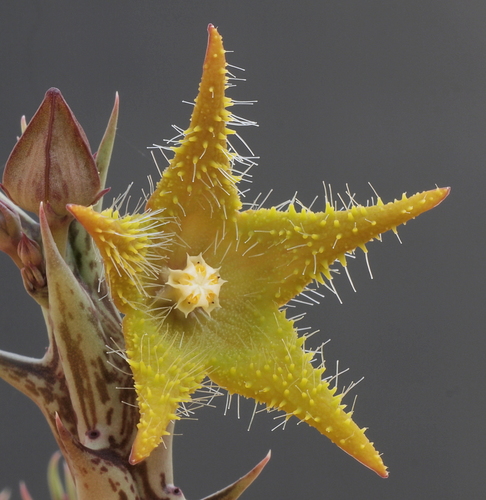
Vallaris solanacea
(Roth) Kuntze
Bread flower vine
iNaturalist· cc-by-nc
(c) Devendra Bhardwaj, some rights reserved (CC BY-NC), uploaded by Devendra Bhardwaj
iNaturalist· cc-by-nc
(c) Radha Veach, some rights reserved (CC BY-NC)
iNaturalist· cc-by-nc
(c) Radha Veach, some rights reserved (CC BY-NC)
Description
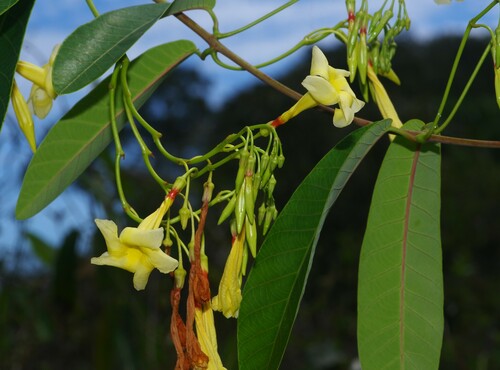
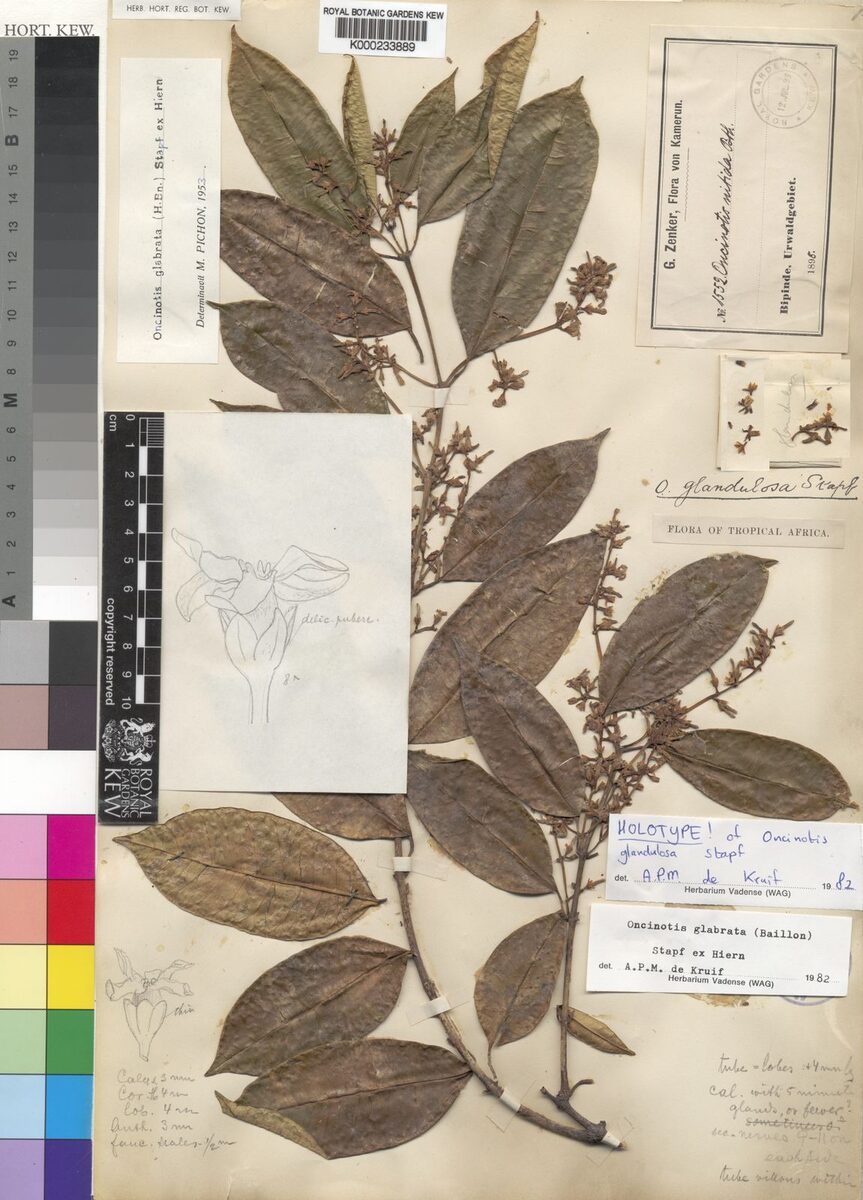
A large twining shrub or tree. It grows 10 m long. The bark is smooth and it has a yellowish-white covering. The stems have milky sap. The leaves are 5-12 cm long by 2.5 cm wide. They are sword shaped. The groups of flowers are in the axils of leaves. The flowers are white and have a scent. The fruit is 10-15 cm long by 3-5 cm wide.
Edible Uses
The flowers, fruit, leaves, and seeds are all edible.
Traditional Uses
The flowers and fruit are edible.
This uses section is brief — help expand it
Known Hazards
The stems contain milky sap, typical of Apocynaceae family members which often contain toxins; caution advised.
Distribution
A tropical plant. In southern China it grows in forest thickets and along streams from sea level to 2,700 m above sea level.
Where It Grows
Asia, Cambodia, China, Himalayas, India, Indochina, Indonesia, Laos, Malaysia, Myanmar, Nepal, Pakistan, SE Asia, Sri Lanka, Thailand, Vietnam,
Cultivation
Plants can be grown from seeds.
Notes
There are 5 or 6 Vallaris species.
Synonyms
Also Known As
Bhadramunja, Bhadravalli, Bonokonerinoi, Bugadi, Chama nat, Chamari-ki-vel, Dudhe lahara, Dudhi bel, Dudhi, Gohingia, Haparmali, Hopormoli, Jokhuni-lew, Jookamallechettu, Karilew, Kerak nasi, Kesidang, Khinbok, Madhumaalati, Mai-soh-sangia, Nabu-nwe, Nityamalle, Pallamalletivva, Puttupodarayayala, Ramsar, Safed bel, Vishalayakrit
References (11)
- Ambasta, S.P. (Ed.), 2000, The Useful Plants of India. CSIR India. p 667
- Arora, R. K., 2014, Diversity in Underutilized Plant Species - An Asia-Pacific Perspective. Bioversity International. p 47
- Burkill, I.H., 1966, A Dictionary of the Economic Products of the Malay Peninsula. Ministry of Agriculture and Cooperatives, Kuala Lumpur, Malaysia. Vol 2 (I-Z) p 2258 (As Vallaris heynii)
- [(Annathuvarei, Arurong, Attarasu, Attupuvarasu, Aulekapasi, Bhel-kol, Bhillaura, Bol-diktak, Bolnokhap, Dieng-soh-lyndot, Eeruponaku, Gadalopong, Gamari, Gamhar, Garum, Jongheia, Kaadukanji, Kanji, Kattukunil, Kaykumbala, Kenlo, Kurong, Malankumil, Monda, Pambarakkumbil, Panigambhar, Panijambhar, Panipitho, Petari, Pindara, Pitali, Pithakuma-kendlow, Pithaliya, Ramritha, Raypbunul, Thing-chingel, Thungplam, Tumri, Vellar,) wrong location ]
- Flora of China. 16:177, 1995,
Show all 11 references Hide references
- Martin, F.W. & Ruberte, R.M., 1979, Edible Leaves of the Tropics. Antillian College Press, Mayaguez, Puerto Rico. p 175 (As Vallaris heynii)
- Milow, P., et al, 2013, Malaysian species of plants with edible fruits or seeds and their evaluation. International Journal of Fruit Science. 14:1, 1-2
- Revis. gen. pl. 2:417. 1891
- Sukarya, D. G., (Ed.) 2013, 3,500 Plant Species of the Botanic Gardens of Indonesia. LIPI p 986
- Wild edible plants of Himachal Pradesh
- World Checklist of Useful Plant Species 2020. Royal Botanic Gardens, Kew