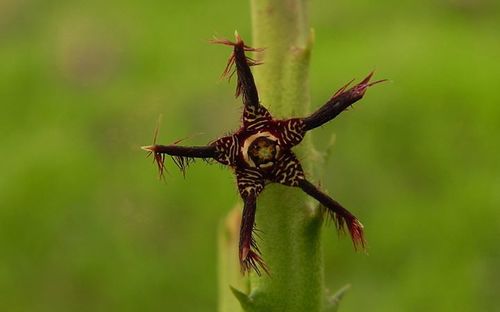
Asclepias speciosa
Torr.
Showy milkweed, Davis milkweed
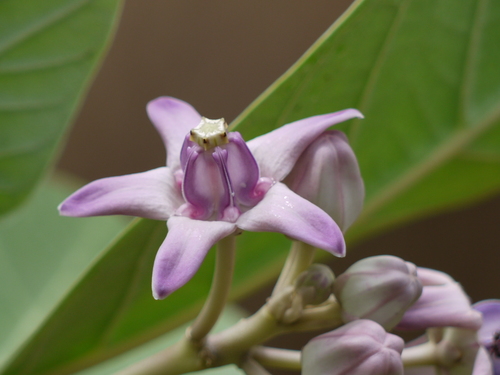
iNaturalist· cc-by-nc
(c) stormcatcher, some rights reserved (CC BY-NC), uploaded by stormcatcher
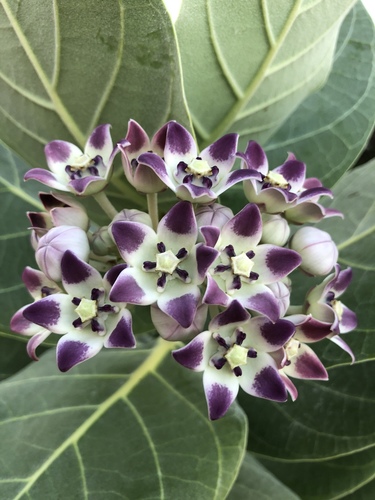
iNaturalist· cc-by-nc
(c) tnewman, some rights reserved (CC BY-NC)
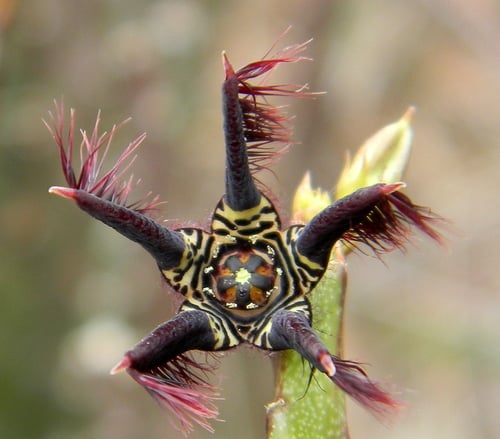
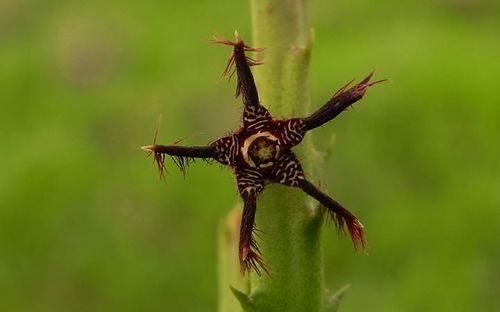
iNaturalist· cc-by-nc
(c) tatudtink, some rights reserved (CC BY-NC)
Summary
Source: WikipediaAsclepias speciosa is a milky-sapped perennial plant in the dogbane family (Apocynaceae), known commonly as the showy milkweed and is found in the western half of North America.
Description
A shrub. It grows 60-90 cm high and spreads 60-90 cm wide. It is bushy and hairy. The leaves are large and oval. They are 8-16 cm long. The flowers are small and shaped like stars. They are pink or purple. They are in round clusters 8 cm across. The fruit is a large soft pod. It has many seeds.
Edible Uses
Edible Parts: Flowers Leaves Oil Root Seed Seedpod Shoots Edible Uses: Gum Oil Sweetener Edible parts (after boiling): Leaves, flowers, buds, young pods, sap (gum). Flavor: Mild, compared to green beans; flowers very sweet from Preparation: Single boiling sufficient; syrup can be made from nectar. Traditional Use: Sap used for gum; greens as potherbs [2-3]. Flower buds - raw or cooked. They taste somewhat like peas. They can be used to thicken soups. Young shoots and leaves - cooked. An asparagus substitute. One report says that they should not be eaten raw, whilst another says that the young spring shoots were eaten raw by some native American tribes. Tips of older shoots are cooked like spinach. Young seed pods, 3 - 4 cm long - raw or cooked. Very appetizing. The immature pods are peeled before being eaten. Flower clusters can be boiled down to make a sugary syrup or they can be eaten raw. Seed - raw. A chewing gum can be made from the latex contained in the stem and leaves. Root. No further details are given, but another report says that the root can be poisonous in large quantities.
Traditional Uses
The young shoots are boiled and eaten like asparagus. The tender tops of older plants are steamed and eaten as a potherb. The gum has been used for chewing. The flower buds, fruit, roots and raw flowers are also used. Caution: It contains bitter alkaloids. Plants should be cooked.
Medicinal Uses
Antirheumatic Antiseptic Ophthalmic Skin Stomachic VD Warts The latex is used as a cure for warts. The latex needs to be applied at least once a day of a period of some weeks for it to be effective. The latex has antiseptic properties and has been used to treat skin sores, cuts and ringworm. A decoction of the plant tops can be strained and used to treat blindness and snow-blindness. The root is either chewed when fresh, or dried, ground into a powder then boiled, and used in the treatment of stomach ache. A decoction of the roots has been used in small doses to treat venereal diseases and also to treat coughs, especially from TB. A poultice of the mashed roots has been applied to rheumatic joints. Some caution should be employed when using the root since there is a report that it can be poisonous in large quantities.
Known Hazards
Native Americans used fiber in the stems for rope, basketry, and nets. Some Native Americans used the milky sap for medicinal purposes. Although care is needed to distinguish the species from highly toxic species in the genus, the young leaves and seed pods of A. speciosa can be boiled and eaten.
Distribution
It is a temperate plant. It grows along roadsides and in moist grassland. It suits hardiness zones 2-9.
Where It Grows
Australia, Canada, North America, USA,
Cultivation
Experimental Crop Industrial Crop: Hydrocarbon Management: Hay. Form: Tall perennial, 60–150 cm tall. Leaves: Large, opposite, velvety. Flowers: Pink to purple starbursts, highly fragrant. Habitat: Western U.S.; roadsides, fields, streams. Bloom: May–August. Hardiness: USDA zones 3–9. Weed Potential: Spreads vigorously but not aggressively invasive.Prefers a well-drained light rich or peaty soil and a sunny position. A very ornamental plant, it is closely related to A. purpurascens. The roots can spread quite freely when the plant is in a suitable position. Many members of this genus seem to be particularly prone to damage by slugs. The young growth in spring is especially vulnerable, but older growth is also attacked and even well-established plants have been destroyed in wet years. Plants resent root disturbance and are best planted into their final positions whilst small. The flower of many members of this genus can trap insects between its anther cells, the struggles of the insect in escaping ensure the pollination of the plant.
Propagation
Seed - best sown in a greenhouse as soon as it is ripe in the autumn or in late winter. We have also had good results from sowing the seed in the greenhouse in early spring, though stored seed might need 2 - 3 weeks cold stratification. Germination usually takes place in 1 - 3 months at 18°c. As soon as the seedlings are large enough to handle, prick them out into individual pots and grow them on in the greenhouse for their first winter. Plant out when they are in active growth in late spring or early summer and give them some protection from slugs until they are growing away strongly. Division in spring. With great care since the plant resents root disturbance. Pot the divisions up and place them in a lightly shaded position in the greenhouse until they are growing away strongly, then plant them out in the summer, giving them some protection from slugs until they are established.. Basal cuttings in late spring. Use shoots about 10cm long with as much of their white underground stem as possible. Pot them up individually and place them in a lightly shaded position in a greenhouse until they are rooting and growing actively. If the plants grow sufficiently, they can be put into their permanent positions in the summer, otherwise keep them in the greenhouse until the following spring and when they are in active growth plant them out into their permanent positions. Give them some protection from slugs until they are established.
Other Uses
Dye Fibre Gum Latex Oil Paper Pollution Stuffing A good quality tough fibre is obtained from the bark. It is used in twine, coarse cloth, paper etc. The fibre is 10 - 45mm long. It is easily harvested in late autumn, after the plants have died down, by simply pulling it off the dead stems. When making paper, the stems can be retted by leaving them in the ground until they are dry in the winter or they can be harvested in late summer, the leaves removed and the stems steamed to remove the fibre. The stems are then cooked for two hours with lye and pounded with mallets. The paper colour varies from white to creamy green depending on how the paper is made. If the stems are used in the summer the latex will often find its way onto the fibres and is hard to remove. The seed floss is used to stuff pillows etc, or is mixed with other fibres to make cloth. It has also been used as a baby's nappy. The seed floss is a Kapok substitute, used in Life Jackets or as a stuffing material. It is very water repellent. The floss has also been used to mop up oil spills at sea. Rubber can be made from latex contained in the leaves and the stems. The yield is up to 3%. Pods contain an oil and a wax which are of potential importance. A green dye is obtained from the flowers and leaves combined. Asclepias speciosa is a specific Monarch butterfly food and habitat plant. The dogbane-milkweed family Asclepias, Apocynum, Calotropis, and Trachomitum spp) has been used for fiber industrial crops for millennia with a number in cultivation as regional crops. All of these crops are dual-purpose fibres, offering bast fibres from the stem and seed finer or ‘floss’ in the fruit pods. Many have also been identified as potential hydrocarbon crops due to high latex content. Could be integrated into various agroforestry systems rather than as monocultures [1-1]. Special Uses Carbon Farming
Notes
There are 100 Asclepias species.
Synonyms
References (19)
- Ann. Lyceum Nat. Hist. New York 2:218. 1827
- Beckstrom-Sternberg, Stephen M., and James A. Duke. "The Foodplant Database." http://probe.nalusda.gov:8300/cgi-bin/browse/foodplantdb.(ACEDB version 4.0 - data version July 1994)
- Bircher, A. G. & Bircher, W. H., 2000, Encyclopedia of Fruit Trees and Edible Flowering Plants in Egypt and the Subtropics. AUC Press. p 44
- Bremness, L., 1994, Herbs. Collins Eyewitness Handbooks. Harper Collins. p 152
- Brickell, C. (Ed.), 1999, The Royal Horticultural Society A-Z Encyclopedia of Garden Plants. Convent Garden Books. p 144
Show all 19 references Hide references
- Cormack, R. G. H., 1967, Wild Flowers of Alberta. Commercial Printers Edmonton, Canada. p 270
- Cundall, P., (ed.), 2004, Gardening Australia: flora: the gardener's bible. ABC Books. p 194
- Elias, T.S. & Dykeman P.A., 1990, Edible Wild Plants. A North American Field guide. Sterling, New York p 106
- Facciola, S., 1998, Cornucopia 2: a Source Book of Edible Plants. Kampong Publications, p 31
- http://www.stoller-eser.com/Flora/ethnobotany_table.htm
- Kermath, B. M., et al, 2014, Food Plants in the Americas: A survey of the domesticated, cultivated and wild plants used for Human food in North, Central and South America and the Caribbean. On line draft. p 95
- Lim, T. K., 2015, Edible Medicinal and Non Medicinal Plants. Volume 9, Modified Stems, Roots, Bulbs. Springer p 13
- MacKinnon, A., et al, 2009, Edible & Medicinal Plants of Canada. Lone Pine. p 258
- Plants for a Future database, The Field, Penpol, Lostwithiel, Cornwall, PL22 0NG, UK. http://www.scs.leeds.ac.uk/pfaf/
- Saunders, C.F., 1948, Edible and Useful Wild Plants. Dover. New York. p 119
- Stubbs, R. D., 1966, An investigation of the Edible and Medicinal Plants used by the Flathead Indians. MA thesis University of Montana. p 41
- Tozer, F., 2007, The Uses of Wild Plants. Green Man Publishing. p 41
- Turner, N., 1997, Food Plants of Interior First Peoples. Royal BC Museum Handbook p 165
- World Checklist of Useful Plant Species 2020. Royal Botanic Gardens, Kew