Valerianella locusta
(L.) Betcke
Corn salad, White pot herb, European lamb's lettuce
iNaturalist· cc-by
(c) Christian Berg, some rights reserved (CC BY), uploaded by Christian Berg
iNaturalist· cc-by-nc
(c) John D Reynolds, some rights reserved (CC BY-NC), uploaded by John D Reynolds
iNaturalist· cc-by-nc
(c) Noah Strycker, some rights reserved (CC BY-NC), uploaded by Noah Strycker
Summary
Source: WikipediaA small annual herb reaching 0.3 m (1 ft) tall. Flowers from April to June with seeds ripening May to July. Hermaphroditic and self-fertile. Grows in light sandy, medium loamy, and heavy clay soils across mildly acid to basic pH ranges. Requires full sun and tolerates both dry and moist conditions. Hardy to UK zone 5.
Description
A low growing hardy annual herb. It produces rosettes of spoon shaped leaves. It grows 10-30 cm high and spreads to 40 cm across. The stem is low and branches from near the base. The stems are slender, forked and angular. The leaves at the base are in a ring and those on the stems are opposite in 3-4 pairs. They do not have leaf stalks. Leaves are round, and dark green. They are 10 cm long and 2 cm wide. The flowers are purplish-blue. They are in clusters at the ends of branches. They are funnel shaped and 2 mm long. The fruit are diamond shaped and 2-4 mm wide. One side is fertile and has one seed.
Edible Uses
Young leaves are eaten raw and have a very mild, delicate flavour that seems to melt in the mouth; they can be added to salads in generous quantity. Through successional sowings, leaves can be available all year round, requiring protection only in colder winters. The flowers and flowering stems are also eaten raw.
Traditional Uses
The leaves are eaten mostly fresh. They are used in salads. They can be lightly cooked and used in soups and omelettes. The flowers and flower stalks are eaten.
Medicinal Uses
None known.
Distribution
It is a cold temperate plant. It will grow in most types of soil. It is frost resistant. A very cold resistant vegetable suitable for high altitude areas in the tropics. It cannot tolerate drought. Plants should be in a sunny position. It grows best in cool seasons. It grows in temperate regions as far north as 60°N. It suits hardiness zones 5-9. Tasmania Herbarium. Hobart Botanical Gardens.
Where It Grows
Africa, Andorra, Argentina, Asia, Australia, Balkans, Bosnia, Britain, Caucasus, Central Africa, Chile, China, Congo, Croatia, Czech Republic, East Africa, Europe*, Falklands, France, Germany, Hungary, Ireland, Italy, Korea, Luxembourg, Macedonia, Madagascar, Mediterranean, Malaysia, Mediterranean, Netherlands, North Africa, North America, Pacific, Papua New Guinea, PNG, SE Asia, Serbia, Sicily, Slovakia, Slovenia, South America, Spain, Switzerland, Taiwan, Tasmania, Tunisia, Turkey, Türkiye, USA,
Cultivation
Plants are mostly grown from seed. Plants should be 10-25 cm apart. They can be transplanted.
Propagation
For a continuous supply of leaves, sow seed successionally from early spring to late summer in situ. A late summer sowing may also succeed and would provide edible leaves through winter.
Other Uses
None known.
Production
Leaves are harvested one by one. Leaves are available in mid winter in temperate areas.
Other Information
It is a commercially cultivated vegetable. In Papua New Guinea seeds are available in stores and it is just being tried out.
Notes
Also put in the family Valerianaceae.
Synonyms
Also Known As
Ackersalat, Bel boccone, Canonigos, Corn salad, Dolcetes, Doucette, Dulceta, Feldsalad, Fetticus, Field salad, Gaddinedda, Hog salad, Lamb’s lettuce, Mache, Marsh salad, Matovilec, Navadni motovilec, Nut lettuce, Raiponce, Rapunzel, Valerianela, Valerianita
References (51)
- Arora, R. K., 2014, Diversity in Underutilized Plant Species - An Asia-Pacific Perspective. Bioversity International. p 46
- Bianchini, F., Corbetta, F., and Pistoia, M., 1975, Fruits of the Earth. Cassell. p 52 (As Valerianella olitoria)
- Biscotti, N. et al, 2018, The traditional food use of wild vegetables in Apulia (Italy) in the light of Italian ethnobotanical literature. Italian Botanist 5:1-24
- Bodkin, F., 1991, Encyclopedia Botanica. Cornstalk publishing, p 1004 (Also as Valerianella olitoria)
- Bonet, M. A. & Valles, J., 2002, Use of non-crop food vascular plants in Montseny biosphere reserve (Catalonia, Iberian Peninsula). International Journal of Food Sciences and Nutrition (2002) 53, 225–248
Show all 51 references Hide references
- Bosch, C.H., 2004. Valerianella locusta (L.) Laterr. [Internet] Record from Protabase. Grubben, G.J.H. & Denton, O.A. (Editors). PROTA (Plant Resources of Tropical Africa), Wageningen, Netherlands. < http://database.prota.org/search.htm>. Accessed 23 October 2009
- BOUQUET, (As Valerianella olitoria)
- Burkill, I.H., 1966, A Dictionary of the Economic Products of the Malay Peninsula. Ministry of Agriculture and Cooperatives, Kuala Lumpur, Malaysia. Vol 2 (I-Z) p 2257 (As Valerianella olitoria)
- Cerne, M., 1992, Wild Plants from Slovenia used as Vegetables. Acta Horticulturae 318
- Cheifetz, A., (ed), 1999, 500 popular vegetables, herbs, fruits and nuts for Australian Gardeners. Random House p 104
- Cundall, P., (ed.), 2004, Gardening Australia: flora: the gardener's bible. ABC Books. p 1454
- Denes, A., et al, 2012, Wild plants used for food by Hungarian ethnic groups living in the Carpathian Basin. Acta Societatis Botanicorum Poloniae 81 (4): 381-396 (Also as Valerianella olitoria)
- Facciola, S., 1998, Cornucopia 2: a Source Book of Edible Plants. Kampong Publications, p 244
- Fl. bordel. ed. 2, 93. 1821
- French, B.R., 1986, Food Plants of Papua New Guinea, A Compendium. Asia Pacific Science Foundation p 151
- Geraci, A., et al, 2018, The wild taxa utilized as vegetables in Sicily (Italy): a traditional component of the Mediterranean diet. Journal of Ethnobiology and Ethnomedicine (2018) 14:14
- Gouldstone, S., 1983, Growing your own Food-bearing Plants in Australia. Macmillan p 167
- Grubben, G. J. H. and Denton, O. A. (eds), 2004, Plant Resources of Tropical Africa 2. Vegetables. PROTA, Wageningen, Netherlands. p 542
- Hammer, K. & Spahillari, M., 1999, Crops of European origin. in Report of a networking group on minor crops. IPGRI p 47
- Hedrick, U.P., 1919, (Ed.), Sturtevant's edible plants of the world. p 670 (As Valerianella olitoria)
- Herklots, G. A. C., 1972, Vegetables in South-East Asia. Allen & Unwin. p 141 (As Valerianella olitoria)
- Hist. pl. Palat. 1:30. 1776 (As Valerianella olitoria)
- http://www.botanic-gardens-ljubljana.com/en/plants
- Hu, Shiu-ying, 2005, Food Plants of China. The Chinese University Press. p 690 (As Valerianella olitoria)
- Irving, M., 2009, The Forager Handbook, A Guide to the Edible Plants of Britain. Ebury Press p 298
- Kays, S. J., and Dias, J. C. S., 1995, Common Names of Commercially Cultivated Vegetables of the World in 15 languages. Economic Botany, Vol. 49, No. 2, pp. 115-152
- Kermath, B. M., et al, 2014, Food Plants in the Americas: A survey of the domesticated, cultivated and wild plants used for Human food in North, Central and South America and the Caribbean. On line draft. p 898
- Kiple, K.F. & Ornelas, K.C., (eds), 2000, The Cambridge World History of Food. CUP p 1763 (Also as Valerianella olitoria)
- Luczaj, L., 2012, Ethnobotanical review of wild edible plants of Slovakia. Acta Societatis Botanicorum Poloniae 81(4):245-255
- Luczaj, L. et al, 2014, Wild Food Plants of Dalmatia (Croatia). in A. Pieroni, C. L. Quave (eds.), Ethnobotany and Biocultural Diversities in the Balkans, p 143
- Mabey, R., 1973, Food for Free. A Guide to the edible wild plants of Britain, Collins. p 82
- Malezas Comestibles del Cono Sur, INTA, 2009, Buernos Aires
- Martin, F.W. & Ruberte, R.M., 1979, Edible Leaves of the Tropics. Antillian College Press, Mayaguez, Puerto Rico. p 224 (As Valerianella olitoria)
- Michael, P., 2007, Edible Wild Plants and Herbs. Grub Street. London. p 68
- Moerman, D. F., 2010, Native American Ethnobotany. Timber Press. p 588
- Pasta, S., et al, 2020, An Updated Checklist of the Sicilian Native Edible Plants: Preserving the Traditional Ecological Knowledge of Century-Old Agro-Pastoral Landscapes. Frontiers in Plant Science. Volume 11|Article 388
- Plants for a Future database, The Field, Penpol, Lostwithiel, Cornwall, PL22 0NG, UK. http://www.scs.leeds.ac.uk/pfaf/
- Redzic, S. J., 2006, Wild Edible Plants and their Traditional Use in the Human Nutrition in Bosnia-Herzegovina. Ecology of Food and Nutrition, 45:189-232
- Reis, S. V. and Lipp, F. L., 1982, New Plant Sources for Drugs and Foods from the New York Botanical Garden herbarium. Harvard. p 296
- Sansanelli, S., et al, 2014, Wild food plants traditionall consumed in the area of Bologna (Emilia Romagna region, Italy). Journal of Ethnobiology and Ethnomedicine 10:69
- Schneider, E., 2001, Vegetables from Amaranth to Zucchini: The essential reference. HarperCollins. p 376 (Also as Valerianella olitoria)
- Self, M., 199, Phoenix Seeds catalogue. p 5
- Smith, K., 1998. Growing Uncommon Fruits and Vegetables. New Holland. p 109
- Smith, N., Mori, S.A., et al, 2004, Flowering Plants of the Neotropics. Princeton. p 386
- Tardio, J., et al, Ethnobotanical review of wild edible plants in Spain. Botanical J. Linnean Soc. 152 (2006), 27-71
- Terra, G.J.A., 1973, Tropical Vegetables. Communication 54e Royal Tropical Institute, Amsterdam, p 80 (As Valerianella olitoria)
- USDA, ARS, National Genetic Resources Program. Germplasm Resources Information Network - (GRIN). [Online Database] National Germplasm Resources Laboratory, Beltsville, Maryland. Available: www.ars-grin.gov/cgi-bin/npgs/html/econ.pl (10 April 2000)
- Tronickova, E. & Krejcova, Z., 1987, Ortaggi, Instituto Geografico de Agostini, Cecoslovacchia. p 98 (As Valerianella olitoria)
- van Wyk, B., 2005, Food Plants of the World. An illustrated guide. Timber press. p 377
- Vorstenbosch, T., et al, 2017, Famine food of vegetal origin consumed in the Netherlands during World War II. Journal of Ethnobiology and Ethnomedicine (2017) 13:63
- World Checklist of Useful Plant Species 2020. Royal Botanic Gardens, Kew
More from Caprifoliaceae
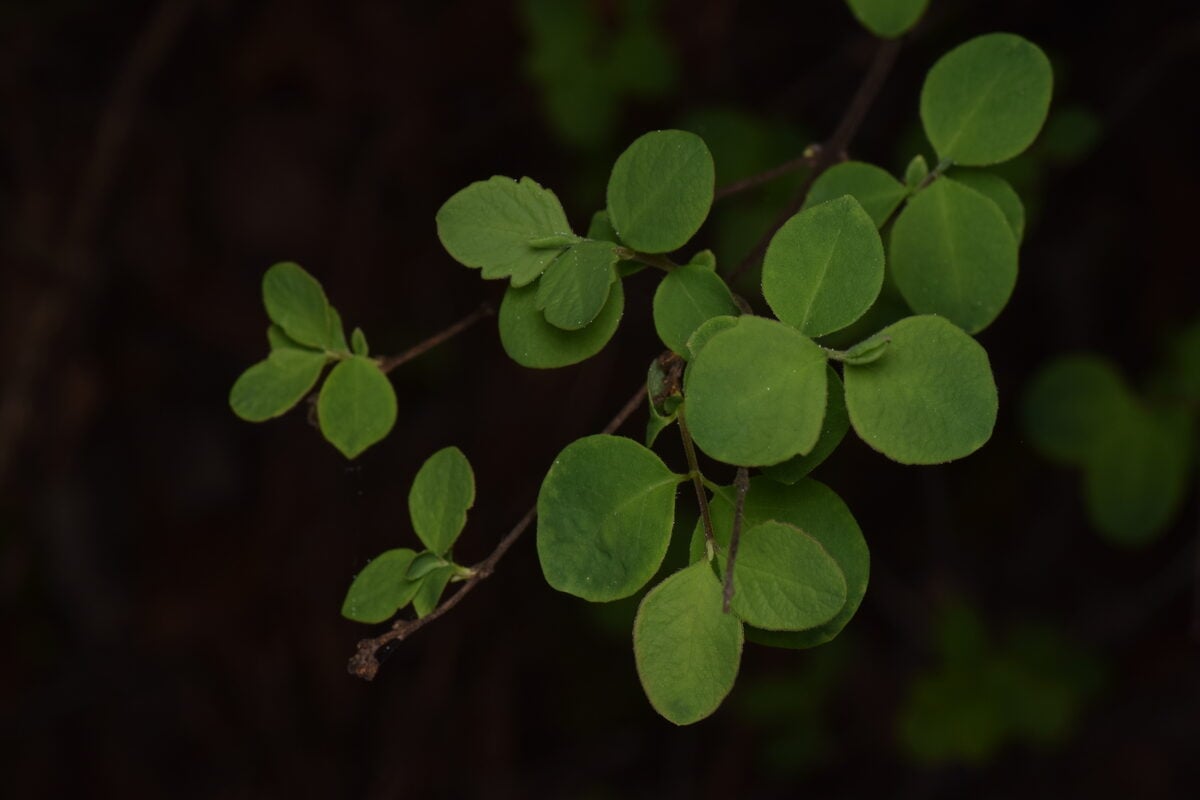
Symphoricarpos albus laevigatus - (Fernald.)S.F.Blake.
Snowberry
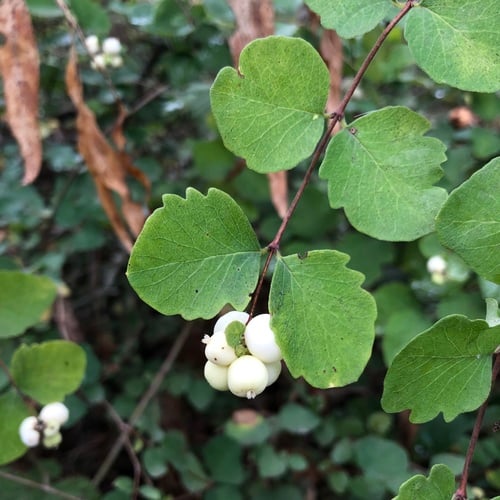
Symphoricarpos albus var. laevigatus
Common Snowberry, Coral-berry, Indian Currant
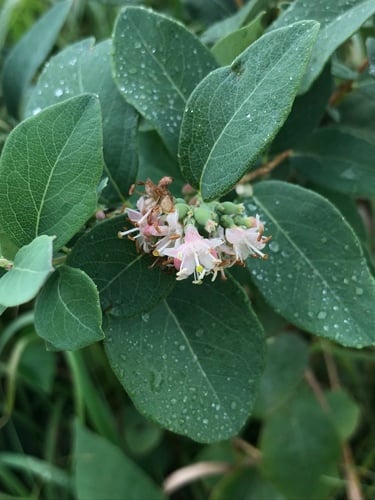
Symphoricarpos occidentalis
Western Snowberry, Wolfberry, Buckbush
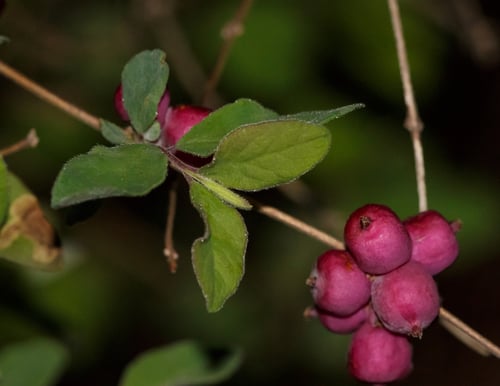
Symphoricarpos orbiculatus
Coralberry, Indian currant
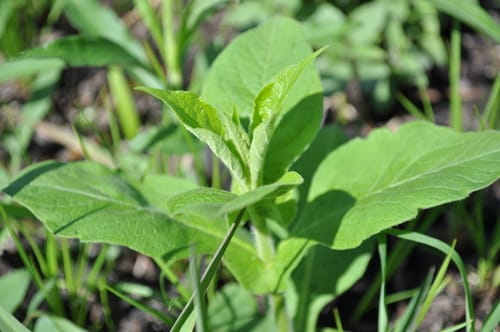
Triosteum perfoliatum
Fever root, Wild coffee, Tinker's weed
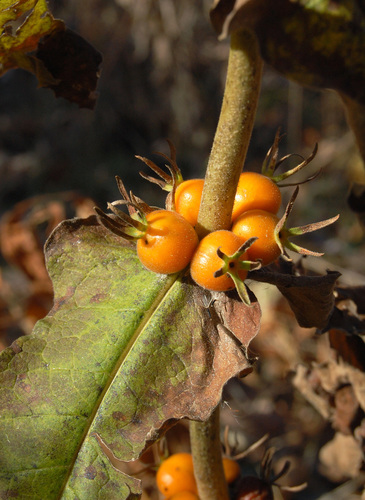
Triosteum perfoliatum var. aurantiacum
Wild coffee, Horse gentian