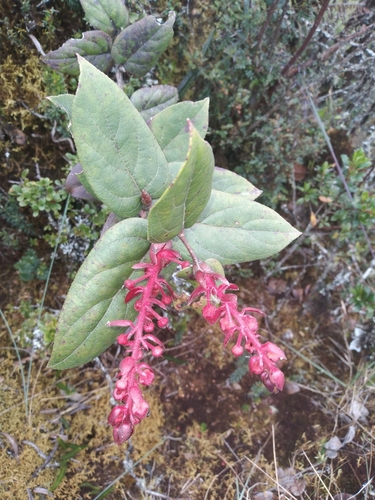
Polycodium stamineum
(L.) Greene
Wild Blueberry, Deerberry, Squaw huckleberry
iNaturalist· cc-by-nc
(c) Spencer Hardy, some rights reserved (CC BY-NC)
iNaturalist· cc-by-nc
(c) abelkinser, some rights reserved (CC BY-NC)
iNaturalist· cc-by-nc
(c) abelkinser, some rights reserved (CC BY-NC)
Description
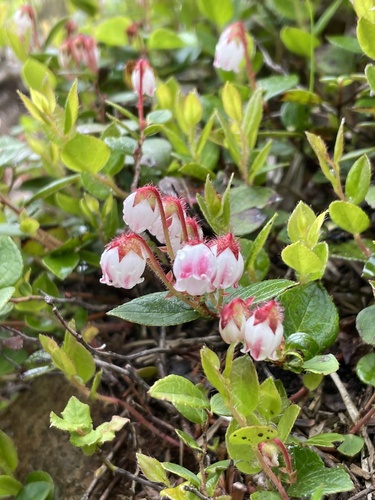
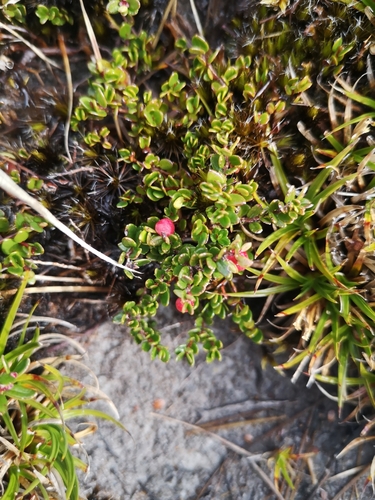
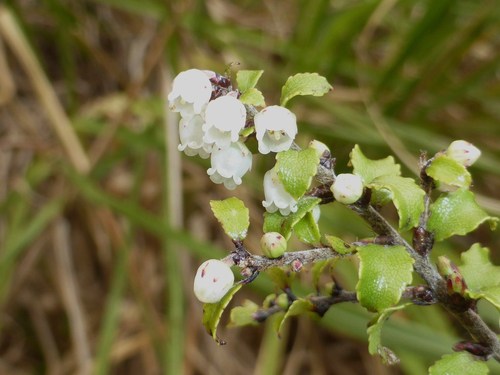
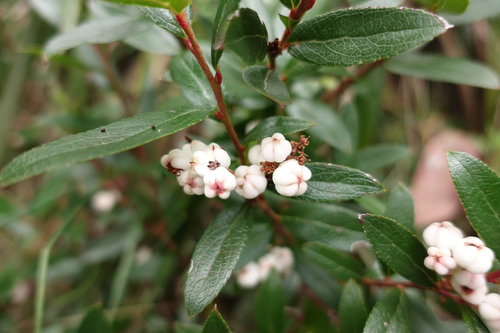
A shrub. It grows 1.5 m high and spreads 0.9 m wide. It loses its leaves during the year. The leaves have smooth edges and are covered with small hairs. They change colour in autumn. The flowers are white to cream. They are in sprays. The fruit are greenish-blue berries.
Edible Uses
The berries can be eaten raw, though quality varies; they are better cooked and eaten cold, and can be made into jelly.
Traditional Uses
The fruit can be eaten raw although quality varies. They are better cooked then eaten cold. They can be used for jelly.
This uses section is brief — help expand it
Known Hazards
Fruit quality is variable.
Distribution
It is a temperate plant. It suits hardiness zones 5-9.
Where It Grows
Australia, North America, USA,
Synonyms
References (7)
- Cundall, P., (ed.), 2004, Gardening Australia: flora: the gardener's bible. ABC Books. p 1454 (As Vaccinium stramineum)
- Duke, J.A., 1992, Handbook of Edible Weeds. CRC Press. p 208 (As Vaccinium stramineum)
- Facciola, S., 1998, Cornucopia 2: a Source Book of Edible Plants. Kampong Publications, p 99 (As Vaccinium stramineum)
- Hedrick, U.P., 1919, (Ed.), Sturtevant's edible plants of the world. p 668 (As Vaccinium stramineum)
- http://en.hortipedia.com
Show all 7 references Hide references
- Plants for a Future database, The Field, Penpol, Lostwithiel, Cornwall, PL22 0NG, UK. http://www.scs.leeds.ac.uk/pfaf/ (As Vaccinium stramineum)
- Sp. pl. 1:350. 1753 (As Vaccinium stramineum)