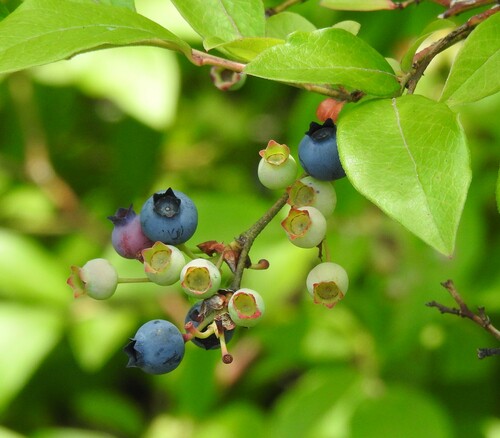
Vaccinium sprengelii
(G. Don) Sleumer ex Rehd.
iNaturalist· cc-by-nc
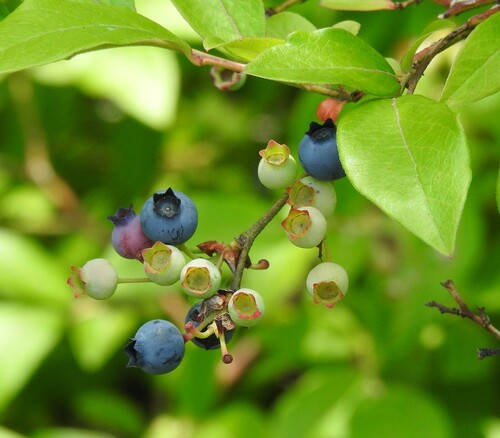
(c) Thomas Calame, some rights reserved (CC BY-NC), uploaded by Thomas Calame
Summary
An evergreen shrub growing to 3m tall, hardy to UK zone 7. Flowers appear from May to June. Suited to light sandy to medium loamy, well-drained soils with mildly acid to very acid pH. Tolerates semi-shade or full sun and prefers moist soil.
Description
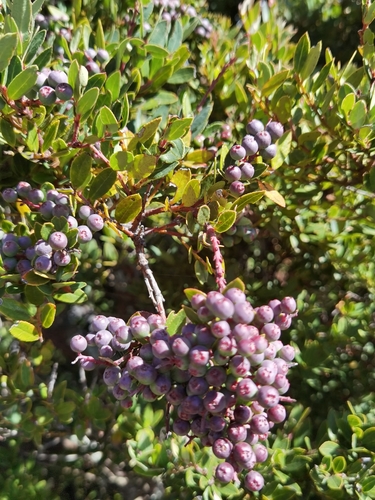
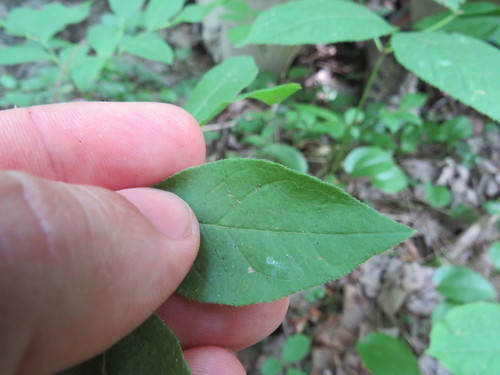
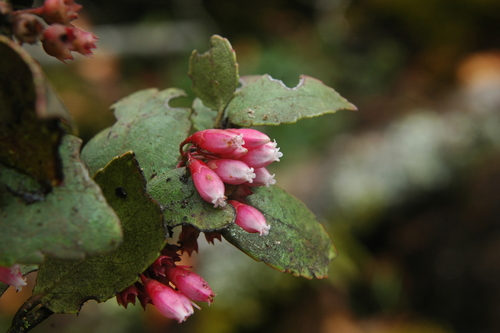
A shrub. It loses its leaves during the winter. It can grow 3 m high. Young growth is red coloured. The leaves are oval or sword shaped and 4-9 cm long by 2-4 cm wide. They have long narrow points. The flowers are on the underside of long flowering stalks. These are white tinged with pink. The flowering groups are 7.5 cm long and the flowers are 5 mm long. The fruit are small purple-black berries.
Edible Uses
The fruit can be eaten raw or cooked and is about 5mm in diameter. The leaves are also edible, though no further details are recorded.
Traditional Uses
The fruit are edible. The young leaves are boiled and used as a vegetable. The flowers are eaten raw.
This uses section is brief — help expand it
Medicinal Uses
None known.
Distribution
It is a subtropical plant. It grows in cool climates but cannot tolerate heavy frosts.
Where It Grows
Asia, China, Himalayas, India, Indochina, Laos, Myanmar, Northeastern India, SE Asia, Thailand, Vietnam,
Cultivation
Plants are grown from seed or cuttings.
Propagation
Sow seed in late winter in a greenhouse using a lime-free potting mix, barely covering it. Stored seed may need up to 3 months of cold stratification. Alternatively, sow fresh seed in a greenhouse as soon as it is ripe. When seedlings reach about 5cm tall, prick them out into individual pots and grow on in a lightly shaded position in the greenhouse for at least their first winter. Plant out into permanent positions in late spring or early summer, after the last expected frosts. Cuttings of half-ripe wood, 5–8cm with a heel, can be taken in August in a frame, though this method is slow and difficult. Layering can be done in late summer or early autumn — though one report favours spring — and takes 18 months. Suckers can be divided in spring or early autumn.
Other Uses
None known.
Dangerous Lookalikes
This plant can be confused with the following toxic species. Always verify identification carefully before consuming any wild plant.
Deadly Nightshade
Atropa belladonna
Joan Simon from Barcelona, España
Vaccinium sprengelii
Vaccinium sprengelii
(c) Thomas Calame, some rights reserved (CC BY-NC), uploaded by Thomas Calame
Deadly Nightshade: Tall herbaceous plant (1-2m), single shiny black cherry-sized berries, star-shaped calyx, large oval leaves, sweet but dangerous taste.
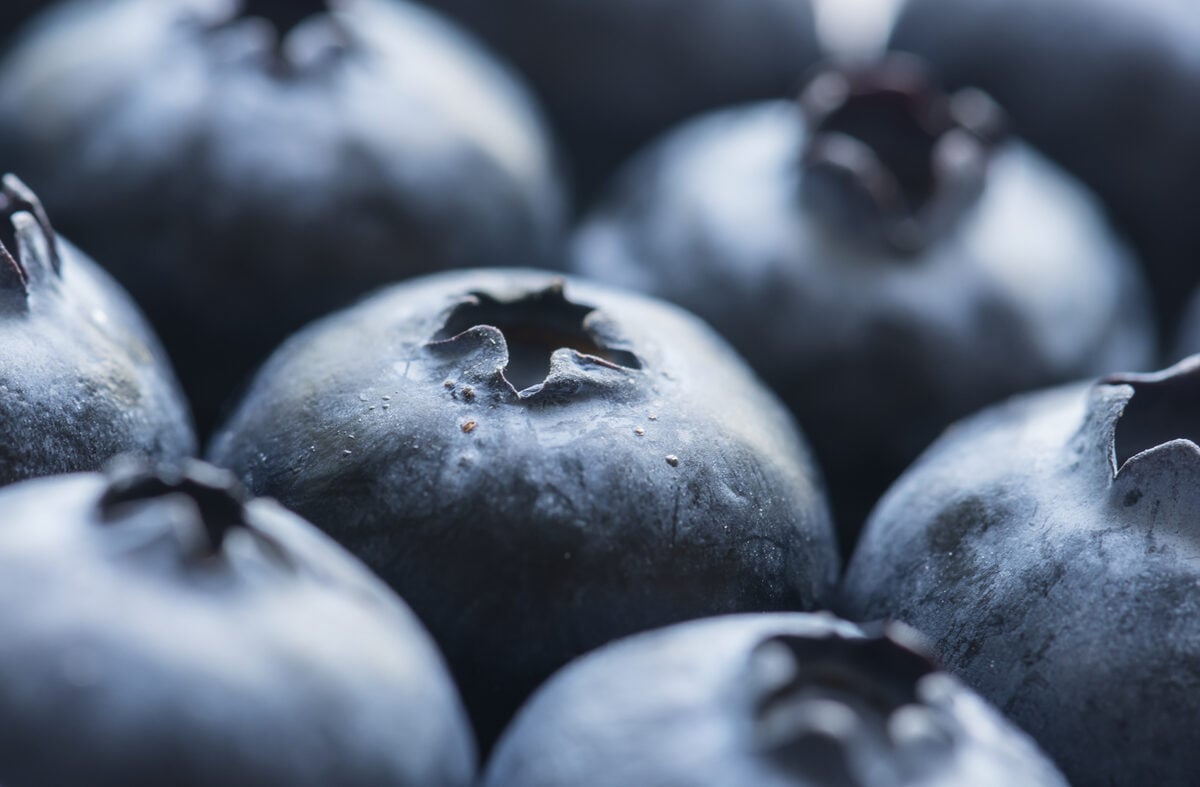
Vaccinium sprengelii: Low woody shrub, berries in clusters with crown/remnant calyx ring, sweet taste.
Synonyms
Also Known As
Dieng-jing, Dieng-soh-rongkham, Sir-kam, Sirte, Sontram sprengel
References (10)
- Ambasta, S.P. (Ed.), 2000, The Useful Plants of India. CSIR India. p 666
- Anderson, E. F., 1993, Plants and people of the Golden Triangle. Dioscorides Press. p 224
- Dobriyal, M. J. R. & Dobriyal, R., 2014, Non Wood Forest Produce an Option for Ethnic Food and Nutritional Security in India. Int. J. of Usuf. Mngt. 15(1):17-37
- Kar, A., et al, 2013, Wild Edible Plant Resources used by the Mizos of Mizoram, India. Kathmandu University Journal of Science, Engineering and Technology. Vol. 9, No. 1, July, 2013, 106-126
- Maisuthisakul, P., 2012, Phenolic Constituents and Antioxidant Properties of some Thai Plants. Chp. 9 in Book Phytochemicals - A Global Perspective of Their Role in Nutrition and Health
Show all 10 references Hide references
- Plants for a Future database, The Field, Penpol, Lostwithiel, Cornwall, PL22 0NG, UK. http://www.scs.leeds.ac.uk/pfaf/
- Singh, H.B., Arora R.K.,1978, Wild edible Plants of India. Indian Council of Agricultural Research, New Delhi. p 73
- Singh, H.B., Arora R.K.,1978, Wild edible Plants of India. Indian Council of Agricultural Research, New Delhi. p 38, 73 (As Vaccinium donianum)
- Singh, V. B., et al, (Ed.) Horticulture for Sustainable Income and Environmental Protection. Vol. 1 p 220
- Trehane, J., 2004, Blueberries, Cranberries and Other Vacciniums. Timber Press. p 241