Calluna vulgaris
(L.) Hull
Broom, Scotch Heather
iNaturalist· cc-by-nc-nd
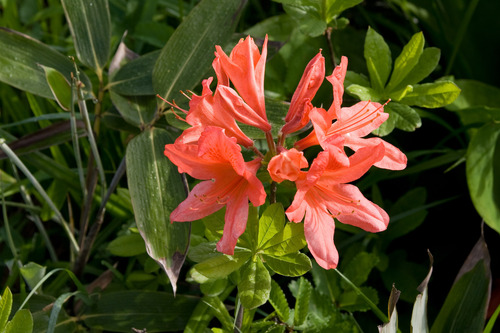
(c) Karsten, some rights reserved (CC BY-NC-ND), uploaded by Karsten
iNaturalist· cc-by-nc-sa
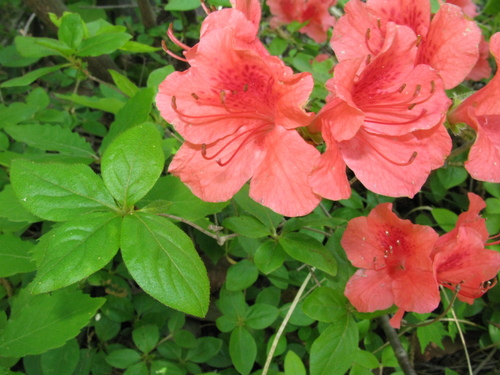
(c) Ramunė Vakarė, some rights reserved (CC BY-NC-SA)
iNaturalist· cc-by-nc
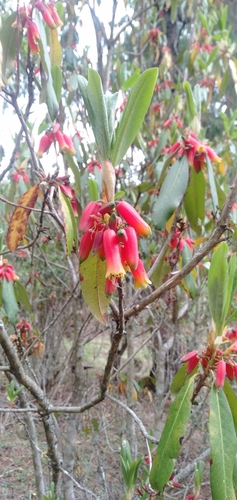
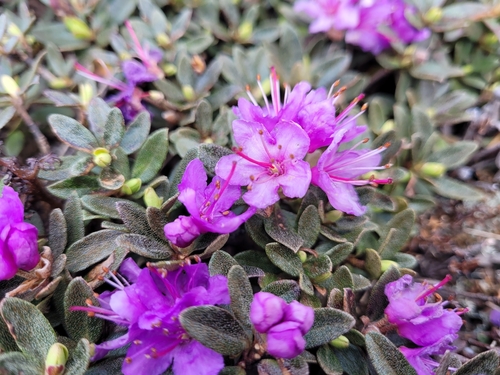
(c) Mindaugas N., some rights reserved (CC BY-NC), uploaded by Mindaugas N.
Summary
Source: WikipediaEvergreen shrub growing to 0.6 m tall and 0.5 m wide, hardy to UK zone 4. Flowers July to October with seeds ripening October to November. Hermaphrodite, pollinated by bees, flies, moths, butterflies, and wind. Attracts wildlife. Tolerates light sandy and medium loamy soils, including nutritionally poor soil. Prefers mildly acid to very acid pH. Grows in semi-shade or full sun; handles maritime exposure and prefers dry to moist soil.
Description
A shrub 10-60 cm high. It spreads 10-75 cm wide. It is evergreen. The leaves are in overlapping pairs. The are in opposite pairs and look like scales. The leaves turn brown or dull purple in winter. The flowers are small and bell shaped. They can be white, pink, red or purple. They occur in dense clusters. There are many named varieties.
Edible Uses
Edible Parts: Shoots Edible Uses: Condiment Tea A tea is made from the flowering stems. A kind of mead was once brewed from the flowers and the young shoots have been used instead of hops to flavour beer.
Traditional Uses
The flowers are used to produce Heather ale in Scotland. The dried flower heads are used for tea. The flowers can be substituted for hops in beer making. It is also the source of heather honey. The seeds have been used in famine bread in Poland and Estonia.
Medicinal Uses
Antianxiety Antirheumatic Antiseptic Bach Cholagogue Depurative Diaphoretic Diuretic Expectorant Sedative Urinary Vasoconstrictor Heather has a long history of medicinal use in folk medicine. In particular it is a good urinary antiseptic and diuretic, disinfecting the urinary tract and mildly increasing urine production. The flowering shoots are antiseptic, astringent, cholagogue, depurative, diaphoretic, diuretic, expectorant, mildly sedative and vasoconstrictor. The plant is often macerated and made into a liniment for treating rheumatism and arthritis, whilst a hot poultice is a traditional remedy for chilblains. An infusion of the flowering shoots is used in the treatment of coughs, colds, bladder and kidney disorders, cystitis etc. A cleansing and detoxifying plant, it has been used in the treatment of rheumatism, arthritis and gout. The flowering stems are harvested in the autumn and dried for later use. The plant is used in Bach flower remedies - the keywords for prescribing it are 'Self-centredness' and 'Self-concern'. A homeopathic remedy is made from the fresh branches. It is used in the treatment of rheumatism, arthritis and insomnia.
Distribution
It is a temperate plant. It is frost hardy. They need full sun and well-drained acid soil. It grows naturally in the moors in the colder parts of Britain. Soils they are acid and of low fertility suit it best. It suits hardiness zones 4-9. Tasmania Herbarium.
Where It Grows
Australia, Azores, Balkans, Belarus, Bosnia, Britain, Estonia, Europe, Falklands, Lithuania, Luxembourg, Mediterranean, Morocco, North Africa, North America, Norway, Poland, Russia, Scandinavia, Siberia, Slovenia, Sweden, Tasmania, Turkey, Türkiye, Ukraine, USA,
Cultivation
Plants can be grown from semi-ripe cuttings or layering. It can be grown from rooted branches.
Propagation
Seed - sow as soon as it is ripe or in February in a shaded part of the greenhouse. Surface sow or only just cover the seed. Cold stratification for 4 - 20 weeks aids germination. The seed usually germinates in 1 - 2 months at 20°c. When large enough to handle, prick the seedlings out into individual pots and grow them on in the greenhouse for at least their first winter, planting them out into their permanent positions in late spring or early summer, after the last expected frosts. Cuttings of half-ripe wood 4 - 5cm with a heel, July/August in a frame. Good percentage. Cuttings of mature wood of the current season's growth, 5 - 7cm with a heel, October/November in a frame. Good percentage. Layering in autumn. Division in spring. Dig up the plant 12 months prior to division and replant it 15 - 30cm deeper in the soil in order to encourage rooting along the stems. When ready to take the divisions, it is just a matter of digging up the plant and cutting off sections of stem with roots on them. These are best potted up and kept in a cold frame or greenhouse until they are well rooted before planting them out in the summer or following spring.
Other Uses
Basketry Besom Dye Fuel Hedge Hedge Insulation Musical Tannin Thatching The branches have many uses, including in thatching, as a bedding or a stuffing for mattresses, for insulation, basketry, rope making and for making brooms. The dried branches are a good fuel. The rootstock can be made into musical pipes. A yellow dye is obtained from the plant. The bark is a source of tannin. Heather can be grown as a low hedge and is quite useful as an edging to beds. It is fairly amenable to trimming. A useful ground cover plant for covering dry banks. The cultivar 'White Lawn' has been recommended. All except the very dwarf cultivars will need trimming each spring in order to keep them compact. Special Uses Attracts Wildlife Food Forest Ground cover Hedge Hedge
Notes
There is only one Calluna species. Over 400 different cultivated varieties have been selected for flower and leaf colour.
Synonyms
Also Known As
Heath, Kanarbik, Ling Heather, Navadna kalužnica, Rosslyng, Vieriesk, Virzis, Vris
References (27)
- Bircher, A. G. & Bircher, W. H., 2000, Encyclopedia of Fruit Trees and Edible Flowering Plants in Egypt and the Subtropics. AUC Press. p 74
- Bodkin, F., 1991, Encyclopedia Botanica. Cornstalk publishing, p 198
- Bremness, L., 1994, Herbs. Collins Eyewitness Handbooks. Harper Collins. p 95
- Brickell, C. (Ed.), 1999, The Royal Horticultural Society A-Z Encyclopedia of Garden Plants. Convent Garden Books. p 209
- Brit. fl. ed. 2, 1:114. 1808
Show all 27 references Hide references
- Brown, D., 2002, The Royal Horticultural Society encyclopedia of Herbs and their uses. DK Books. p 150
- Cundall, P., (ed.), 2004, Gardening Australia: flora: the gardener's bible. ABC Books. p 287
- Curtis, W.M., 1963, The Students Flora of Tasmania Vol 2 p 418
- Etherington, K., & Imwold, D., (Eds), 2001, Botanica's Trees & Shrubs. The illustrated A-Z of over 8500 trees and shrubs. Random House, Australia. p 163
- Facciola, S., 1998, Cornucopia 2: a Source Book of Edible Plants. Kampong Publications, p 95
- Girard, N. J., 2020, Sustainable Foraging of Wild Edible Plants in Norway. A Biocultural Approach. M. Sc. thesis Norwegian University. p 131
- Hedrick, U.P., 1919, (Ed.), Sturtevant's edible plants of the world. p 143
- Hibbert, M., 2002, The Aussie Plant Finder 2002, Florilegium. p 49
- Huxley, A. (Ed.), 1977, The Encyclopedia of the Plant Kingdom. Chartweil Books. p 147
- Joyce, D., 1998, The Garden Plant Selector. Ryland, Peters and Small. p 127
- Kalle, R. & Soukand, R., 2012, Historical ethnobotanical review of wild edible plants of Estonia (1770s-1960s) Acta Societatis Botanicorum Poloniae 81(4):271-281
- Kiple, K.F. & Ornelas, K.C., (eds), 2000, The Cambridge World History of Food. CUP p 1784
- Kremer, B.P., 1995, Shrubs in the Wild and in Gardens. Barrons. p 197
- Lord, E.E., & Willis, J.H., 1999, Shrubs and Trees for Australian gardens. Lothian. p 209
- Łukasz Łuczaj and Wojciech M Szymański, 2007, Wild vascular plants gathered for consumption in the Polish countryside: a review. J Ethnobiol Ethnomedicine. 3: 17
- Mabey, R., 1973, Food for Free. A Guide to the edible wild plants of Britain, Collins. p 154
- Michael, P., 2007, Edible Wild Plants and Herbs. Grub Street. London. p 121
- Prakofjewa, J., et al, 2023, Boundaries Are Blurred: Wild Food Plant Knowledge Circulation across the Polish-Lithuanian-Belarusian Borderland. Biology 2023, 12, 571.
- Redzic, S. J., 2006, Wild Edible Plants and their Traditional Use in the Human Nutrition in Bosnia-Herzegovina. Ecology of Food and Nutrition, 45:189-232
- Tasmanian Herbarium Vascular Plants list p 28
- Upson, R., & Lewis R., 2014, Updated Vascular Plant Checklist and Atlas for the Falkland Islands. Falklands Conservation and Kew.
- Young, J., (Ed.), 2001, Botanica's Pocket Trees and Shrubs. Random House. p 169