Brachyloma depressum
(F. Muell.) Benth.
Spreading brachyloma
iNaturalist· cc-by
(c) linleymcg, some rights reserved (CC BY)
iNaturalist· cc-by-nc
(c) grampianshiker, some rights reserved (CC BY-NC)
iNaturalist· cc-by-nc
(c) Ken Harris EntSocVic, some rights reserved (CC BY-NC), uploaded by Ken Harris EntSocVic
Summary
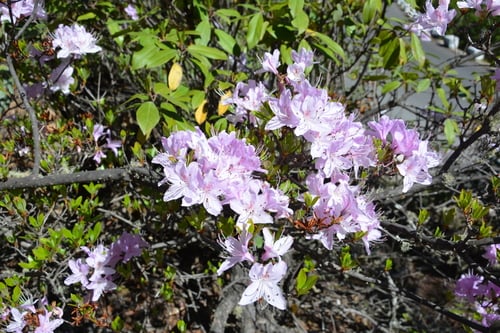
Source: WikipediaBrachyloma depressum, commonly known as spreading brachyloma or spreading heath, is a species of flowering plant in the family Ericaceae and is endemic to south-eastern Australia. It is a stiff, prickly shrub with sharply-pointed, lance-shaped leaves and white, tube-shaped flowers.
Description
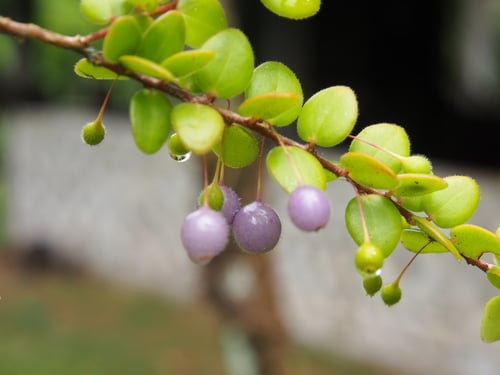
A small shrub. It grows 1-1.5 m high and spreads 1-2 m wide. There are many branches and they are slender and wiry. The leaves are 1.5 cm long. They are alternate and taper to a long sharp point. The flowers are like tubes. They are 0.3 cm long. They occur singly. They are on very short stalks in the axils of leaves. They occur in clusters at the base of flowering branches. The flowers are white. The fruit is fleshy with a hard stone. It has 5 cells.
Edible Uses
The fruit is used for making jams and jellies.
Traditional Uses
The fruit are used for jams and jellies.
This uses section is brief — help expand it
Distribution
It is a temperate coastal plant. It grows in very well drained light soils. It does best with light shade. It can tolerate frost. Tasmania Herbarium.
Where It Grows
Australia*, Tasmania*,
Cultivation
Plants can be grown from cuttings.
Notes
There are 7 Brachyloma species. They grow in Australia.
References (7)
- Cribb, A.B. & J.W., 1976, Wild Food in Australia, Fontana. p 23
- Curtis, W.M., 1963, The Students Flora of Tasmania Vol 2 p 432
- Elliot, W.R., & Jones, D.L., 1982, Encyclopedia of Australian Plants suitable for cultivation. Vol 2. Lothian. p 370
- Low, T., 1991, Wild Food Plants of Australia. Australian Nature FieldGuide, Angus & Robertson. p 128
- Tasmanian Herbarium Vascular Plants list p 25
Show all 7 references Hide references
- Whiting, J. et al, 2004, Tasmania's Natural Flora. Tasmania's Natural Flora Editorial Committee PO Box 194, Ulverstone, Tasmania, Australia 7315 p 115
- World Checklist of Useful Plant Species 2020. Royal Botanic Gardens, Kew