Pourouma cecropiifolia
Mart.
Uvilla, Amazon grape tree
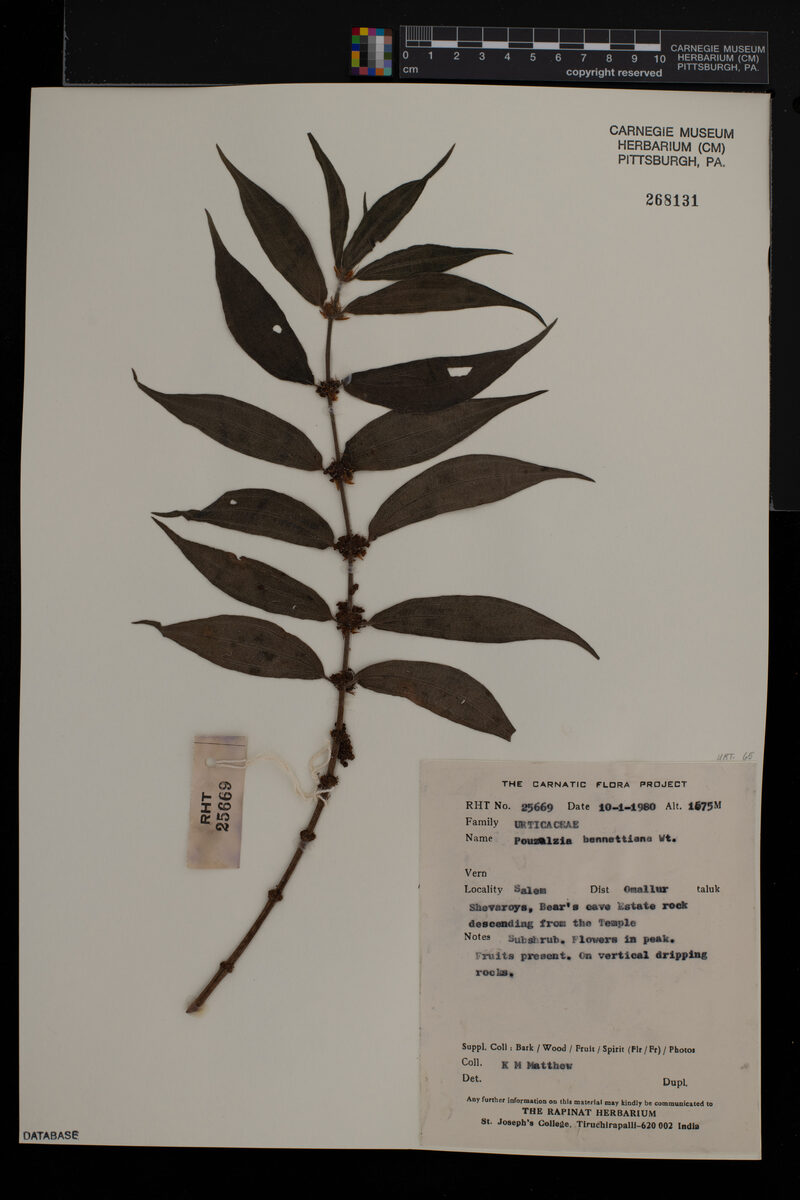
iNaturalist· cc-by-nc-sa
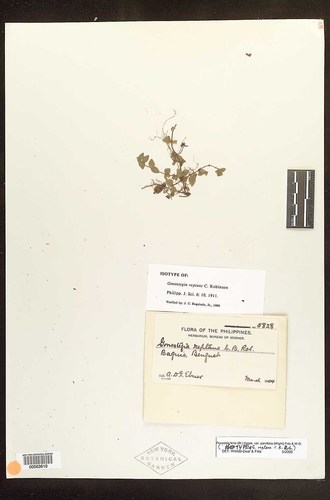
(c) Smithsonian Institution, National Museum of Natural History, Department of Botany, some rights reserved (CC BY-NC-SA)
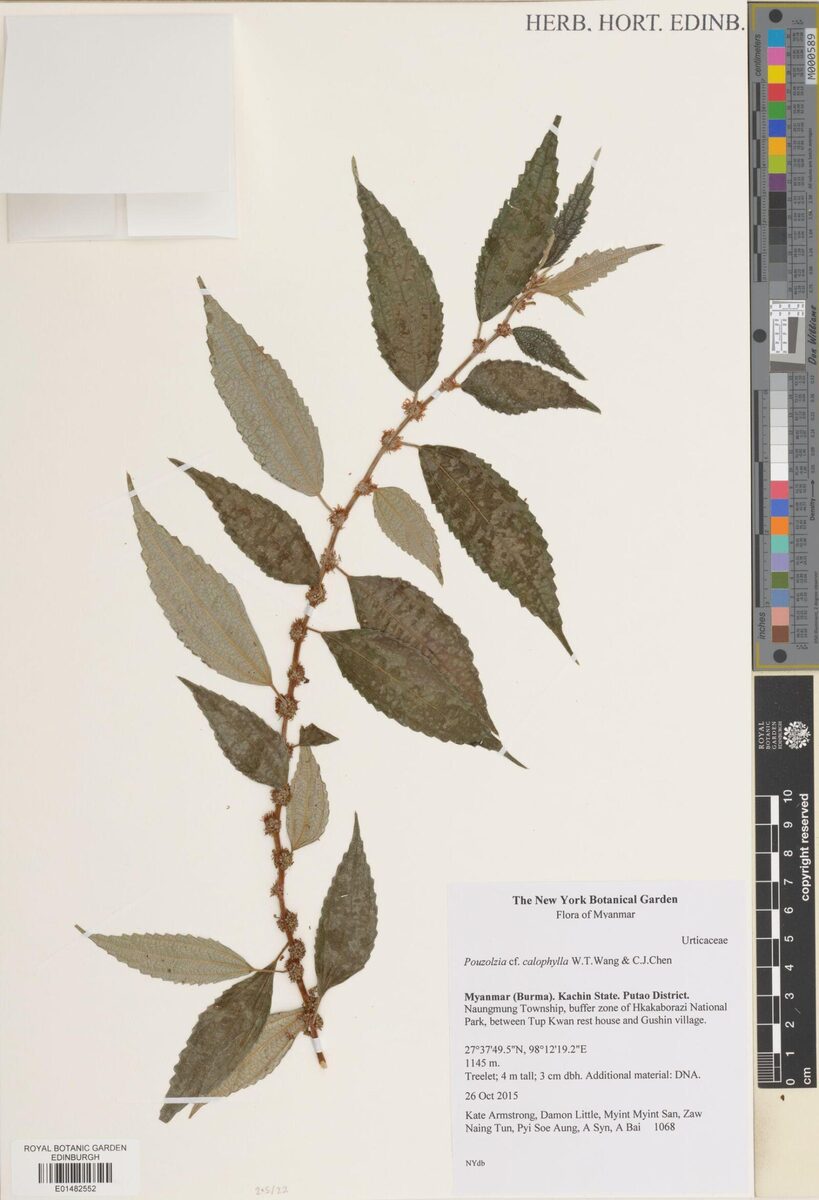
iNaturalist· cc-by
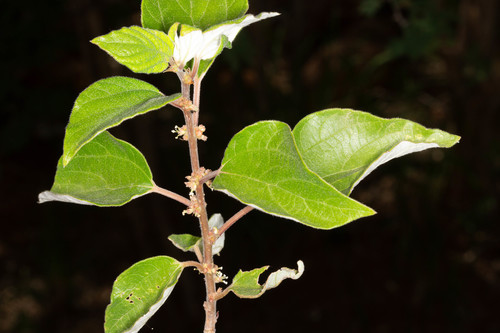
(c) Skjold Søndergaard, some rights reserved (CC BY)
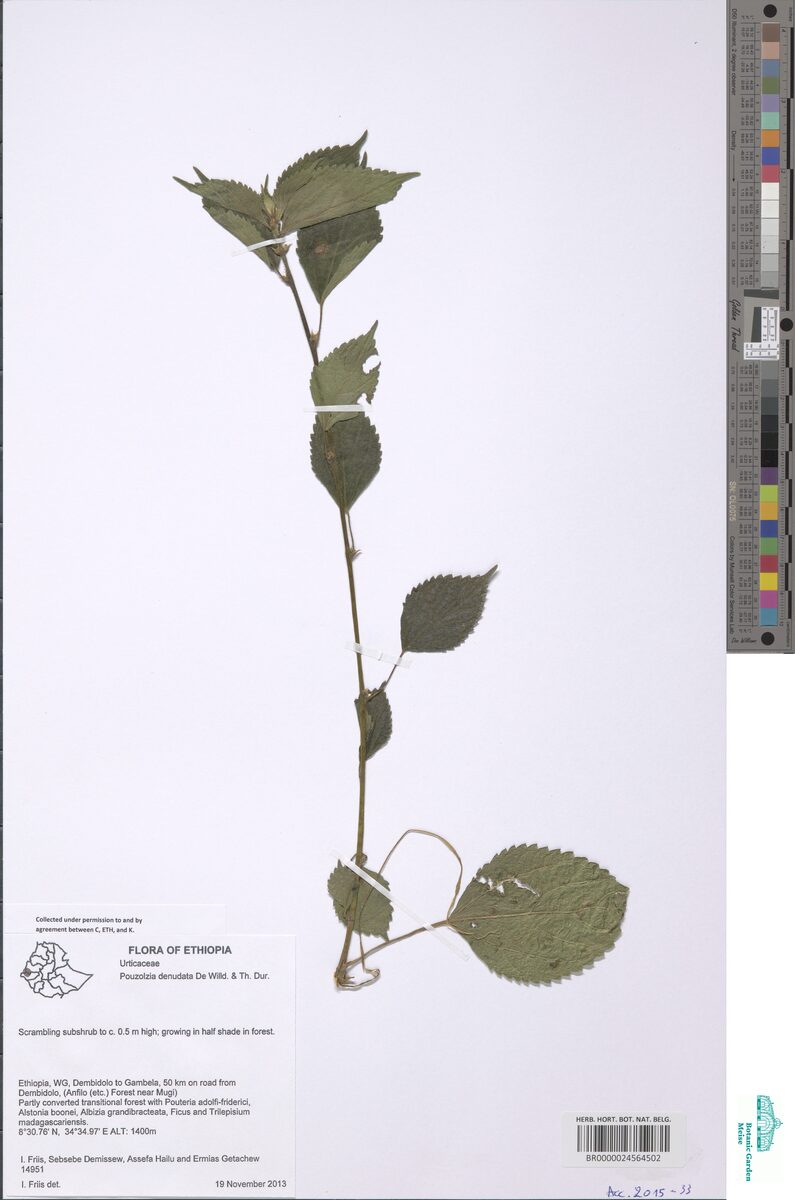
iNaturalist· cc-by-nc
(c) Carlos G Velazco-Macias, some rights reserved (CC BY-NC)
Summary
Source: WikipediaPourouma cecropiifolia (Amazon grape, Amazon tree-grape or uvilla; syn. P. multifida) is a species of Pourouma, native to tropical South America, in the western Amazon Basin in northern Bolivia, western Brazil, southeastern Colombia, eastern Ecuador, eastern Peru, and southern Venezuela. It is a medium-sized evergreen tree growing to 20 m tall. The leaves are palmately compound, with 9–11 leaflets 10–20 cm long and 2.5–4 cm broad, on a 20 cm petiole. The flowers are white, produced 20 or more together in a 10 cm long inflorescence; it is dioecious, with male and female flowers on separate trees. The fruit is ovoid, 1–2 cm long, purple when ripe, grape-like in appearance but with a wintergreen smell and a root beer flavour; the skin is rough, inedible but easily peeled.
Description
A medium size tree 8-18 m high. The leaves are 25 cm long and grow in large clusters. The leaves are velvety and blue-grey underneath. Male and female flowers are on separate trees. The fruit form in clusters of 25 or more. The fruit are round and purple. They are 2-5 cm across. They have a white, juicy pulp. The ripe fruit smell like wintergreen mint.
Edible Uses
The purple, grape-like fruits, produced in clusters and up to 4cm in diameter, have a large seed and a sweet, juicy white pulp with a grape-like flavour. They can be eaten raw or cooked, and are also made into wine, jams, and jellies.
Traditional Uses
The fruit are eaten raw or made into wine. They are also used for jams, juice and jellies. The flavour is mild like a common grape.
This uses section is brief — help expand it
Medicinal Uses
Warmed bark is applied as a poultice to treat hard boils.
Distribution
A tropical plant. It will not tolerate frost. It needs regular moisture throughout the year. It suits the hot, humid tropical lowlands. It grows in areas with rainfalls of 1,500-4,000 mm per year. The average temperatures are 20-28°C. Trees will stand short periods of flooding but are very susceptible to drought. It grows naturally in the rainforests of Brazil, Peru and Ecuador. It grows up to 1,700 m above sea level.
Where It Grows
Amazon, Asia, Australia, Bolivia, Brazil*, Colombia*, Ecuador*, Pacific, Mexico, Peru*, Philippines, Puerto Rico, SE Asia, South America*, Venezuela*, West Indies,
Cultivation
A tree of the hot, humid, tropical lowlands, where it is found at elevations up to 1,000 metres. It is not tolerant of frost. Succeeds in full sun or dappled shade. Found in the wild on fertile, clayey soils. A relatively fast-growing plant, it can commence fruiting when three years old. A dioecious species, both male and female forms need to be grown if fruit and seeds are required.
Propagation
Best sown as soon as ripe in a sunny seedbed. Germination typically occurs within 3–5 weeks, though less than 50% of seeds usually sprout.
Other Uses
The wood is light, soft, easy to work, thick-textured, and has poor mechanical properties with low durability. It is used for linings, boxes, toys, and plywood, and can also be pulped for cellulose.
Production
They are fast growing. Seedling trees can produce fruit in 1-3 years.
Other Information
The fruit are enjoyed. It is a cultivated food plant. Fruit are sold in local markets.
Notes
There are 25 Pourouma species. Also put in the family Cecropiaceae and Moraceae.
Synonyms
Also Known As
Airo cuiya'i, Amarten, Ambauba-do-vinho, Ambaibillo, Ambaibo macho, Baacohe, Bochoa tsaha, Caima, Caimaron, Camairon, Chimiqua, Cirpe, Cocura, Cucura, Cucuva, Cuiya'i, Curcura, Gurucana, Huo'coro, Ikitoka, La'ti, Maca ede ni, Mapati, Peruma, Puruma, Sacha uvilla, Sadajii, Sesho, Shuinia, Sirpe, Tamaribe, Tarpu uvillas, Ubilla, Uva, Uva cimarona, Uva de monte, Uvilla del monte, Uvula, Washi shuinia, Willas, Yai queopea, Yanat, Yuhue
References (34)
- Coronel, R.E., 1982, Fruit Collections in the Philippines. IBPGR Newsletter p 8
- Darley, J.J., 1993, Know and Enjoy Tropical Fruit. P & S Publishers. p 133
- Facciola, S., 1998, Cornucopia 2: a Source Book of Edible Plants. Kampong Publications, p 75
- Gilmore, M. P., et al, 2013, The socio-cultural importance of Mauritia flexuosa palm swamps (aguajales) and implications for multi-use management in two Maijuna communities of the Peruvian Amazon. Journal of Ethnobiology and Ethnomedicine 2013, 9:29
- Grandtner, M. M. & Chevrette, J., 2013, Dictionary of Trees, Volume 2: South America: Nomenclature, Taxonomy and Ecology. Academic Press p 520
Show all 34 references Hide references
- Hedrick, U.P., 1919, (Ed.), Sturtevant's edible plants of the world. p 514
- Hermandez Bermejo, J.E., and Leon, J. (Eds.), 1994, Neglected Crops. 1492 from a different perspective. FAO Plant Production and Protection Series No 26. FAO, Rome. p16, 198
- Heywood, V.H., Brummitt, R.K., Culham, A., and Seberg, O. 2007, Flowering Plant Families of the World. Royal Botanical Gardens, Kew. p 89
- Kermath, B. M., et al, 2014, Food Plants in the Americas: A survey of the domesticated, cultivated and wild plants used for Human food in North, Central and South America and the Caribbean. On line draft. p 683
- Lopez-Diago, D. & Garcia, N., 2021, Wild edible fruits of Colombia. Biota ColomBiana 22 (2) p 53
- Lorenzi, H., 2002, Brazilian Trees. A Guide to the Identification and Cultivation of Brazilian Native Trees. Vol. 02 Nova Odessa, SP, Instituto Plantarum p 83
- Lorenzi, H., Bacher, L., Lacerda, M. & Sartori, S., 2006, Brazilian Fruits & Cultivated Exotics. Sao Paulo, Instituto Plantarum de Estuados da Flora Ltda. p 314
- Macmillan, H.F. (Revised Barlow, H.S., et al) 1991, Tropical Planting and Gardening. Sixth edition. Malayan Nature Society. Kuala Lumpur. p 305
- Martin, F. W., et al, 1987, Perennial Edible Fruits of the Tropics. USDA Handbook 642 p 37
- Morton, J. F., 1987, Fruits of Warm Climates. Wipf & Stock Publishers p 64
- Paz, F. S., et al, 2021, Edible Fruit Plant Species in the Amazon Forest Rely Mostly on Bees and Beetles as Pollinators. Journal of Economic Entomology, XX(XX), 2021, 1–13
- Philips, O., 1992, The potential for harvesting fruits in tropical rainforests: new data from Amazonian Peru. Biodiversity and Conservation 2, 18-38
- Pohle, P. & Reinhardt, S., 2004, Indigenous knowledge of plants and their utilization among the Shuar of the lower tropical mountain forest in southern Ecuador. Lyonia 7(2)
- Reise Bras. 3:1130. 1831
- Rivero, J. A., y Brunner, B. R., 2007, Arborels frutales exoticas y poco conocidos en Puerto Rico. Universidad de Puerto Rico. p 33
- Roa, J. A. G. & Boada, D. S. G., 2018, Fundación para el Fortalecimiento de la Fruticultura y Plantas Alimenticias no Convencionales en Colombia.
- Segura, S., et al, 2018, The edible fruit species in Mexico. Genet Resour Crop Evol (2018) 65:1767–1793
- Smith, N., Mori, S.A., et al, 2004, Flowering Plants of the Neotropics. Princeton. p 94
- Smith, N., et al, 2007, Amazon River Fruits. Flavors for Conservation. Missouri Botanical Gardens Press. p 248
- Tankard, G., 1990, Tropical fruit. An Australian Guide to Growing and using exotic fruit. Viking p 116
- Torre, de la, L., et al, 2008, Enciclopedia de las Plantas Útiles del Ecuador. Herbario QCA. Pontificia Universidad Católica del Ecuador. p 609
- USDA, ARS, National Genetic Resources Program. Germplasm Resources Information Network - (GRIN). [Online Database] National Germplasm Resources Laboratory, Beltsville, Maryland. Available: www.ars-grin.gov/cgi-bin/npgs/html/econ.pl (10 April 2000)
- Vael, L., 2015, Ethnobotanical study of the plant use in the natural landscape of two mestizo communities in the Ucayali region of the Peruvian Amazon. Universiteit Gent.
- Van den Eynden, V., et al, 2003, Wild Foods from South Ecuador. Economic Botany 57(4): 576-603
- Van Looy, T., et al, 2008, Underutilized agroforestry food products in Amazonas (Venezuela): a market chain anlysis. Agroforestry Systems 74:127-141
- Vasquez, R. and Gentry, A. H., 1989, Use and Misuse of Forest-harvested Fruits in the Iquitos Area. Conservation Biology 3(4): 350f
- Villachica, H., (Ed.), 1996, Frutales Y hortalizas promisorios de la Amazonia. FAO, Lima. p 291
- Wiersema, J. H. & Leon, B., 2013, World Economic Plants. A Standard Reference CRC Press. 2nd Ed. p 554
- World Checklist of Useful Plant Species 2020. Royal Botanic Gardens, Kew