Poikilospermum suaveolens
(Blume) Merr.
iNaturalist· cc-by-nc
(c) wcyongwc, some rights reserved (CC BY-NC)
iNaturalist· cc-by
(c) Dr. Alexey Yakovlev, some rights reserved (CC BY), uploaded by Dr. Alexey Yakovlev
iNaturalist· cc-by-nc
(c) Jay Pruett, some rights reserved (CC BY-NC), uploaded by Jay Pruett
Description
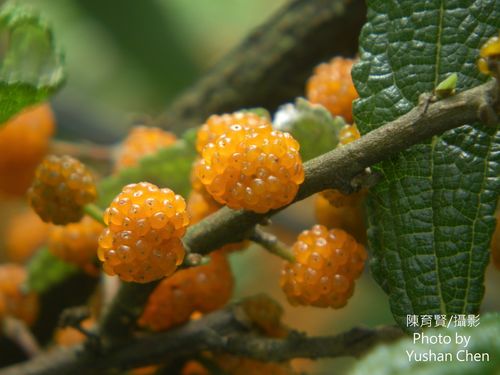
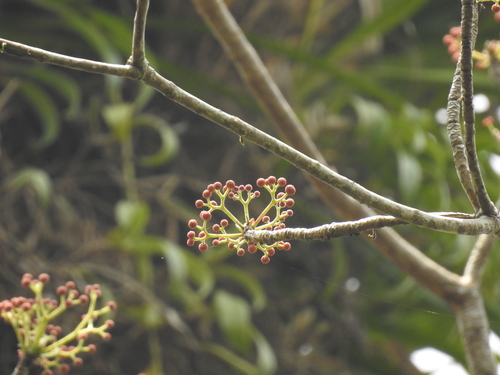
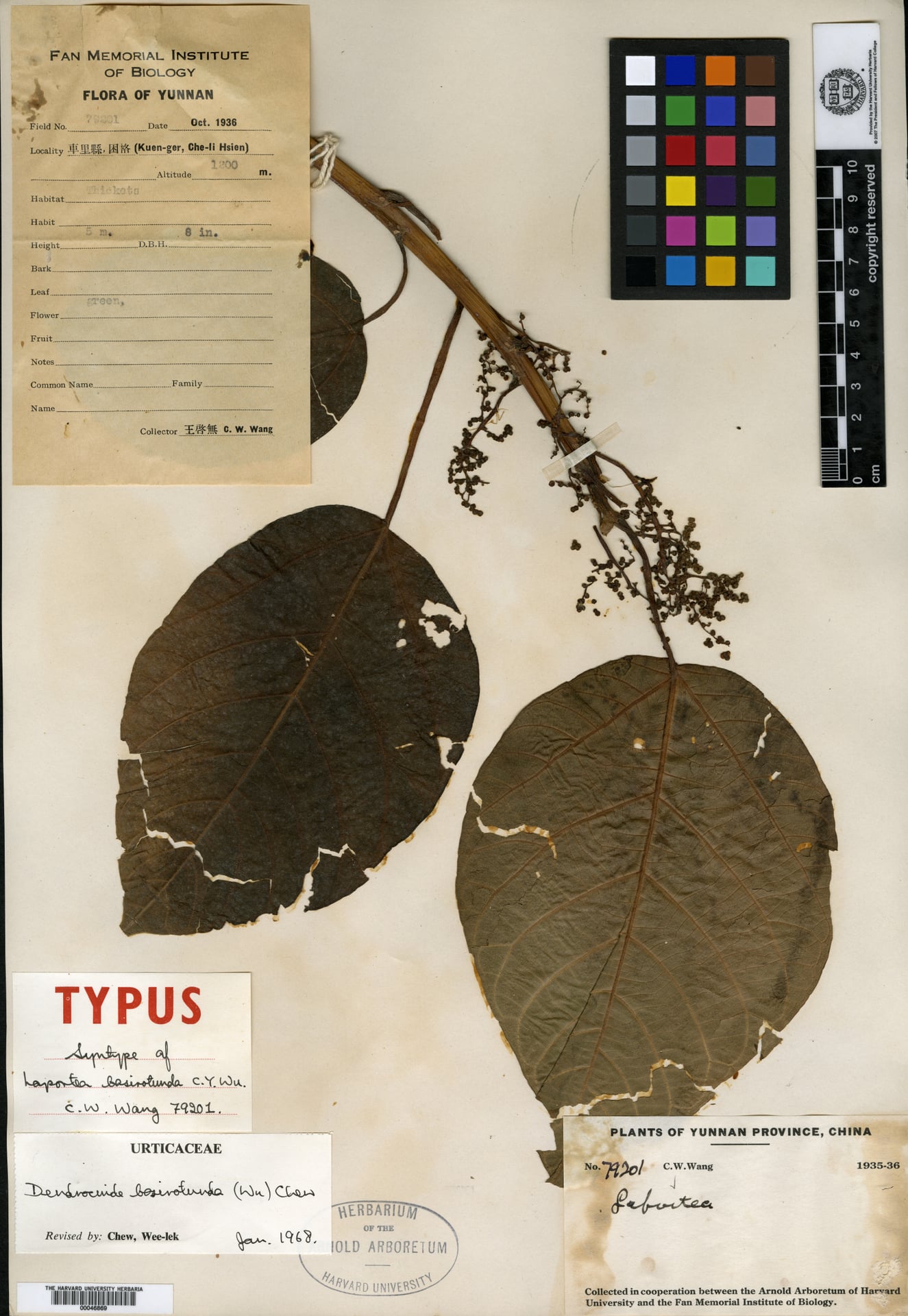
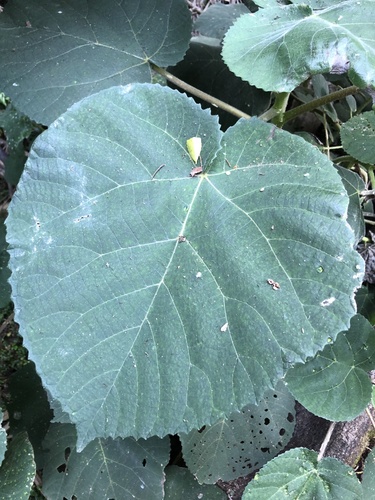
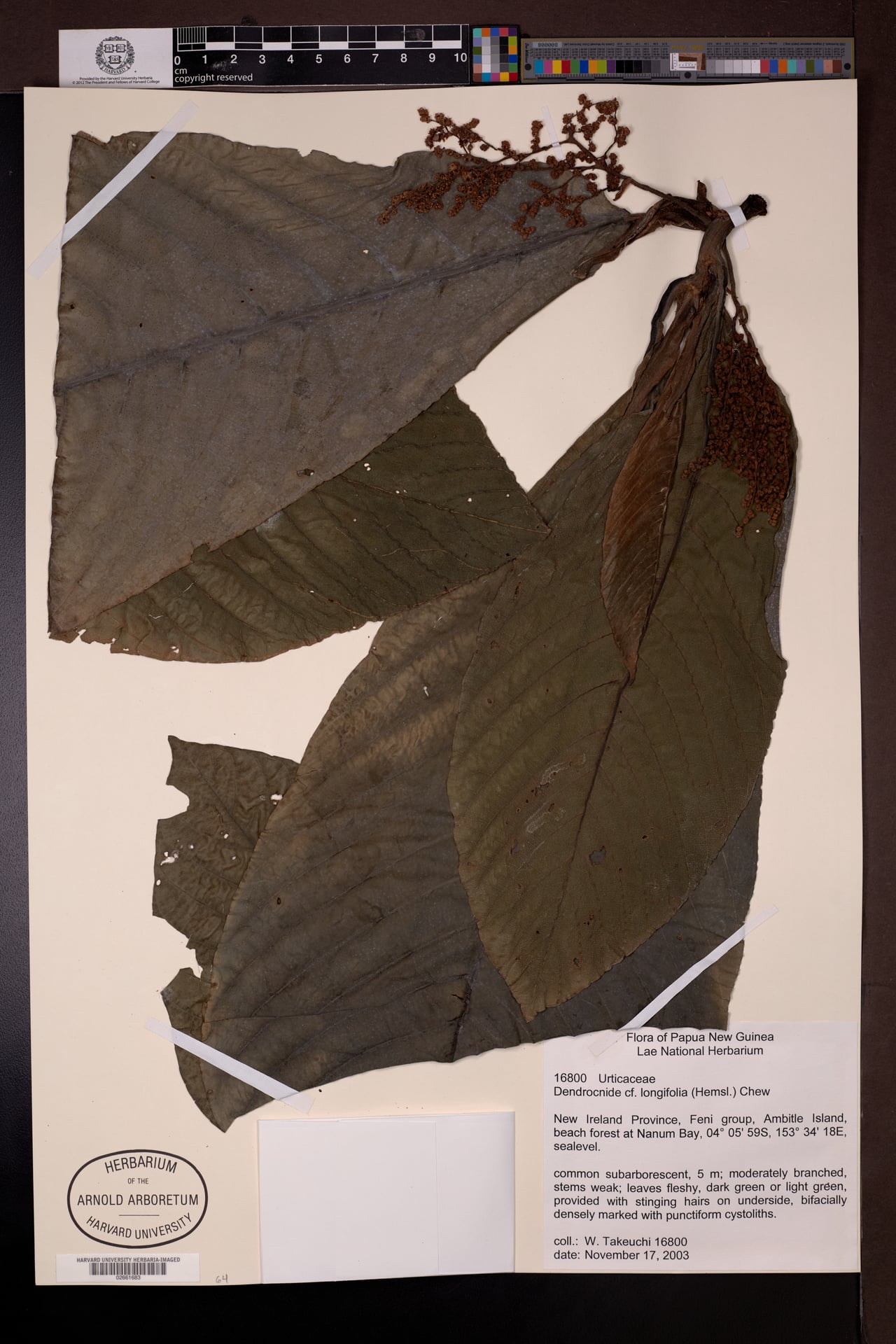
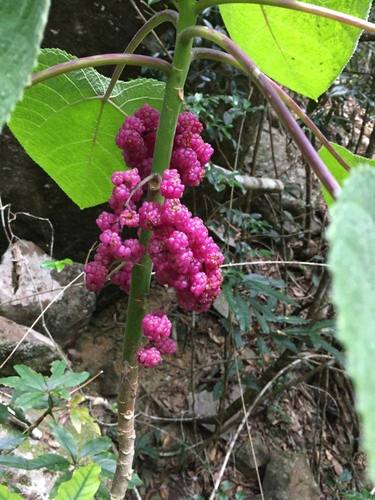
A vine like shrub or climber. A stout woody plant which grows on other plants. It keeps its leaves throughout the year. The main stem is brown and there are several aerial roots. The leaves are simple. The leaves are alternate and narrowly oval. They are leathery. They are 10-35 cm long by 7-23 cm wide. The leaf base is wedge or heart shaped and it tapers to the tip. The flowers contain both sexes and have a scent. They are in dense round heads in the axils of the leaves. The fruit has one seed.
Edible Uses
The young leafy tops are eaten raw in salads or boiled as a cooked vegetable. The stem also yields a quantity of drinking water.
Traditional Uses
The young leafy tops are eaten in salads and also boiled. The leaves and young shoots are cooked and eaten as a vegetable. The stem yields a quantity of water.
Medicinal Uses
The plant is used in medicine.
Distribution
It is a tropical plant. It grows in moist places in forests and near streams between 500-600 m above sea level. In northeastern India it grows up to 1,200 m above sea level. In Yunnan.
Where It Grows
Asia, Bangladesh, Cambodia, China, India, Indochina, Indonesia, Malaysia, Myanmar, Philippines, Northeastern India, Pacific, Philippines, SE Asia, Thailand, Vietnam,
Notes
It is used in medicine. Other lists have it in the Moraceae and the Cecropiaceae.
Synonyms
Also Known As
Agig reibe, Airai, Akar setawan, Anopol, Anukol, Areuy kakejoan, Besto, Centawan, Charai, Dudiblok, Gabong lota, Hanopol, Khaman, Khuang-khau, Khung-khai, Kyagyaw-nwe, Lata dimoru, Mentawan, Ogi'g I ri'bi', Riep, Sarsarapa
References (17)
- Ambasta, S.P. (Ed.), 2000, The Useful Plants of India. CSIR India. p 139 (As Conocephalus suaveolens)
- Bijdr. 9:484. 1825 (As Conocephalus suaveolens)
- Brown, W.H., 1920, Wild Food Plants of the Philippines. Bureau of Forestry Bulletin No. 21 Manila. p 40 (As Conocephalus violaceus)
- Burkill, I.H., 1966, A Dictionary of the Economic Products of the Malay Peninsula. Ministry of Agriculture and Cooperatives, Kuala Lumpur, Malaysia. Vol 1 (A-H) p 660 (As Conocephalus suaveolens)
- Dobriyal, M. J. R. & Dobriyal, R., 2014, Non Wood Forest Produce an Option for Ethnic Food and Nutritional Security in India. Int. J. of Usuf. Mngt. 15(1):17-37
Show all 17 references Hide references
- Flora of China @ efloras.org Volume 5
- Hoare, A., 2003, Food use of the Lundayeh SW Sabah. Borneo Research Council.
- Kar, A., et al, 2013, Wild Edible Plant Resources used by the Mizos of Mizoram, India. Kathmandu University Journal of Science, Engineering and Technology. Vol. 9, No. 1, July, 2013, 106-126
- Menisa, A. A., et al, 2012, Survey and characterization of Indigenous Food Plants in Ilocos Norte, Philippines. SEARCA Discussion Paper series No. 2011-2
- Patiri, B. & Borah, A., 2007, Wild Edible Plants of Assam. Geethaki Publishers. p 138
- Pegu, R., et al, 2013, Ethnobotanical study of Wild Edible Plants in Poba Reserved Forest, Assam, India. Research Journal of Agriculture and Forestry Sciences 1(3):1-10
- Sarma, H., et al, 2010, Updated Estimates of Wild Edible and Threatened Plants of Assam: A Meta-analysis. International Journal of Botany 6(4): 414-423
- Sawian, J. T., et al, 2007, Wild edible plants of Meghalaya, North-east India. Natural Product Radiance Vol. 6(5): p 415 (As Conocephalus suaveolens)
- Singh, H.B., Arora R.K.,1978, Wild edible Plants of India. Indian Council of Agricultural Research, New Delhi. p 25 (As Conocephalus suaveolens)
- Sukarya, D. G., (Ed.) 2013, 3,500 Plant Species of the Botanic Gardens of Indonesia. LIPI p 956
- Wild edible plants of Himachal Pradesh (As Conocephalus suaveolens)
- World Checklist of Useful Plant Species 2020. Royal Botanic Gardens, Kew