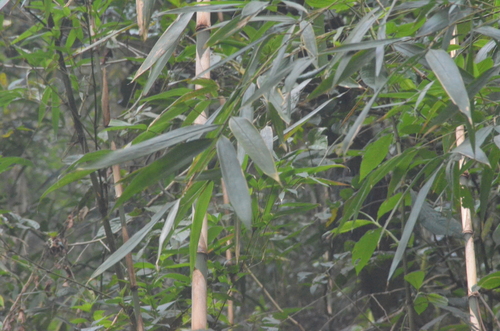
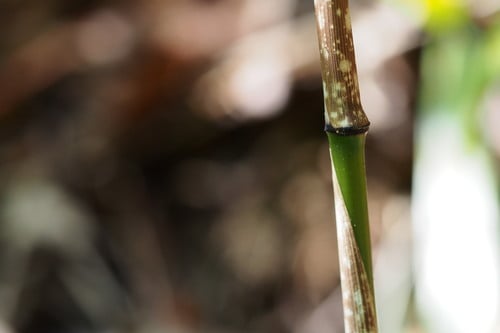
Triticum turgidum
L.
Rivet wheat, Poulard wheat
iNaturalist· cc-by-nc
(c) Maël Taupin, some rights reserved (CC BY-NC), uploaded by Maël Taupin
iNaturalist· cc-by-nc
(c) Aliaksandr Mialik, some rights reserved (CC BY-NC)
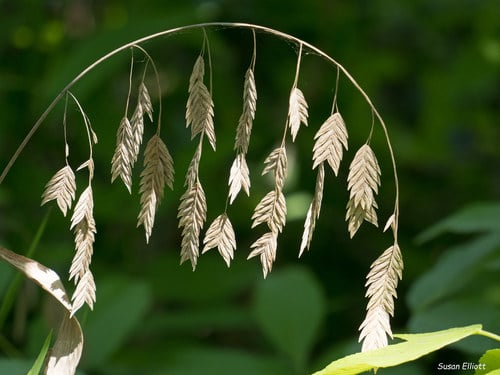
iNaturalist· cc-by-nc
(c) txgirl, some rights reserved (CC BY-NC)
Summary
Source: WikipediaTriticum turgidum (with its various subspecies being known as pasta wheat, macaroni wheat and durum wheat) is a species of wheat. It is an annual and grows primarily in temperate areas and is native to countries around the eastern Mediterranean, down to Iran and east to Xinjiang, China.
Description
A cereal. It is a grass, like wheat. It grows 60-180 cm tall. The leaf blade can be erect or nodding. The seeds or kernels are about 3 times the size of ordinary wheat.
Edible Uses
The seed is cooked and most commonly ground into flour for use as a cereal, particularly for making macaroni, spaghetti, and vermicelli.
Traditional Uses
The seeds are used along with wheat to make pastas, puffed cereals, biscuits and bread. It can also be used for macaroni, spaghetti and vermicelli.
This uses section is brief — help expand it
Medicinal Uses
None known
Distribution
It is a temperate plant. In Sichuan and Yunnan.
Where It Grows
Africa, Argentina, Asia, Canada, Central Asia, China, India, Middle East, North America, Pakistan, Russia, South Africa, South America, Southern Africa, Tajikistan, Tibet, USA,
Cultivation
An easily grown plant, it succeeds in most well-drained soils in a sunny position. One of the more primitive forms of wheat, it was probably developed in cultivation from T. dicoccoides about 10,000 years ago. It is still occasionally cultivated for its edible seed, there are some named varieties. It is not very high yielding. A tetraploid species, it is not much grown outside Britain.
Propagation
Sow seed in early spring or autumn directly in situ, barely covering it. Germination should occur within a few days.
Other Uses
The straw serves many purposes, including as a biomass fuel, thatching material, and garden mulch. Fibre extracted from the stems can be used to make paper: stems are harvested in late summer after seed collection, cut into usable pieces, soaked in clear water for 24 hours, cooked for 2 hours in lye or soda ash, then beaten in a ball mill for 1½ hours, producing a green-tan paper. Starch from the seed is used for laundering and sizing textiles, and can also be converted to alcohol for use as a fuel.
Other Information
It is cultivated commercially for the health food market.
Notes
It has good quantities of folic acid and iron. It is low in gluten.
Synonyms
Also Known As
Kamut
References (17)
- Ambasta, S.P. (Ed.), 2000, The Useful Plants of India. CSIR India. p 654
- Belay, G., 2006. Triticum turgidum L. [Internet] Record from Protabase. Brink, M. & Belay, G. (Editors). PROTA (Plant Resources of Tropical Africa), Wageningen, Netherlands. < http://database.prota.org/search.htm>. Accessed 23 October 200
- Facciola, S., 1998, Cornucopia 2: a Source Book of Edible Plants. Kampong Publications, p 183
- Feldman, M., 1979, Wheats, in Simmonds N.W.,(ed), Crop Plant Evolution. Longmans. London. p 120
- Flora of Pakistan. www.eFloras.org
Show all 17 references Hide references
- Haq, N., Anthony, K., Sarwar, M., and Ahmad, Z. (eds.), 1998, Underutilized Crops of Pakistan. Plant Genetic Resources Institute. p 12
- Heywood, V.H., Brummitt, R.K., Culham, A., and Seberg, O., 2007, Flowering Plant Families of the World. Royal Botanical Gardens, Kew. p 394
- Jardin, C., 1970, List of Foods Used In Africa, FAO Nutrition Information Document Series No 2.p 10
- Kiple, K.F. & Ornelas, K.C., (eds), 2000, The Cambridge World History of Food. CUP p 1795
- Plants for a Future database, The Field, Penpol, Lostwithiel, Cornwall, PL22 0NG, UK. http://www.scs.leeds.ac.uk/pfaf/
- Ruiters-Welcome, A. K., 2019, Food plants of southern Africa. Ph.D. thesis. Univ. of Johannesburg p 90
- Sp. pl. 1:86. 1753
- Uphof,
- Welcome, A. K. & Van Wyk, B.-E., 2019, An inventory and analysis of the food plants of southern Africa. South African Journal of Botany 122 (2019) 136–179
- Wiersema, J. H. & Leon, B., 2013, World Economic Plants. A Standard Reference CRC Press. 2nd Ed. p 700
- Wilson, J.M. & Witcombe, J.R., Crops for Arid lands, in Wickens, G.E., Goodin, J.R., and Field, D.V.,(Eds.) 1985, Plants for Arid Lands. Unwin Hyman, London, p 36
- Zeven, A. C. & de West, J. M. J., 1982, Dictionary of cultivated plants and their regions of diversity. Wageningen. p 56, 93, 112