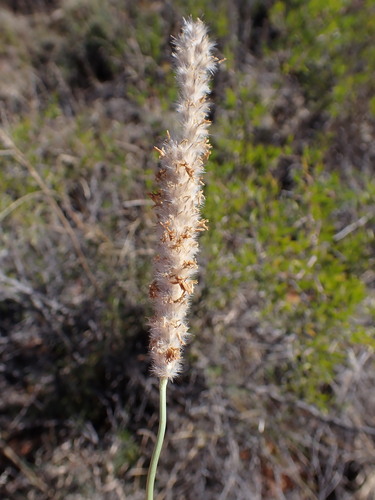
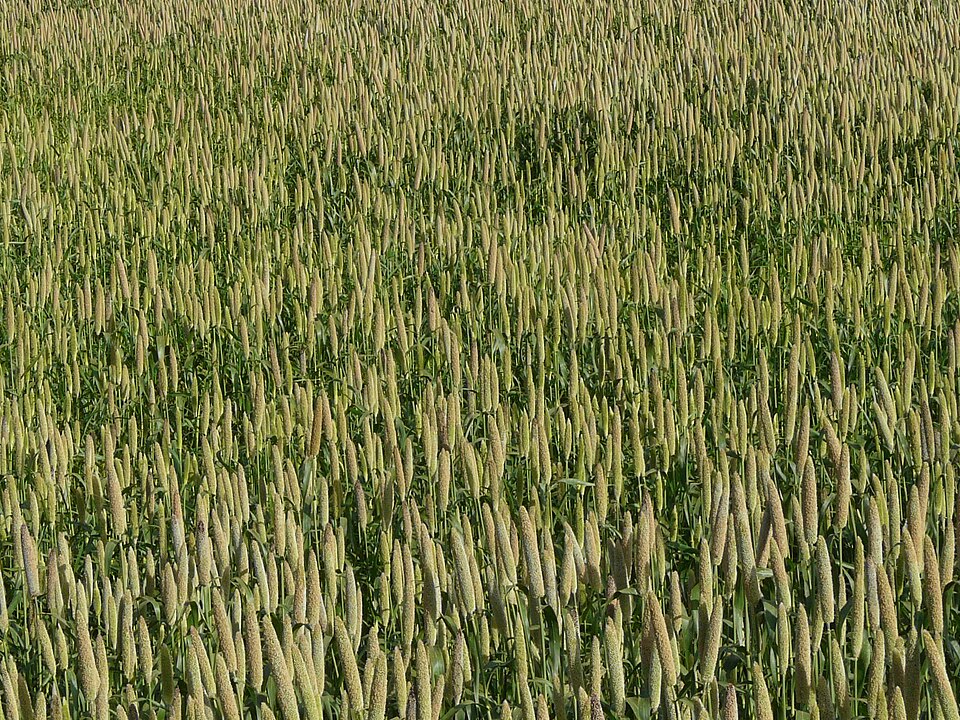
Triticosecale spp.
Wittm. ex A. Camus.
Triticale
gbif· cc-by-nc-nd
Andreas Kronshage
gbif· cc-by-nc
Dawid Wojtachnio
gbif· cc-by-nc
Dawid Wojtachnio
Description
A temperate grass that is a hybrid between rye and wheat, characterized by low gluten content.
This description is brief — help expand it
Edible Uses
The seeds are eaten in soups and salads, ground into flour for bread, pancakes, and muffins (usually mixed with wheat flour for better results), or sprouted and eaten fresh.
Traditional Uses
The seeds are eaten in soups, salads or ground into flour for bread, pancakes, muffins, and other foods. As it is low in gluten it is usually mixed with wheat flour. The seeds can be sprouted and eaten.
Distribution
It is a temperate plant.
Where It Grows
Australia, Azerbaijan, Balkans, Canada, Caucasus, Europe, Kyrgyzstan, Macedonia, North America, Switzerland, Tasmania, Ukraine,
Notes
It is low in gluten.
Nutrition
| Part | Moisture | kJ | kcal | Protein | Vit A | Vit C | Iron | Zinc |
|---|---|---|---|---|---|---|---|---|
| Seeds | 10 | 1429 | 342 | 11.4 | — | — | — | — |
Synonyms
References (7)
- Facciola, S., 1998, Cornucopia 2: a Source Book of Edible Plants. Kampong Publications, p 181
- Kiple, K.F. & Ornelas, K.C., (eds), 2000, The Cambridge World History of Food. CUP p 1872
- Larter, E.N., 1979, Triticale, in Simmonds N.W.,(ed), Crop Plant Evolution. Longmans. London. p 117
- Plants for a Future database, The Field, Penpol, Lostwithiel, Cornwall, PL22 0NG, UK. http://www.scs.leeds.ac.uk/pfaf/
- Small, E., 2009, Top 100 Food Plants. The world's most important culinary crops. NRC Research Press. p 464
Show all 7 references Hide references
- Vaughan, J. C. & Geissler, C. A., 2009, The new Oxford Book of Food Plants. Oxford University Press. p 6
- Wiersema, J. H. & Leon, B., 2013, World Economic Plants. A Standard Reference CRC Press. 2nd Ed. p 698