Trigonella corniculata
(L.) L.
Sickle-fruited fenugreek
iNaturalist· cc-by-nc
(c) Papageorgiou Nikolaos, some rights reserved (CC BY-NC)
iNaturalist· cc-by
(c) WATANABE Hitoshi 渡辺仁, some rights reserved (CC BY)
iNaturalist· cc-by
(c) WATANABE Hitoshi 渡辺仁, some rights reserved (CC BY)
Summary
Annual herb reaching 0.6m (2ft) tall with hermaphrodite flowers pollinated by insects. Grows vigorously in light sandy, medium loamy, and heavy clay soils with mildly acidic to basic pH. Requires full sun and tolerates dry to moist conditions. Capable of fixing atmospheric nitrogen.
Description
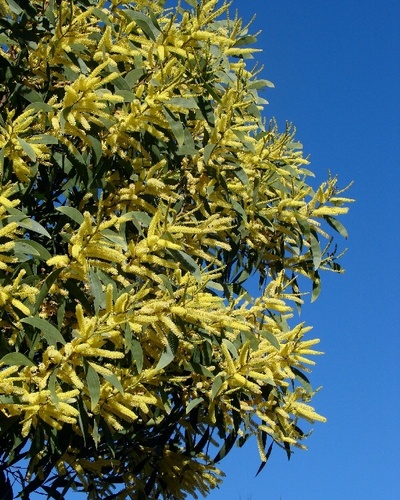
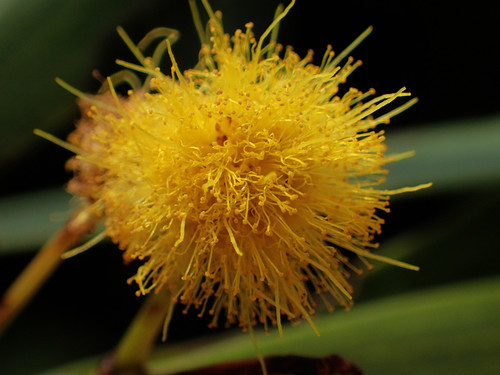
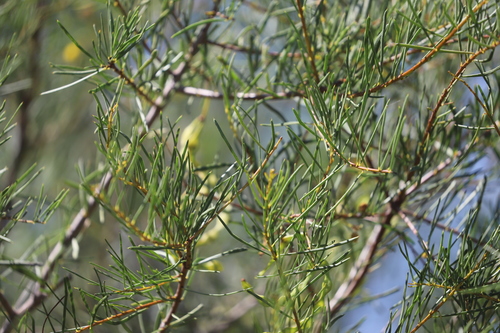
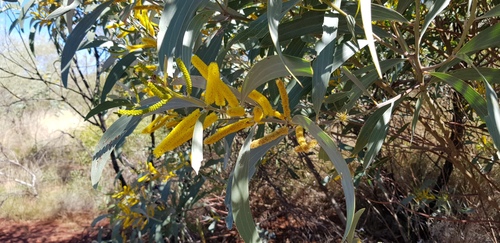
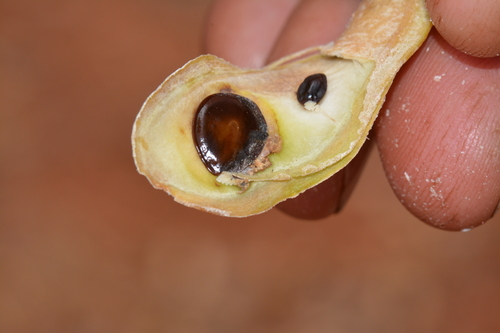
A spreading herb. It is an annual plant and usually hairless. The leaves have 3 leaflets. These are narrow and can be notched at the tip. The flowers are yellow. They are 6-7 mm long. They are in long stalked cylinder shaped racemes. These contain 8-15 flowers. The wing petals are shorter than the keel. The pods are narrow. They are 10-16 mm long and hang down. The are slightly curved and have thin veins across them.
Edible Uses
Young leaves and stem tips are harvested and cooked as a potherb.
Traditional Uses
The leaves are used as a pot-herb and as a flavouring. They can be dried and stored. They can be soaked in water and used as a flavouring in cooked dishes.
Medicinal Uses
The fruit is astringent, bitter, and styptic. It is applied externally to swellings and bruises.
Known Hazards
None listed.
Distribution
It is a temperate plant. It grows in grassy places.
Where It Grows
Africa, Asia, Europe, France, Greece, Himalayas, India, Italy, Mediterranean, Nepal, North Africa, Pakistan, Slovenia, Spain, Turkey, Türkiye,
Propagation
Pre-soak seed for 12 hours in warm water, then sow in spring directly in situ.
Other Uses
None known. This plant is a nitrogen fixer.
Production
It is slow growing.
Synonyms
Also Known As
Champa, Chirawa, Jungle math, Kasturi methi, Kasuri methi, Lukaika, Malya, Meehtre, Pirang, Piring sak, Rogljasti triplat, Tirapa
References (15)
- Ambasta, S.P. (Ed.), 2000, The Useful Plants of India. CSIR India. p 651
- Banerjee, A., et al, 2013, Ethnobotanical Documentation of Some Wild Edible Plants in Bankura District, West Bengal, India. The Journal of Ethnobiology and Traditional Medicine. Photon 120 (2013) 585-590
- Blamey, M and Grey-Wilson, C., 2005, Wild flowers of the Mediterranean. A & C Black London. p 95
- Facciola, S., 1998, Cornucopia 2: a Source Book of Edible Plants. Kampong Publications, p 112
- Flora of Pakistan. www.eFloras.org
Show all 15 references Hide references
- Hedrick, U.P., 1919, (Ed.), Sturtevant's edible plants of the world. p 655
- http://www.botanic-gardens-ljubljana.com/en/plants
- Majeed, M., et al, 2021, Gathered Wild Food Plants among Diverse Religious Groups in Jhelum District, Punjab, Pakistan. Foods 2021, 10, 594.
- Martin, F.W. & Ruberte, R.M., 1979, Edible Leaves of the Tropics. Antillian College Press, Mayaguez, Puerto Rico. p 201
- Plants for a Future database, The Field, Penpol, Lostwithiel, Cornwall, PL22 0NG, UK. http://www.scs.leeds.ac.uk/pfaf/
- Sharma, B.B., 2005, Growing fruits and vegetables. Publications Division. Ministry of Information and broadcasting. India. p 193
- Syst. nat. ed. 10, 2:1180. 1759
- Terra, G.J.A., 1973, Tropical Vegetables. Communication 54e Royal Tropical Institute, Amsterdam, p 80
- USDA, ARS, National Genetic Resources Program. Germplasm Resources Information Network - (GRIN). [Online Database] National Germplasm Resources Laboratory, Beltsville, Maryland. Available: www.ars-grin.gov/cgi-bin/npgs/html/econ.pl (10 April 2000)
- World Checklist of Useful Plant Species 2020. Royal Botanic Gardens, Kew