Trifolium subterraneum
L.
Subterranean clover
iNaturalist· cc-by-nc
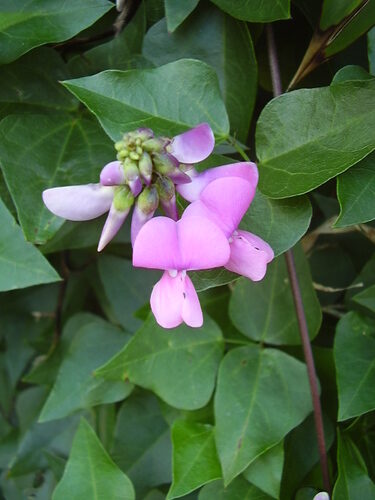
(c) Lauren Glevanik, some rights reserved (CC BY-NC), uploaded by Lauren Glevanik
iNaturalist· cc-by-nc
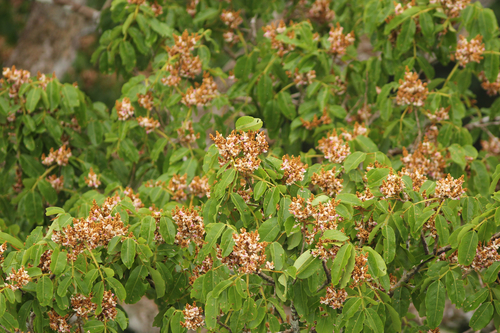
(c) Michael Stanton, some rights reserved (CC BY-NC)
iNaturalist· cc-by-nc
(c) Michael Stanton, some rights reserved (CC BY-NC)
Summary
Source: WikipediaTrifolium subterraneum, the subterranean clover (often shortened to sub clover), subterranean trefoil, is a species of clover native to Europe, Southwest Asia, Northwest Africa and Macaronesia. The plant's name comes from its underground seed development (geocarpy), a characteristic not possessed by other clovers. It can thrive in poor-quality soil where other clovers cannot survive, and is grown commercially for animal fodder. There are three distinct subspecies used in agriculture, each with its own ideal climate and soil type, allowing for wide distribution of the plant over varied environments. T. subterraneum subsp. subterraneum is the generalist subspecies, and it can be grown in the widest range of environments. T. subterraneum subsp. yanninicum is grown in moist areas that are prone to flooding or waterlogging. T. subterraneum subsp. brachycalycinum is a more sensitive plant, requiring dry, cracked soil for its germination. Some systematists consider the three plants to be separate species. There are many strains and varieties of these subspecies, but few are in wide use. The technique of mixing the subspecies in one field is popular as a method of ensuring a dense crop. Also, subterranean clover is sometimes mixed with alfalfa for a longer-lasting grazing pasture. This species is self-fertilizing, unlike most legume forage crops such as alfalfa and other clovers, which are pollinated by insects, especially honeybees. The flowers of subclover are often located beneath its leaves and are low in nectar, making access both difficult and unappealing for bees. These characteristics also make the plant less attractive to certain types of pest insects. Subterranean clover is one of the most commonly grown forage crops in Australia. It provides high quality forage to livestock. It is also grown in places such as California and Texas, where the extreme ranges of soil type and quality, rainfall, and temperature make the variable tolerances of sub clover especially useful. Subterranean clover can contain high levels of estrogenic compounds that may interfere with health and reproductive capability of animals that consume it.
Description
A small herb. It grows along the ground. It is often hairy. The leaves have 3 leaflets. The leaflet colour and shape can vary. They can have dark or white marks like a crescent or spots. The leaflets tend to be round and broader at the end with a notch. The lower surface is more hairy. The flowers occur in groups or 3 or 4. They are creamy-white. These are in the axils of stems. The flowers droop downwards when mature. The flowers develop a burr which is forced towards the soil. It gets buried in the soil.
Edible Uses
The leaves can be eaten raw or cooked.
Traditional Uses
CAUTION: These leaves can have significant levels or hormones (Oestrogens).
This uses section is brief — help expand it
Medicinal Uses
None known
Distribution
It is a temperate plant. Tasmania Herbarium.
Where It Grows
Albania, Asia, Australia, Balkans, Belgium, Brazil, Britain, Bulgaria, Chile, Crete, Europe, France, Greece, India, Ireland, Lord Howe Island, Macedonia, Mediterranean, Portugal, Romania, Russia, Tasmania, Turkey, Türkiye, Uruguay, Yugoslavia,
Cultivation
Succeeds in a moist, well-drained circum-neutral soil in full sun. Succeeds in poor soils. Plants are partially winter hardy. After flowering, the fruiting head grows into the ground, thereby planting the seed. This species grows well in an apple orchard, the trees will produce tastier fruit that stores better. It should not be grown with camellias or gooseberries, however, because it harbours a mite that can cause fruit drop in the gooseberries and premature budding in the camellias. This species has a symbiotic relationship with certain soil bacteria, these bacteria form nodules on the roots and fix atmospheric nitrogen. Some of this nitrogen is utilized by the growing plant but some can also be used by other plants growing nearby. Buttercups growing nearby depress the growth of the nitrogen bacteria by means of a root exudate. When removing plant remains at the end of the growing season, it is best to only remove the aerial parts of the plant, leaving the roots in the ground to decay and release their nitrogen.
Propagation
Pre-soak seed for 12 hours in warm water, then sow in spring in situ. If seed is scarce, sow in pots in a cold frame instead. Prick seedlings out into individual pots when large enough to handle, and plant out in late spring.
Other Uses
Can be grown as a ground-cover green manure under greenhouse tomatoes by sowing the seed before planting the tomatoes. Also suitable for sowing under soft fruit, cutting once or twice during summer. Functions as a nitrogen fixer and dynamic accumulator.
Other Information
It is cultivated.
Notes
There are about 240 Trifolium species. They are mostly temperate.
References (10)
- Ambasta, S.P. (Ed.), 2000, The Useful Plants of India. CSIR India. p 651
- Dashorst, G.R.M., and Jessop, J.P., 1998, Plants of the Adelaide Plains & Hills. Botanic Gardens of Adelaide and State Herbarium. p 90
- Flora of Australia Volume 49, Oceanic Islands 1, Australian Government Publishing Service, Canberra. (1994) p 194
- Hussey, B.M.J., Keighery, G.J., Cousens, R.D., Dodd, J., Lloyd, S.G., 1997, Western Weeds. A guide to the weeds of Western Australia. Plant Protection Society of Western Australia. p 160
- Hyde-Wyatt, B.H. & Morris D.I., 1975, Tasmanian Weed Handbook. Dept of Ag Tasmania. p 103
Show all 10 references Hide references
- Lamp, C & Collet F., 1989, Field Guide to Weeds in Australia. Inkata Press. p 312
- Paczkowska, G . & Chapman, A.R., 2000, The Western Australian Flora. A Descriptive Calatogue. Western Australian Herbarium. p 452
- Plants for a Future database, The Field, Penpol, Lostwithiel, Cornwall, PL22 0NG, UK. http://www.scs.leeds.ac.uk/pfaf/
- Sp. pl. 2:767. 1753
- Zeven, A. C. & de West, J. M. J., 1982, Dictionary of cultivated plants and their regions of diversity. Wageningen. p 66, 115