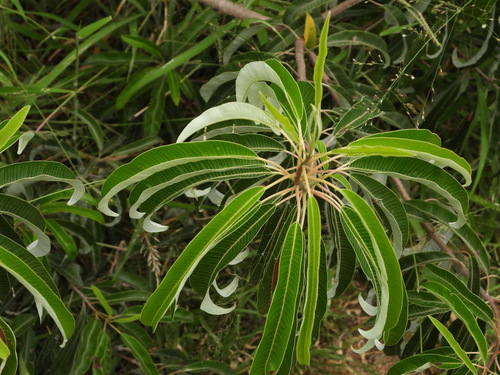
Searsia mysorensis
(G. Don) Moffett
Mysore sumac
iNaturalist· cc-by
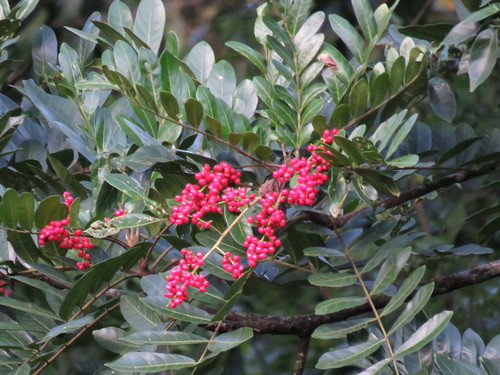
(c) Karthik Thrikkadeeri, some rights reserved (CC BY), uploaded by Karthik Thrikkadeeri
iNaturalist· cc-by
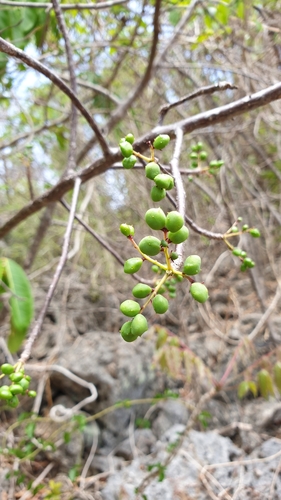
(c) Siddarth Machado, some rights reserved (CC BY), uploaded by Siddarth Machado
iNaturalist· cc-by
(c) Siddarth Machado, some rights reserved (CC BY), uploaded by Siddarth Machado
Summary
Source: WikipediaSearsia mysorensis (synonym Rhus mysorensis) is a species of shrub with thorny branches. It is commonly known as Mysore sumac or Indian sumac (ചിപ്പമരം in Malayalam).
Description
A shrub. It grow 1.5 m high. Small branches are spiny. Young shoots are softly hairy. The leaves have 3 leaflets. The leaflets are 8-34 mm long by 6-23 mm wide. The end leaflet is the largest. The end leaflet has irregular lobes near the end. Male and female flowers are on separate plants. They are yellow. The fruit is fleshy and is 4.5 mm across. They are yellowish-brown.
Edible Uses
The fruit are eaten raw or roasted.
Traditional Uses
The fruit are eaten raw or roasted.
This uses section is brief — help expand it
Medicinal Uses
Phytochemical screening of the plant has identified the presence of several chemical constituents, including cardiac glycosides, saponins, flavonoids, tannins, alkaloids, sterols, and phenols. The plant contains compounds such as limonene, sabinene, α-pinene, β-caryophyllene, as well as α- and β-eudesmol. The fruit is used to treat dysentery, and a leaf decoction is administered for itching. Leaves are also used in managing diarrhea and stomatitis, while leaf paste is applied to relieve rashes and allergies. The root, stem, and leaves have been traditionally used to manage diabetes.
Distribution
A tropical plant. It grows near Mumbai. In Pakistan it grows in dry rocky areas up to 1500 m above sea level.
Where It Grows
Asia, India, Pakistan,
Notes
There are about 200 Rhus species.
Synonyms
Also Known As
Amani, Ambaoni, Amboni, Ambonia, Amoni, Dansar, Dansri
References (8)
- Chaturvedi, Y. et al, 2001, Level of B-carotene and effects of processing on selected fruits and vegetables of the arid zone of India. Plant Foods for Human Nutritiion 56: 127-132 (As Rhus mysorensis)
- Dobriyal, M. J. R. & Dobriyal, R., 2014, Non Wood Forest Produce an Option for Ethnic Food and Nutritional Security in India. Int. J. of Usuf. Mngt. 15(1):17-37 (As Rhus mysorensis)
- GAMMIE, (As Rhus mysorensis)
- GUPTA & KANNODIA, (As Rhus mysorensis)
- Jadhav, R., et al, 2015, Forest Foods of Northern Western Ghats: Mode of Consumption, Nutrition and Availability. Asian Agri-History Vol. 19, No. 4: 293-317 (As Rhus mysorensis)
Show all 8 references Hide references
- Moffett, R. O., 2007, Name changes in the Old World Rhus and recognition of Searsia (Anacardiaceae). Bothalia 37,2: 165-175 (2007)
- SHANKARNARAYAN & SAXENA, (As Rhus mysorensis)
- World Checklist of Useful Plant Species 2020. Royal Botanic Gardens, Kew