Artemisia michauxiana
Besser.
Mountain sagewort
iNaturalist· cc-by-sa
(c) Matt Lavin, some rights reserved (CC BY-SA)
iNaturalist· cc-by-sa
(c) Matt Lavin, some rights reserved (CC BY-SA)
iNaturalist· cc-by-nc
(c) 2012 Gary A. Monroe, some rights reserved (CC BY-NC)
Summary
Source: WikipediaArtemisia michauxiana is a North American species of wormwood in the sunflower family. It is known by the common names Michaux's wormwood and lemon sagewort. It is native to the western United States and Canada. It grows in mountain talus habitats in subalpine to alpine climates. Artemisia michauxiana is a rhizomatous perennial herb with green, lemon-scented foliage. The plant grows up to 100 cm (40 inches) tall with several erect branches. The leaves are divided into many narrow segments which are hairless or lightly hairy and bear yellowish resin glands. The inflorescence is a spike up to 15 centimeters long full of clusters of small flower heads. Each head is lined with rough purplish green, glandular phyllaries and generally contains pale pistillate and disc florets. The fruit is a tiny hairless achene.
Description
A herb. It has a woody base and several branching stems. The stems are leafy. The stems are 20-40 cm high. The leaves are 35 cm long and twice divided. They are green above and have a covering underneath. The flowers are in several heads along a spike-like raceme.
Edible Uses
Edible Parts: Seed Edible Uses: Seeds eaten by US Goshiute (“kutsipawatsip”), probably in porridges. Few modern references exist. Lemon-scented leaves may be usable as a seasoning, but this has not been verified.[2-3]. Seed. No further details are given, but the seed is very small and fiddly to use.
Medicinal Uses
Poultice A hot infusion of the plant has been used in the treatment of headaches. A poultice of the chewed plant is applied to sprains and swellings.
Known Hazards
Although no reports of toxicity have been seen for this species, skin contact with some members of this genus can cause dermatitis or other allergic reactions in some people.
Distribution
It is a cool temperate plant. It grows in the Rocky Mountains. It grows on mountains at high elevation. It suits hardiness zone 3.
Where It Grows
Canada, North America, USA,
Cultivation
Habitat & Distribution: High-elevation species of Utah, Nevada, and the northern Rockies. Found in mountain meadows and alpine slopes. Blooms in summer; seeds mature before frost. Growth & Ecology: Perennial herb with aromatic lemon-scented foliage. Rare and localized. Cultivation: prefers high mountain soils, well-drained, cool climates. Rarely cultivated. Easily grown in a well-drained circumneutral or slightly alkaline loamy soil, preferring a warm sunny dry position. Established plants are drought tolerant. Plants are longer lived, more hardy and more aromatic when they are grown in a poor dry soil. Members of this genus are rarely if ever troubled by browsing deer. USDA zones 3–9. Very hardy.
Propagation
Seed - surface sow from late winter to early summer in a greenhouse, making sure that the compost does not dry out. When large enough to handle, prick the seedlings out into individual pots and grow them on in the greenhouse for their first winter. Plant out in late spring or early summer. Division in spring or autumn. Basal cuttings in late spring. Harvest the young shoots when about10 - 15cm long, pot up in a lightly shaded position in a greenhouse or cold frame and plant them out when well rooted. Very easy.
Other Uses
Minor medicinal use; aromatic foliage possibly used for incense. Special Uses
Notes
There are about 300 Artemisia species.
Synonyms
Also Known As
Artemisia michauxiana Besser – Michaux’s, Lemon, or Mountain Sagewort
References (3)
- Beckstrom-Sternberg, Stephen M., and James A. Duke. "The Foodplant Database." http://probe.nalusda.gov:8300/cgi-bin/browse/foodplantdb.(ACEDB version 4.0 - data version July 1994) (As Artemisia discolor)
- Plants for a Future database, The Field, Penpol, Lostwithiel, Cornwall, PL22 0NG, UK. http://www.scs.leeds.ac.uk/pfaf/
- Porsild, A.E., 1974, Rocky Mountain Wild Flowers. Natural History Series No. 2 National Museums of Canada. p 400
More from Asteraceae
Adenostemma lavenia
Sticky daisy
Adenostemma viscosum
Dung weed
Ageratina adenophora
Eupatory, Sticky snakeroot, Crofton weed
Ageratina aromatica
Lesser Snakeroot, Mata
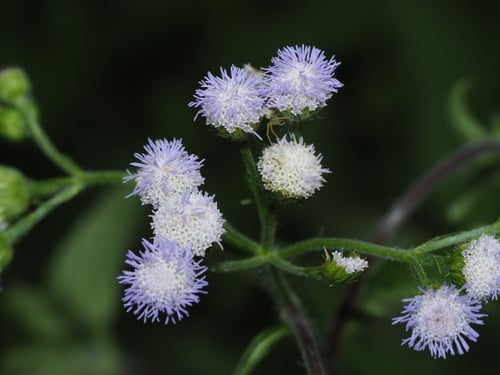
Ageratum conyzoides
Billygoat Plant, Goatweed
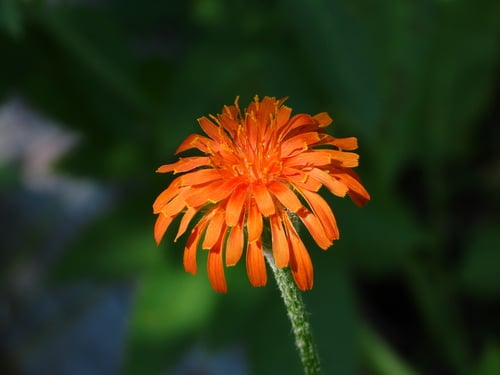
Agoseris aurantiaca
Mountain dandelion, Orange Agoseris, Orange-flower Goat-chicory, False dandelion