Tilia tomentosa
Moench
Silver lime, Silver Linden
iNaturalist· cc-by-nc
(c) zacsf, some rights reserved (CC BY-NC)
iNaturalist· cc-by-nc
(c) Antoine Guilbaud, some rights reserved (CC BY-NC), uploaded by Antoine Guilbaud
iNaturalist· cc-by-nc
(c) Misha Zitser, some rights reserved (CC BY-NC), uploaded by Misha Zitser
Summary
Source: WikipediaTilia tomentosa, known as silver linden in the US and silver lime in the UK, is a species of flowering plant in the family Malvaceae, native to southeastern Europe and southwestern Asia, from Romania and the Balkans east to western Turkey, occurring at moderate altitudes.
Description
A large deciduous tree. It grows 24 m high. The crown and tree is compact and rounded. The leaves are alternate. The edges of the leaves have sharp teeth and the base of the leaf is lop sided. The leaves are 5-12 cm long. The leaves are shiny and dark green above but white or silvery and hairy underneath. The flowers are yellow. They are on light green, leaf-like bracts. The fruit are warty, hairy and slightly 5 angled.
Edible Uses
Young leaves can be eaten raw or cooked. The dried leaves are sometimes used as an adulterant for marjoram (Origanum majorana). A tea can be made from the flowers. A paste of ground fruits and flowers makes a very good chocolate substitute, though attempts to market it commercially failed because the paste decomposes readily.
Traditional Uses
The leaves are boiled then eaten with oil and salt. The leaves are used for sarma in Turkey. They are rolled around a filling of rice or minced meat. The dried leaves are sometimes used as a substitute for marjoram.
Medicinal Uses
A tea made from the flowers is antispasmodic, diaphoretic, and sedative.
Known Hazards
The flowers are toxic to bumble bees.
Distribution
It is a temperate plant. It can grow in most soils. It needs an open, sunny position. It is hardy and can withstand drought and frost. It suits hardiness zones 6-9. Hobart Botanical Gardens.
Where It Grows
Asia, Australia, Balkans, Bulgaria, Canada, China, Europe, Greece, Mediterranean, North America, Tasmania, Turkey, Türkiye, USA,
Cultivation
Prefers a good moist loamy alkaline to neutral soil but succeeds on slightly acid soils. Grows poorly on any very dry or very wet soil. According to another report this species succeeds in a hot dry position. Dislikes exposed positions. Succeeds in sun or semi-shade. This species thrives in southern England, though it prefers a continental climate, growing more slowly and not producing fertile seed in areas with cool summers. Lime trees tend to hybridise freely if other members of the genus are growing nearby. If growing plants from seed it is important to ensure the seed came from a wild source or from an isolated clump of the single species. Grows best in a woodland situation, young plants tolerate a reasonable level of side shade. The fragrant flowers of this tree are toxic to bees. Trees are usually attacked by aphids which cover the ground and the leaves with a sticky honeydew. Rarely produces suckers. Quite tolerant of root disturbance, semi-mature trees up to 5 metres tall have been transplanted successfully. Plants in this genus are notably resistant to honey fungus.
Propagation
Much of the seed produced in Britain is not viable — cut a few seedcases open to check for a seed inside. Where possible, obtain fresh seed that is ripe but has not yet developed a hard seed coat and sow it immediately in a cold frame. It may germinate the following spring, though it could take 18 months. Stored seed can be very slow to germinate due to a hard seed coat, embryo dormancy, and a hard coat on the pericarp — together these factors can mean the seed takes up to 8 years to germinate. One way to shorten this time is to stratify the seed for 5 months at high temperatures (10°c at night, up to 30°c by day) followed by 5 months of cold stratification. When seedlings are large enough to handle, prick them out into individual pots and grow them on in the greenhouse through their first winter. Plant out into permanent positions in late spring or early summer, after the last expected frosts. Layering in spring just before the leaves unfurl takes 1–3 years. Suckers, when formed, can be removed with as much root as possible during the dormant season and replanted immediately.
Other Uses
A fibre obtained from the tough inner bark can be worked into mats, shoes, and coarse cloth.
Notes
These have also been in the Tiliaceae.
Synonyms
Also Known As
Gumusi thlamur, Ihlamur
References (17)
- Brouk,
- Crawford, M., 2012, How to grow Perennial Vegetables. Green Books. p 127
- Cundall, P., (ed.), 2004, Gardening Australia: flora: the gardener's bible. ABC Books. p 1420
- Dogan, Y., et al, 2015, Of the importance of a leaf: the ethnobotany of sarma in Turkey and the Balkans. Journal of Ethnobiology and Ethnomedicine, 11:56
- Ertug, F, Yenen Bitkiler. Resimli Türkiye Florası -I- Flora of Turkey - Ethnobotany supplement
Show all 17 references Hide references
- Facciola, S., 1998, Cornucopia 2: a Source Book of Edible Plants. Kampong Publications, p 241
- Farrar, J.L., 1995, Trees of the Northern United States and Canada. Iowa State University press/Ames p 281
- Hancer, C. K., et al, 2020, Traditional Knowledge of Wild Edible Plants of Biga (Çanakkale), Turkey. Acta Societatis Botanicorum Poloniae / 2020 / Volume 89 / Issue 1 / Article 8914
- Harris, E & J., 1983, Field Guide to the Trees and Shrubs of Britain. Reader's Digest. p 42
- Hibbert, M., 2002, The Aussie Plant Finder 2002, Florilegium. p 300
- Kayabasi, N. P., et al, 2018, Wild edible plants and their traditional use in the human nutrition in Manyas (Turkey). Indian Journal of Traditional Knowledge. Vol. 17(2), April 2018, pp 299-306 (As Tilia argentea)
- Lord, E.E., & Willis, J.H., 1999, Shrubs and Trees for Australian gardens. Lothian. p 74
- Özdemir, E. and Kültür, S., 2017, Wild Edible Plants of Savaştepe District (Balıkesir, Turkey), Marmara Pharm J 21/3: 578-589
- Plants for a Future database, The Field, Penpol, Lostwithiel, Cornwall, PL22 0NG, UK. http://www.scs.leeds.ac.uk/pfaf/
- READ, (As Tilia argentea)
- Sfikas, G., 1984, Trees and shrubs of Greece. Efstathiadis Group. Athens. p 110
- Verz. ausland. Baume 136-137. 1785
More from Malvaceae
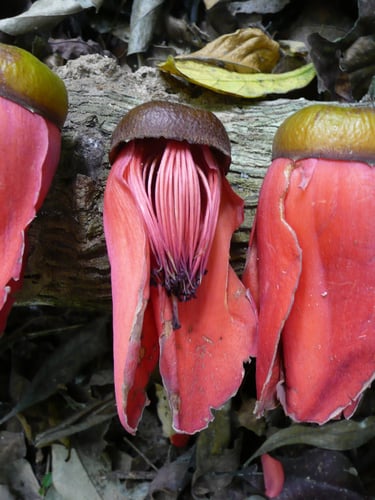
Bombax buonopozense
Cotton tree, Red flower silk cotton tree
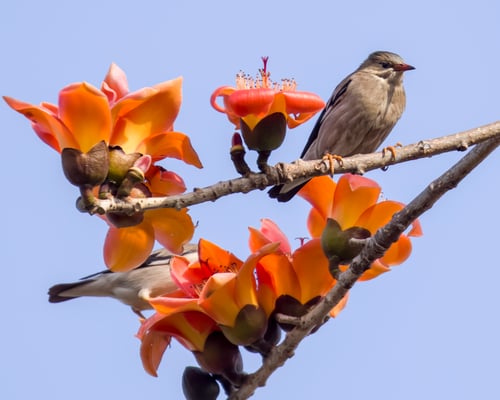
Bombax ceiba
Kapok tree, Red silk-cotton tree
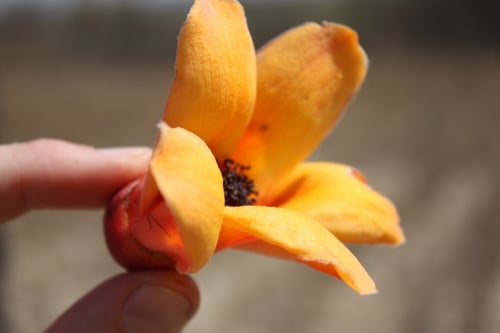
Bombax costatum
Red-flowered silk cotton tree
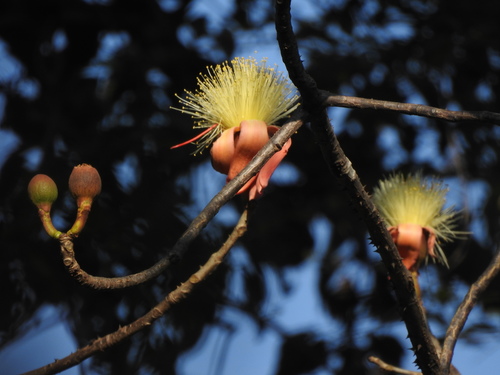
Bombax insigne
Showy silk cotton tree, White silk cotton tree
Bombax ungulicarpum
Brachychiton acerifolius
Flame tree, Flame kurrajong, Bottle Tree