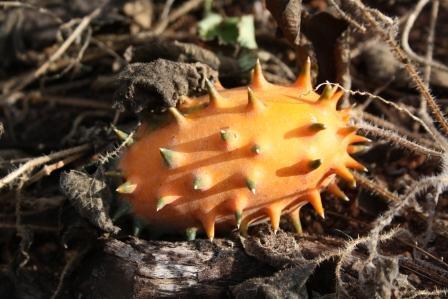
Trichosanthes pilosa
Lour.
Japanese snake gourd
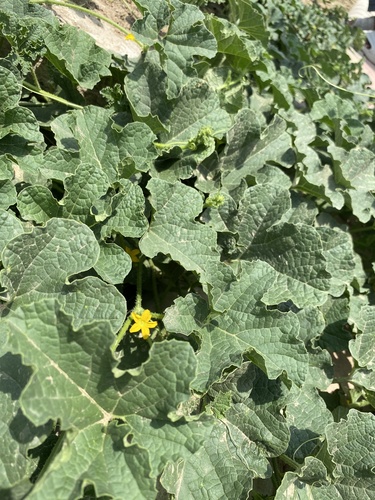
iNaturalist· cc-by-nc
(c) Graham Bell, some rights reserved (CC BY-NC), uploaded by Graham Bell
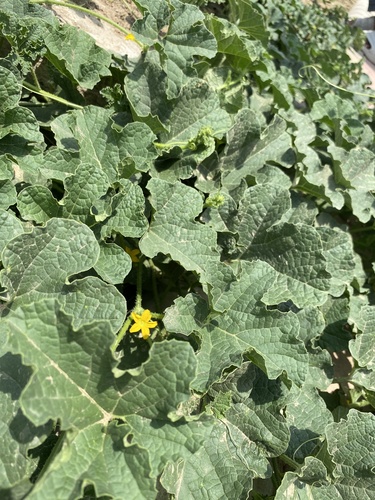
iNaturalist· cc-by-nc
(c) Chan Kam Kong, some rights reserved (CC BY-NC), uploaded by Chan Kam Kong
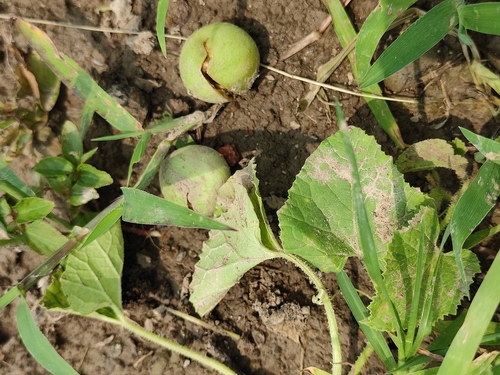
iNaturalist· cc-by-nc
(c) Graham Bell, some rights reserved (CC BY-NC), uploaded by Graham Bell
Summary
Source: WikipediaTrichosanthes pilosa is a species of flowering plant in the family Cucurbitaceae. It is a tropical or semitropical vine bearing an edible fruit. It is native to Japan, Taiwan, India, Malaysia, Vietnam, the Philippines, China (Guangdong, Guangxi, Hainan, Hunan, Jiangxi, Sichuan, Xizang (Tibet), Zhejiang) and other parts of southeast Asia as well as in Australia. It is known in English as Japanese snake gourd. The Japanese snake gourd (T. pilosa), is very similar in its vegetative characters to the more widespread "snake gourd", Trichosanthes cucumerina, the flower and leaves of the two species are very similar but the fruit of T. pilosa are round to egg-shaped, about 7 cm long and not resembling a snake.
Description
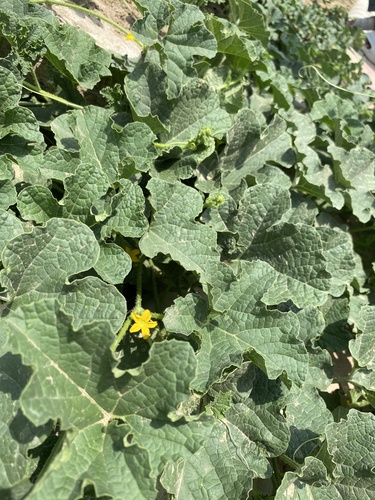
A pumpkin family plant. It is a climbing vine. The stems are slender and grooved. They are hairy. The leaves are oval or round and 5-13 cm long by 5-12 cm wide. They are pale green underneath. The fruit are oval and orange to red. They are 6-7 cm long by 4-6 cm wide. They are smooth and have a beak.
Edible Uses
The immature fruit are preserved in salt or miso; tubers and roots are used for starch, and it is commercially cultivated as a vegetable.
Traditional Uses
The immature fruit are preserved in salt or miso. The tubers are used for starch.
This uses section is brief — help expand it
Medicinal Uses
Yields the protein hetero-trichosanthin, with 1.7 times the abortifacient activity of trichosanthin from the related species Trichosanthes kirilowii. Diuretic. The seed is vermifuge. The root is anodyne, antiphlogistic, blood purifier, depurative, febrifuge and resolvent. It is used as a poultice or made into a decoction to treat abscesses, boils, fevers, sore throats etc. The fruit is used to treat coughs, diabetes, jaundice etc.
Distribution
It is a subtropical plant. It grows in dense forests and on mountain slopes between 600-1,700 m above sea level in China.
Where It Grows
Asia, China, India, Japan, Papua New Guinea, PNG, Taiwan, Tibet,
Cultivation
Trichosanthes pilosa is a plant of mainly tropical and subtropical climates, it is not hardy in most of the temperate zone but can often be grown there as a spring-sown annual. Requires a rich well-drained soil and plenty of moisture in the growing season.
Propagation
Seed - sow in pots in a rich soil. Sow 2 - 3 seeds per pot and thin to the strongest plant. Grow them on fast and plant out when large enough.
Other Uses
The dried fruit is rich in saponins and is used a soap substitute. An industrial starch is obtained from the root.
Other Information
It is a commercially cultivated vegetable.
Synonyms
Also Known As
Huru, Karasu-uri
References (8)
- Arora, R. K., 2014, Diversity in Underutilized Plant Species - An Asia-Pacific Perspective. Bioversity International. p 109 (As Trichosanthes cucumeroides)
- Facciola, S., 1998, Cornucopia 2: a Source Book of Edible Plants. Kampong Publications, p 89 (As Trichosanthes cucumeroides)
- A. R. Franchet & P. A. L. Savatier, Enum. pl. Jap. 1:172. 1873 (As Trichosanthes cucumeroides)
- Kays, S. J., and Dias, J. C. S., 1995, Common Names of Commercially Cultivated Vegetables of the World in 15 languages. Economic Botany, Vol. 49, No. 2, pp. 115-152 (As Trichosanthes cucumeroides)
- Plants of Papua New Guinea LAE herbarium record (As Trichosanthes ovigera)
Show all 8 references Hide references
- Tanaka, (As Trichosanthes cucumeroides)
- van Wyk, B., 2005, Food Plants of the World. An illustrated guide. Timber press. p 366 (As Trichosanthes cucumeroides)
- World Checklist of Useful Plant Species 2020. Royal Botanic Gardens, Kew