Tetragonia implexicoma
(Miq.) Hook. f.
Bower spinach, Warrigal Spinach, Ice Plant
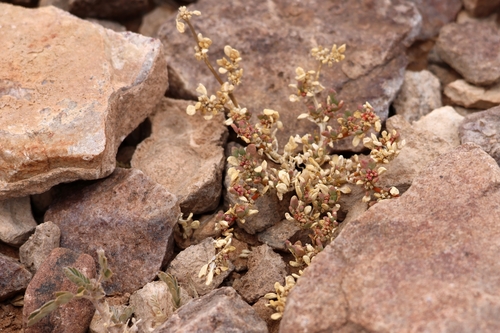
iNaturalist· cc-by-nc
(c) Jennifer Michelson, some rights reserved (CC BY-NC), uploaded by Jennifer Michelson
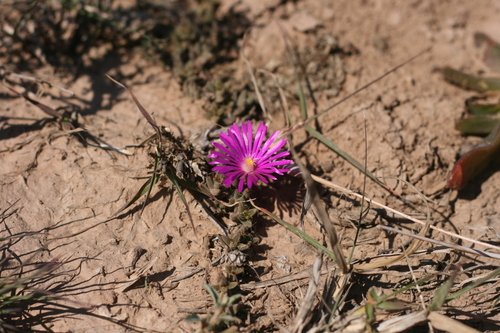
iNaturalist· cc-by-nc
(c) Graeme Rigg, some rights reserved (CC BY-NC), uploaded by Graeme Rigg
iNaturalist· cc-by-nc
(c) Ian McMaster, some rights reserved (CC BY-NC), uploaded by Ian McMaster
Summary
Source: WikipediaTetragonia implexicoma, commonly known as bower spinach, is a species of plant in the Aizoaceae, or ice-plant family. A similar species is Tetragonia tetragonioides, however this species has larger leaves and a shorter flowering time.
Description
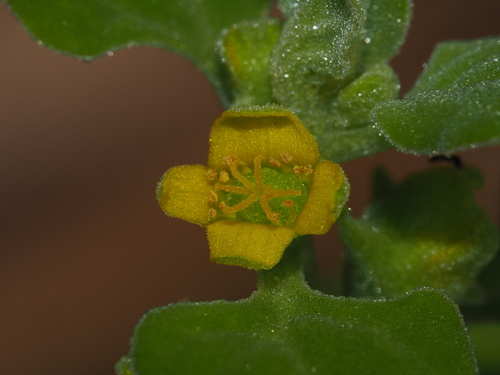
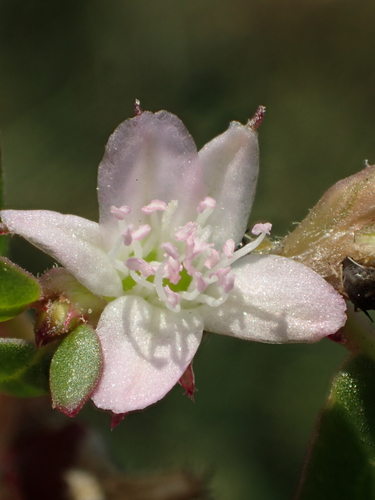
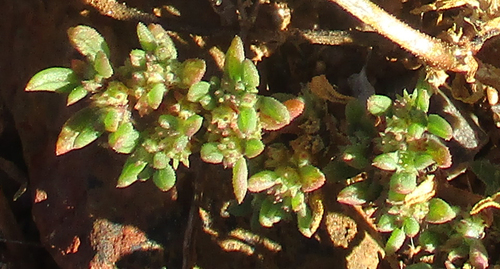
A succulent climber. It can climb 3 m high. The stems are slender and fleshy. It can form dense mats over the ground. The leaves are thick and diamond shaped. They are 1.5-4 cm long. They are bright green and have water filled pustules on the surface. The flowers are small and yellow. They are on slender stems arising from the leaf bases. The fruit are red to black and berry like. They have a hard seed inside. The leaves are smaller and darker than Tetragonia tetragonoides and lack distinct veins.
Edible Uses
None known
Traditional Uses
The young leaves and shoots are eaten cooked. The ripe fruit are eaten.
This uses section is brief — help expand it
Medicinal Uses
None known
Distribution
It is a temperate plant. It is a coastal plant. It forms thick tangled masses just behind the sand dunes. It can tolerate high levels of salt. It is drought resistant but sensitive to frost. Hobart Botanical Gardens. Tasmania Herbarium.
Where It Grows
Australia*, New Zealand, Norfolk Island, Tasmania*,
Cultivation
Plants can be grown from cuttings.
Other Uses
None known
Other Information
The leaves have been a popular food.
Notes
There are about 50-60 Tetragonia species.
Synonyms
Also Known As
Barilla, Coorong spinach, Kokihi, New Zealand Spinach
References (27)
- Alice, L. & O'Quinn, T., Australian Bush Superfoods. Explore Australia p 30
- Bodkin, F., 1991, Encyclopedia Botanica. Cornstalk publishing, p 971
- Bodkin, F., 1991, Encyclopedia Botanica. Cornstalk publishing, p 971 (As Tetragonia trigyna)
- Bonney, N., 1997, Economic Native Trees and Shrubs for South Australia. Greening Australia (SA) inc. Campbelltown SA 5074 p 164
- Breidahl H., 1997, Australian Southern Shores. Lothian. p 122
Show all 27 references Hide references
- Cribb, A.B. & J.W., 1976, Wild Food in Australia, Fontana. p 136
- Crowe, A., 1997, A Field Guide to the Native Edible Plants of New Zealand. Penguin. p 90
- Curtis, W.M., 1963, The Students Flora of Tasmania Vol 2 p 241
- Dashorst, G.R.M., and Jessop, J.P., 1998, Plants of the Adelaide Plains & Hills. Botanic Gardens of Adelaide and State Herbarium. p 54
- Flora of Australia, Volume 4, Phytolaccaceae to Chenopodiaceae, Australian Government Publishing Service, Canberra (1984) p 37
- Flora of Australia Volume 49, Oceanic Islands 1, Australian Government Publishing Service, Canberra. (1994) p 78
- Gott, B & Conran, J., 1991, Victorian Koorie Plants. PO Box 666 Hamilton, Victoria 3300, Australia. p 42
- Hibbert, M., 2002, The Aussie Plant Finder 2002, Florilegium. p 297
- Harris, S., Buchanan, A., Connolly, A., 2001, One Hundred Islands: The Flora of the Outer Furneaux. Tas Govt. p 237
- Hastings Advance Community College, 2017, Uses for Native Plants of the Mornington Peninsula. 86pp. p 74
- Hedrick, U.P., 1919, (Ed.), Sturtevant's edible plants of the world. p 646
- Howells, C & Gulline, H., 2003, Coastal Plants of Tasmania. Plant Identikit. Australian Plant Society, Tasmania. p 36
- Jones, D.L. & Gray, B., 1977, Australian Climbing Plants. Reed. p 61, 148
- King Island Natural Resource Management Group, 2002, King Island Flora: A Field Guide. p 21
- Low, T., 1991, Wild Herbs of Australia and New Zealand. Angus & Robertson. p 96
- Low, T., 1991, Wild Food Plants of Australia. Australian Nature FieldGuide, Angus & Robertson. p 33
- Low, T., 1992, Bush Tucker. Australia’s Wild Food Harvest. Angus & Robertson. p 52, 135
- Paczkowska, G. & Chapman, A.R., 2000, The Western Australian Flora. A Descriptive Catalogue. Western Australian Herbarium. p 135
- Potts, B.M., Kantvilas, G., and Jarman, S.J. (eds), 2006, Janet Somerville's Botanical History of Tasmania. Univ. of Tas. & Tas Museum. p 177
- Smith, K & I., 1999, Grow your own bushfoods. New Holland. Australia. p 75
- Whiting, J. et al, 2004, Tasmania's Natural Flora. Tasmania's Natural Flora Editorial Committee PO Box 194, Ulverstone, Tasmania, Australia 7315 p 15
- Woolmore, E et al, 2002, King Island Flora: A Field Guide. p 21