Terminalia brownii
Fresen.
iNaturalist· cc-by-nc
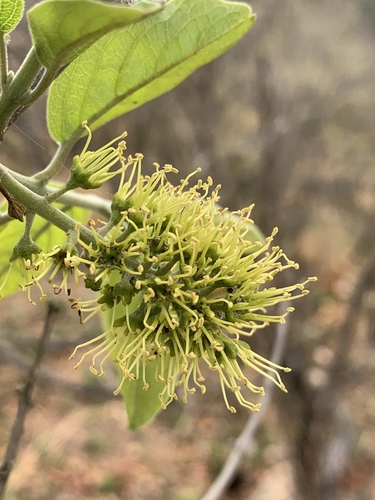
(c) Odile Weber, some rights reserved (CC BY-NC), uploaded by Odile Weber
iNaturalist· cc-by-nc
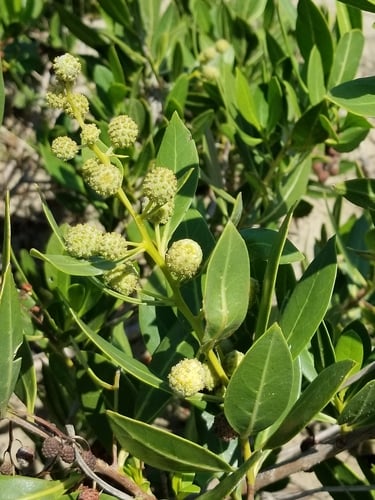
(c) Odile Weber, some rights reserved (CC BY-NC)
Description
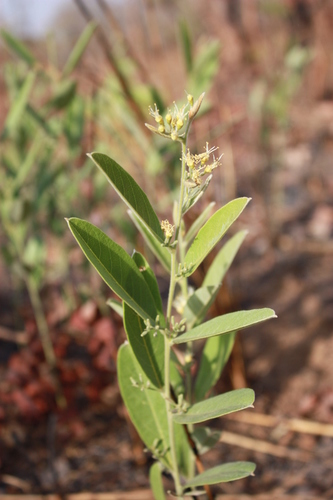
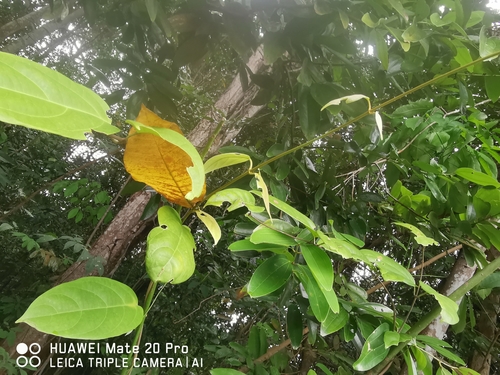
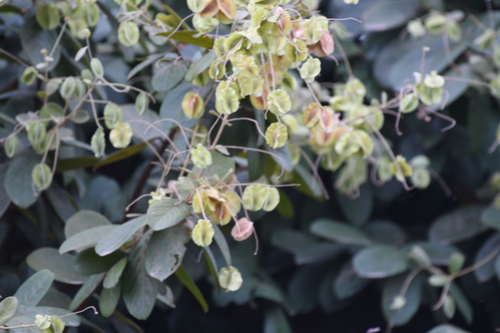
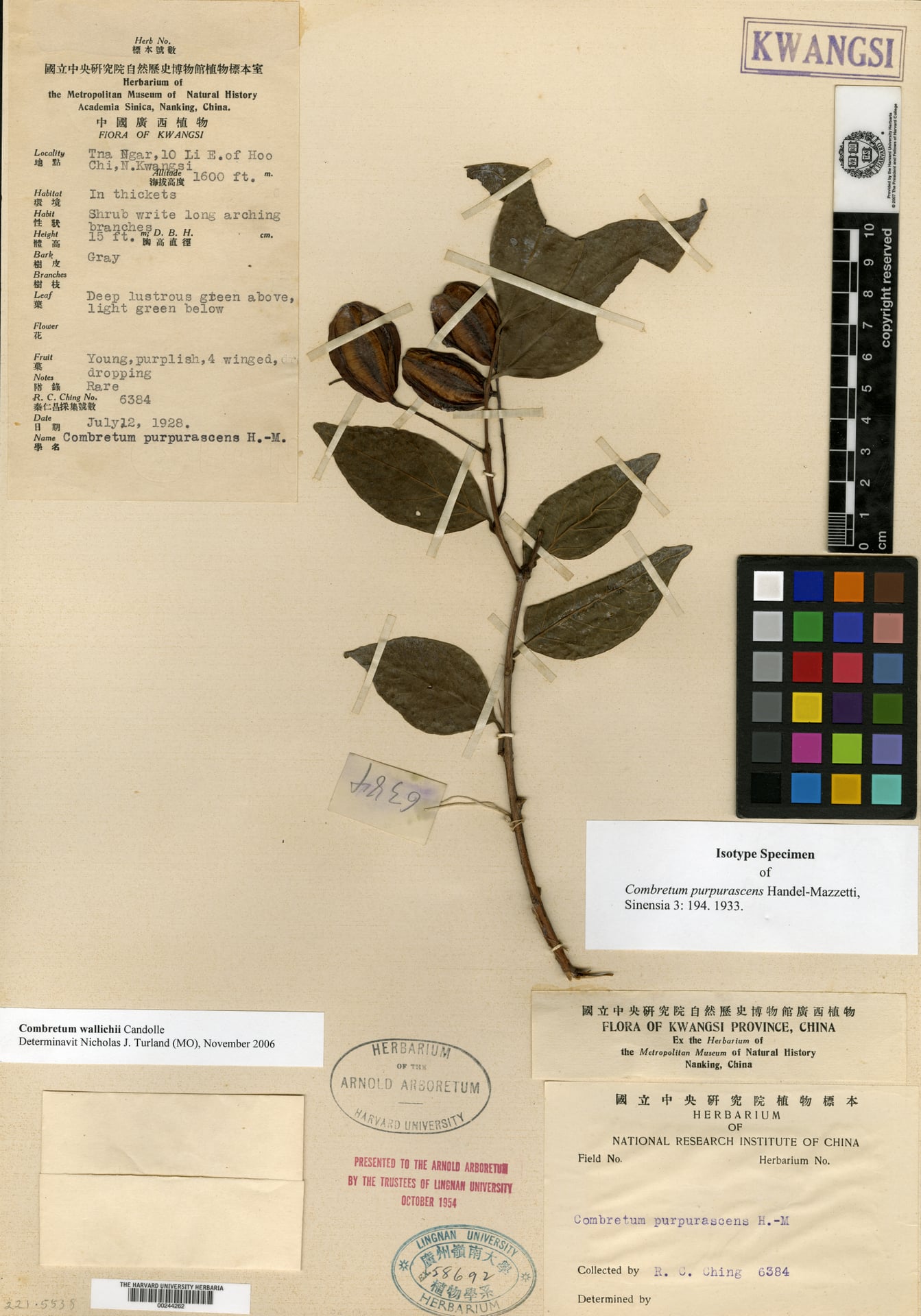
A tree. It grows 7-25 m high. The bark is dark grey and develops cracks along it. The leaves are arranged in spirals at the end of branches. They are oval and 6-16 cm long. The leaves droop. The old leaves turn red before they fall. The flowers are white or cream. The fruit are reddish-purple and have wings. The fruit are 4-6 cm long.
Edible Uses
The fruit are eaten raw, especially by children.
Traditional Uses
The fruit are eaten raw.
This uses section is brief — help expand it
Medicinal Uses
The phloem fibres are chewed, and the solution swallowed, in the treatment of yellow fever, particularly in children. The bark is astringent. An infusion is taken in the treatment of fevers, colds and chest complaints, including tuberculosis and possibly pneumonia. A medicine made from the bark is used in the local treatment of hepatitis. An extract from the leaves is used to treat pink-eye in livestock.
Distribution
It is a tropical plant. It grows in well-drained dry soils. It grows in woodland. It grows between 500-2,000 m above sea level. It grows in areas with a rainfall of 400 mm per year. It can grow in arid places.
Where It Grows
Africa, Benin, Central Africa, Congo, East Africa, Ethiopia, Kenya, Middle East, Nigeria, Somalia, Sudan, Tanzania, Uganda, West Africa, Yemen,
Cultivation
Plants grow from seeds. The seeds germinate easily in about 60-90 days. It can be cut back and allowed to re-grow.
Propagation
Seed - viability can be maintained for at least 1 year in hermetic storage at 3°c.
Other Uses
The bark, fruits and roots contain 19% tannins and can be used as dyes. A yellow dye is obtained from the roots. The inner bark contains a small amount of a sticky exudate, and the wood burns with a scented smoke with which women sometimes perfume their hair. The yellow-brown wood is fairly hard, strong and durable. It is said to be resistant to boring insects and termites. It is used to make canoes, for house-building, piles for grain-stores, beds, tool-handles etc. The wood is used for fuel, and to make a charcoal used in iron-smelting. The tree is widely recommended for use in agroforestry; despite its rather dense shade, crops grow well under its canopy. It is also grown as a windbreak and to provide shade and shelter. The leaf fall is heavy, making an excellent mulch.
Production
It has a moderate growth rate.
Other Information
They are eaten especially by children.
Synonyms
Also Known As
Darot, Epiye, Kiuku, Kolopcho, Koloswo, Mpoke, Mpuko, Muuku, Mwanya, Olbugoi, Sabaranya, Subagh, Wob
References (10)
- Achigan-Dako, E, et al (Eds), 2009, Catalogue of Traditional Vegetables in Benin. International Foundation for Science.
- Allen, D. J., 2007, Wildflowers and Common Trees of East Africa. Camerapix Publishers p 46
- East African Herbarium records, 1981,
- Goode, P., 1989, Edible Plants of Uganda. FAO p 30
- Mutie, F. G., 2020, Conservation of Wild Food Plants and Their Potential for Combatting Food Insecurity in Kenya as Exemplified by the Drylands of Kitui County. Plants 2020, 9, 1017
Show all 10 references Hide references
- Mutie, F. M., et al, 2023, Important Medicinal and Food Taxa (Orders and Families) in Kenya, Based on Three Quantitative Approaches. Plants 2023, 12, 1145
- Peters, C. R., O'Brien, E. M., and Drummond, R.B., 1992, Edible Wild plants of Sub-saharan Africa. Kew. p 87
- Royal Botanic Gardens, Kew (1999). Survey of Economic Plants for Arid and Semi-Arid Lands (SEPASAL) database. Published on the Internet; http://www.rbgkew.org.uk/ceb/sepasal/internet [Accessed 10th April 2011]
- Termote, C., et al, 2014, Assessing the potential of wild foods to reduce the cost of a nutritionally adequate diet: An example from eastern Baringo District, Kenya. Food and Nutrition Bulletin, vol. 35, no. 4
- World Checklist of Useful Plant Species 2020. Royal Botanic Gardens, Kew