Terminalia bellirica
(Gaertn.) Roxb.
Myrobalans, Bedda nuts
iNaturalist· cc-by-nc-sa
(c) Satish Nikam, some rights reserved (CC BY-NC-SA)
iNaturalist· cc-by-nc
(c) Radha Veach, some rights reserved (CC BY-NC)
iNaturalist· cc-by-nc
(c) Radha Veach, some rights reserved (CC BY-NC)
Summary
Source: WikipediaTerminalia bellirica, known as bahera, beleric or bastard myrobalan, is a large deciduous tree in the family Combretaceae. It is common on the plains and lower hills in South and Southeast Asia, where it is also grown as an avenue tree. The basionym is Myrobalanus bellirica Gaertn. (Fruct. Sem. Pl. 2: 90, t. 97. 1791). William Roxburgh transferred M. bellirica to Terminalia as "T. bellerica (Gaertn.) Roxb.". This spelling error is now widely used, causing confusion. The correct name is Terminalia bellirica (Gaertn.) Roxb.
Description
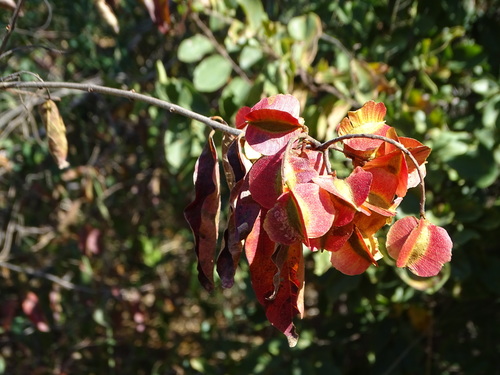
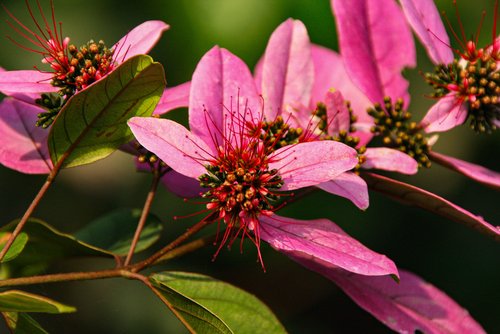
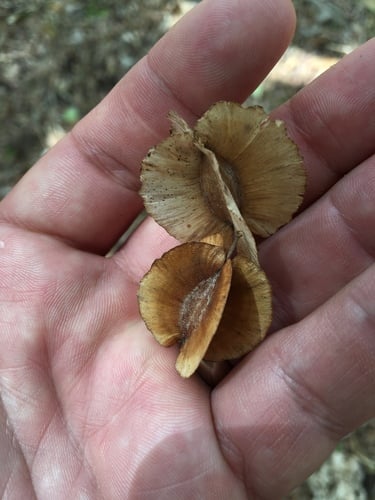
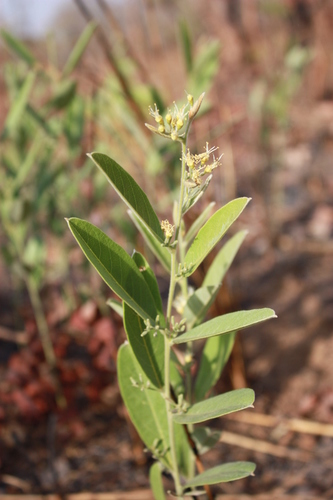
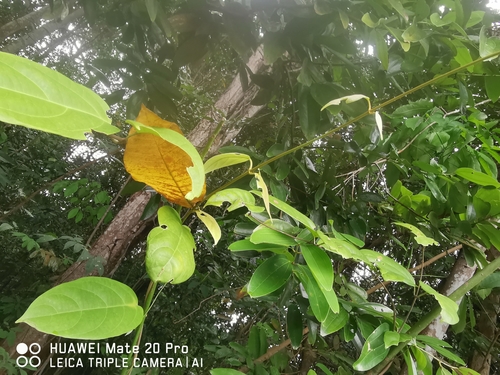
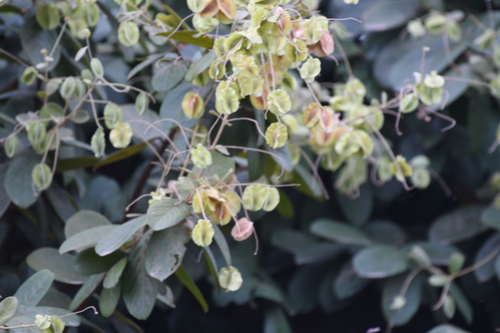
A tall tree which loses its leaves during the year. It grows to 50 m tall and can be 3.5 m across. As a young tree it is narrow, upright and compact but develops buttresses and becomes more spreading with age. The branches come out in layers and are short. Young leaves can be bronze and old leaves turn bright red before falling. The leaves have long stalks. They are alternate. They are 9-26 cm long by 5-14 cm wide. They are mostly at the ends of branches. They are oval and leathery. The base is narrowed and unequal. The flowers do not have stalks. They are yellowish and in slender spikes in the axils of leaves. They have a strong odour. The fruit is oval and has a hard covering over the seed. It is woody and 2-3 cm across. The fruit is covered with brownish velvety hairs.
Edible Uses
The seeds are edible but should be consumed only in small quantities, as eating them in larger amounts can produce narcotic effects — they are possibly toxic or narcotic. The dark red fruits are edible, smooth-skinned, about 3cm in diameter, subacid with a pleasant flavour, and can be used to make preserves.
Traditional Uses
CAUTION: The kernels although eaten may have poisonous affects. It is probably the fruit that have a purgative effect. The kernels are eaten in small amounts after roasting. They taste like almonds. The fruit are used for making preserves. They can be eaten raw but are bitter. The bark is fermented into a type of wine.
Medicinal Uses
The fruit contains anthraquinones and tannins and is anthelmintic, astringent (particularly when ripe), digestive, tonic and laxative (particularly when unripe). It is used internally mainly for digestive and respiratory problems. In Indian herbal medicine, the ripe fruit treats diarrhoea and indigestion, while the unripe fruit is used as a laxative for chronic constipation. The fruit is also used for upper respiratory tract infections causing sore throats, hoarseness and coughs. Externally, it is prepared as a lotion for sore eyes. The sour fruits are one of three ingredients in 'triphala', an Ayurvedic rejuvenative laxative tonic also containing the fruits of Phyllanthus emblica and Terminalia chebula.
Known Hazards
Seeds are possibly toxic or narcotic; consuming more than small quantities can produce narcotic effects.
Distribution
A tropical plant. In Nepal is grows to about 1100 m altitude. They are common in mixed forests throughout India. It grows in areas with a rainfall between 90-300 cm. It can tolerate most soils. It does best in deep sandy loams that are well drained. It can tolerate drought and withstand frosts. In southern China it grows between 540-1,350 m altitude. In XTBG Yunnan.
Where It Grows
Africa, Asia, Australia, Bangladesh, Bhutan, Cambodia, China, Cuba, East Africa, Fiji, Hawaii, Himalayas, India, Indochina, Indonesia, Laos, Malaysia, Maldives, Mozambique, Myanmar, Nepal, Northeastern India, Pacific, Pakistan, Philippines, SE Asia, Sikkim, Sri Lanka, Thailand, USA, Vietnam, West Indies,
Cultivation
Plants are grown from seed. It helps to soak seeds in warm water for 24-36 hours before planting. The whole fruit is sown and if kept watered germinates in 1-2 months. Fruit fed to cattle allow the seed to pass through and these germinate quickly. Plants are best at a spacing of 5 m. It can be grown from stem cuttings of 1 year old branches with 2-3 nodes. Rooting hormone helps.
Propagation
Pre-soaking seed in cold water for 24 hours before sowing has been reported to improve germination. Buried seeds have a better chance of successful germination. Fresh seeds germinate at a high rate of 85–100%, though this declines rapidly in stored seed. Germination requires ample moisture and typically takes 2–5 weeks. Seed is usually sown in nursery seedbeds but can be sown directly in the field under favourable conditions. When raising seedlings in a nursery, transplanting before the taproot develops is strongly preferable and mostly successful. Clipping roots and shoots significantly checks growth, and stumping is not advised.
Other Uses
The bark is used for making a dye. Dried fruits contain 20–25% tannin. A dye from the fruits is used with iron sulphate to dye black cloth and matting, as a cheaper substitute for indigo, and for making ink. The leaves are also a source of tannins. Seeds yield about 40% of a clear yellow oil composed of 12% palmitic acid, 16% stearic acid, 43% oleic acid and 29% linoleic acid, used as hair oil and in soap manufacture. An excellent soap can be made using 60% of this oil combined with 25% coconut oil and 15% groundnut oil. The trunk produces a considerable quantity of insoluble gum. The timber is yellowish-grey, lacking heartwood, light to moderately heavy, fairly straight-grained and very coarse-textured. It is not durable and very prone to insect attack, though durability reportedly improves when the wood is immersed in water. Generally considered of little value, it is used for construction and agricultural implements, particularly where other timber is scarce or costly. Large stems are used for dugout canoes. The wood is valued for fuel and charcoal production.
Production
Seedling growth is slow. Trees can be 8 m high in 6-7 years. Trees flower and fruit regularly. The dry kernel is 47% oil. In northeastern India fruit occur between December and February. In southern China plants flower in March to April and fruit May to July.
Other Information
It is cultivated.
Notes
There are about 200-250 Terminalia species. They are tropical. It is used in medicine.
Synonyms
Also Known As
Badero, Bahada, Bahare, Baheda, Bahera, Bahid, Bahira, Barado, Barain, Barra, Barro, Baru, Bedda nut tree, Behada, Behado, Behda, Beheda, Behedo, Beleric, Belliric Myrobalan, Bhairah, Bhara, Bharla, Bhaora, Bhomora, Bohera, Boirah, Boyra, Bulu, Hroirwk, Jaha kebo, Jaha sapi, Jaha, Jelawai, Kuru, Lokyo, Mai-mahen, Mai-naw, Makalaw, Mentalun, Myrobalm, Pohon ketapang kabakebo, Samaw pipek, Sargona, Shaanthi kaayi, Tani, Tawitho, Thaanni, Thiag-riang, Thani, Thing-van-dawt, Thit-seint, Vibhitaki
References (85)
- Acharya K. P. and Acharya, R., 2010, Eating from the Wild: Indigenous knowledge on wild edible plants in Parroha VDC of Rupandehi District, Central Nepal. International Journal of Social Forestry. 3(1):28-48
- Ambasta, S.P. (Ed.), 2000, The Useful Plants of India. CSIR India. p 627
- Angami, A., et al, 2006, Status and potential of wild edible plants of Arunachal Pradesh. Indian Journal of Traditional Knowledge 5(4) October 2006, pp 541-550
- Arinathan, V., et al, 2007, Wild edibles used by Palliyars of the western Ghats, Tamil Nadu. Indian Journal of Traditional Knowledge. 6(1) pp 163-168
- Aryal, K. P., et al, 2018, Diversity and use of wild and non-cultivated edible plants in the Western Himalaya. Journal of Ethnobiology and Ethnomedicine (2018) 14:10
Show all 85 references Hide references
- Baishya, S. Kr., et al, 2013, Survey of Wild Edible Fruits of Dhubri District, Assam, India. Plant Archives Vol 13 (1): 155-158
- BARC, 2016, State of Biodiversity for Food and Agriculture in Bangladesh. Bangladesh Agricultural Research Council.
- Behera K. K., et al, 2008, Wild Edible Plants of Mayurbhanj District, Orissa, India. J. Econ. Taxon. Bot. Vol. 32 (Suppl.) pp 305-314
- Bhatia, H., et al, 2018, Traditionally used wild edible plants of district Udhampur, J&K, India. Journal of Ethnobiology and Ethnomedicine (2018) 14:73
- Bohra, N., et al, 2017, Ethnobotany of wild edible plants traditionally used by the local people in the Ramnagar regions from Nainital District, Uttarakhand, India. Biolife 5(1): 12-19
- Bole, P.V., & Yaghani, Y., 1985, Field Guide to the Common Trees of India. OUP p 15
- Brahma, S., et al, 2013, Wild edible fruits of Kokrajhar district of Assam, North-East India, Asian Journal of Plant Science and Research 3(6):95-100
- Burkill, I.H., 1966, A Dictionary of the Economic Products of the Malay Peninsula. Ministry of Agriculture and Cooperatives, Kuala Lumpur, Malaysia. Vol 2 (I-Z) p 2175
- Chandrakumar, P., et al, 2015, Ethnobotanical studies of wild edible plants of Gond, Halba and Kawar tribes of Salekasa Taluka, Gondia District, Maharashtra State, India. International Research Journal of Pharmacy 6(8)
- Chandrashekara, U. M., 2009, Tree species yielding edible fruit in the coffee-based homegardens of Kerala, India: their diversity, uses and management. Food Sec. 1:361-370
- Chauhan, S. H., et al, 2018, Consumption patterns of wild edibles by the Vasavas: a case study from Gujarat, India. Journal of Ethnobiology and Ethnomedicine (2018) 14:5
- Dangol, D. R., 2002, Economic uses of forest plant resources in western Chitwan, Nepal. Banko Janakari, 12(2): 56-64
- Das, S. and Mohiuddin, M., 2012, Gender role in Home Garden Management in the Indigenous Community: A case study in Bandarban Hill District, Bangladesh. International Journal of Social Forestry. 5(1):22-37
- Dobriyal, M. J. R. & Dobriyal, R., 2014, Non Wood Forest Produce an Option for Ethnic Food and Nutritional Security in India. Int. J. of Usuf. Mngt. 15(1):17-37
- Ethnobotany of Karbis. Chapter 4 in p 106
- Facciola, S., 1998, Cornucopia 2: a Source Book of Edible Plants. Kampong Publications, p 80 (As Terminalia bellarica)
- Flora of Pakistan. www.eFloras.org
- GAMMIE,
- Gardner, S., et al, 2000, A Field Guide to Forest Trees of Northern Thailand, Kobfai Publishing Project. p 188
- Gautam, R. S., et al, 2020, Wild Edible Fruits of Nepal. Int. J. Appl. Sci. Biotechnol. Vol 8(3): 289-304
- Gautam, R. S., et al, 2022, Ethnobotanical Review of Wild Edible Plants of Nepal. Journal of Natural History Museum Volume 32, 2021-22 p 110
- Hearne, D.A., & Rance, S.J., 1975, Trees for Darwin and Northern Australia. AGPS, Canberra p 112, Pl 36
- Hedrick, U.P., 1919, (Ed.), Sturtevant's edible plants of the world. p 644
- Hu, Shiu-ying, 2005, Food Plants of China. The Chinese University Press. p 575
- Jadhav, V. D. et al, 2011, Documentation and ethnobotanical survey of wild edible plants from Kolhapur district. Recent Research in Science and Technology. 3(12): 58-63
- Kachenchart, B., et al, 2008, Phenology of Edible Plants at Sakaerat Forest. In Proceedings of the FORTROP II: Tropical Forestry Change in a Changing World. Bangkok, Thailand.
- Kahlon, L. K. & Singh, R., 2019, Traditional knowledge & Dynamics of edible plants of primitive tribal group ‘Paudi Bhuyan’ with changing demography migration patterns in Northern Odisha. Indian Journal of Traditional Knowledge Vol 18(1), pp 7-15
- Kar, A., et al, 2013, Wild Edible Plant Resources used by the Mizos of Mizoram, India. Kathmandu University Journal of Science, Engineering and Technology. Vol. 9, No. 1, July, 2013, 106-126
- Karki, S., et al, 2017, Minor Fruits in Nepal: Utilization and Conservation Efforts. Proceedings of 2nd National Workshop on CUAPGR, 2017.
- Kiran, K. C., et al, 2019, Diversity and Seasonal Availability of Potential Wild Edible Plants from Vidarbha Region of Maharashtra State, India. Int.J.Curr.Microbiol.App.Sci (2019) 8(2): 1434-1446
- Krishen P., 2006, Trees of Delhi, A Field Guide. DK Books. p 140
- Kumar, A., et al, 2012, Ethnobotanical Edible Plant Biodiversity of Lepcha Tribes. Indian Forester, 138 (9):798-803
- Kumar, S. A., Manus, D. & Mallika, M., 2018, Impact of non-timber forest products on Forest and in Livelihood Economy of the People of Adjoining Areas of Jalpaiguri Forest Division, West Bengal, India. Int. J. of Life Sciences, 2018; 6 (2):365-385
- Majumdar, K and Datta, N., 2009, Traditional wild edible fruits for the forest dwellers of Tripura, India. Pleione 3(2) 167-178
- Manandhar, N.P., 2002, Plants and People of Nepal. Timber Press. Portland, Oregon. p 452
- Menninger, E.A., 1977, Edible Nuts of the World. Horticultural Books. Florida p 60
- Miguel, E., et al, 1989, A checklist of the cultivated plants of Cuba. Kulturpflanze 37. 1989, 211-357
- Masoodi, H. U. R. & Sundriyal, R. C., 2020, Richness of non-timber forest products in Himalayan communities—diversity, distribution, use pattern and conservation status. Journal of Ethnobiology and Ethnomedicine 16:56
- Nag, A. & De, K. B., 1995, In Search of a New Vegetable Oil. Journal of Agricultural and Food Chemistry 43:902-903
- Narayanan, M. K., R., et al, 2011, Ethnobotanically important trees and their uses by Kattunaikka tribe in Wayanad Wildlife Sanctuary, Kerala, India. Journal of Medicinal Plants research. 5(4): 704-612
- Pandy, R. K. & Saini, S. K., 2007, Edible plants of tropical forests among tribal communities of Madhya Pradesh. Indian Journal of Traditional Knowledge. 6(1), pp 185-190
- Pasha, M. K. & Uddin, S. B., 2019, Minor Edible Fruits of Bangladesh. Bangladesh J. Plant Taxon. 26(2): 299–313
- Pegu, R., et al, 2013, Ethnobotanical study of Wild Edible Plants in Poba Reserved Forest, Assam, India. Research Journal of Agriculture and Forestry Sciences 1(3):1-10
- Pl. Coromandel 2:54, t. 198. 1805 "bellerica"
- Pradhan, R., et al, 2020, Potential Wild Edible Plants and its Significance in Livelihood of Indigenous People of Male Mahadeshwara Hills, Karnataka. Economic Affairs Vol. 64, No. 4 pp. 01-14
- Rahmatullah, M., et al, 2009, A survey of medicinal plants in two areas of Dinajpur district, Bangladesh including plants which can be used as functional foods. American-Eurasian Journal of Sustainable Agriculture, 3(4): 862-876
- Rajendra, K.C., 2014. Prominent Non-Wood Forest Products of Te- rai and Siwalik Regions in Nepal. Food and Agriculture Organization, Kathmandu, Nepal. p 45
- Ramachandran, V.S. and Nair, V.J., 1981, Ethnobotanical studies in Cannanore District, Kerala State (India). J Econ. Tax. Bot. Vol 2 pp 65-72
- Ramachandran, V. S., 2007, Wild edible plants of the Anamalais, Coimbatore district, western Ghats, Tamil Nadu. Indian Journal or Traditional Knowledge. 6(1) pp 173-176
- Rao, M. L. S., et al, 2014, Indigenous Plant Foods which are commonly consumed by the tribal communities in Dumbriguda Area of Visakhapatnam District, Andhra Pradesh, India. Biolife. Vol 2, Issue 3
- Ravikrishna, S., 2011, Ethno-medico-botanical survey on Wild Edible fruits of Udupi Taluq, Udupi p 101
- Reddy, B. M., 2012, Wild edible plants of Chandrapur district, Maharashtra, India. Indian Journal of Natural Products and Resources. 3(1) pp 110-117
- Setiya, A. V., et al, 2016, Exploration and documentation of some wild edible plants used by the aboriginals from Gadchiroli District (M.S.) India. International Advanced Research Journal in Science, Engineering and Technology. 3(7)
- Sharma, G., et al, 2016, Agrobiodiversity in the Sikkim Himalaya. International Centre for Integrated Mountain Development, ICIMOD Working Paper 2016/5 p 20
- Sharma, P., et al, 2013, Wild edibles of Murari Devi and surrounding areas in Mandi district of Himachal Pradesh, India. International Journal of Biodiversity and Conservation. Vol. 5(9), pp. 580-592, September 2013
- Shin, T., et al, 2018, Traditional knowledge of wild edible plants with special emphasis on medicinal uses in Southern Shan State, Myanmar. Journal of Ethnobiology and Ethnomedicine (2018) 14:48
- Singh, H.B., Arora R.K.,1978, Wild edible Plants of India. Indian Council of Agricultural Research, New Delhi. p 85
- Smith, A.C., 1985, Flora Vitiensis Nova, Lawaii, Kuai, Hawaii, Volume 3 p 431
- Srivastava, R. C., 2010, Traditional knowledge of Nyishi (Daffla) tribe of Arunachal Pradesh. Indian Journal of Traditional Knowledge. 9(1):26-37
- Staples, G.W. and Herbst, D.R., 2005, A tropical Garden Flora. Bishop Museum Press, Honolulu, Hawaii. p 244
- Sukarya, D. G., (Ed.) 2013, 3,500 Plant Species of the Botanic Gardens of Indonesia. LIPI p 545
- Sundriyal, M., et al, 1998, Wild edibles and other useful plants from the Sikkim Himalaya, India. Oecologia Montana 7:43-54 (As Terminalia belerica Roxb.)
- Sundriyal, M., et al, 2004, Dietary Use of Wild Plant Resources in the Sikkim Himalaya, India. Economic Botany 58(4) pp 626-638 (As Terminalia belerica Roxb.)
- Sundriyal, M. & Sundriyal, R. C., 2004, Structure, Phenology, Fruit Yield, and Future Prospects of some Prominent Wild Edible Plant Species of the Sikkim Himalaya, India. Journal of Ethnobiology 24(1): 113-138
- Swaminathan, M.S., and Kochnar, S.L., 2007, An Atlas of Major Flowering Trees in India. Macmillan. p 154
- Tanaka,
- Teron, R. & Borthakur, S. K., 2016, Edible Medicines: An Exploration of Medicinal Plants in Dietary Practices of Karbi Tribal Population of Assam, Northeast India. In Mondal, N. & Sen, J.(Ed.) Nutrition and Health among tribal populations of India. p 150
- Thapa, L. B., et al, 2014, Wild Edible Plants used by endangered and Indigenous Raji Tribe in Western Nepal. International Journal of Applied Sciences and Biotechnology. Vol 2(3):243-252
- Toppo, P. et al, 2016, Wild edible plants of Dhamtari district of Chhattisgarh, India. Van Sangyan Vol. 3, No. 4
- Tsering, J., et al, 2017, Ethnobotanical appraisal on wild edible plants used by the Monpa community of Arunchal Pradesh. Indian Journal of Traditional Knowledge. Vol 16(4), October 2017, pp 626-637
- Uphof,
- Upreti, K., et al, 2010, Diversity and Distribution of Wild Edible Fruit Plants of Uttarakhand. Bioversity Potentials of the Himalaya. p 188
- Uprety, Y., et al, 2010, Non-timber Forest Products in Bardiya District of Nepal: Indigenous Use, Trade and Conservation. J Hum Ecol, 30(3): 143-158
- Uprety, Y., et al, 2012, Diversity of use and local knowledge of wild edible plant resources in Nepal. Journal of Ethnobotany and Ethnomedicine 8:16
- WATT,
- Wickens, G.E., 1995, Edible Nuts. FAO Non-wood forest products. FAO, Rome. p 116
- World Checklist of Useful Plant Species 2020. Royal Botanic Gardens, Kew
- www.worldagroforestrycentre.org/treedb/
- Yeshi, K. et al, 2017, Taxonomical Identification of Himalayan Edible Medicinal Plants in Bhutan and the Phenolic Contents and Antioxidant Activity of Selected Plants. TBAP 7 (2) 2017 pp 89 - 106
- Zeven, A. C. & de West, J. M. J., 1982, Dictionary of cultivated plants and their regions of diversity. Wageningen. p 51