Terminalia calamansanai
(Blanco) Rolfe
Philippine almond tree, Yellow terminalia tree
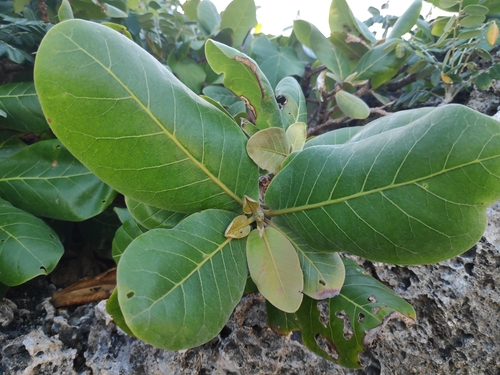
iNaturalist· cc-by-nc
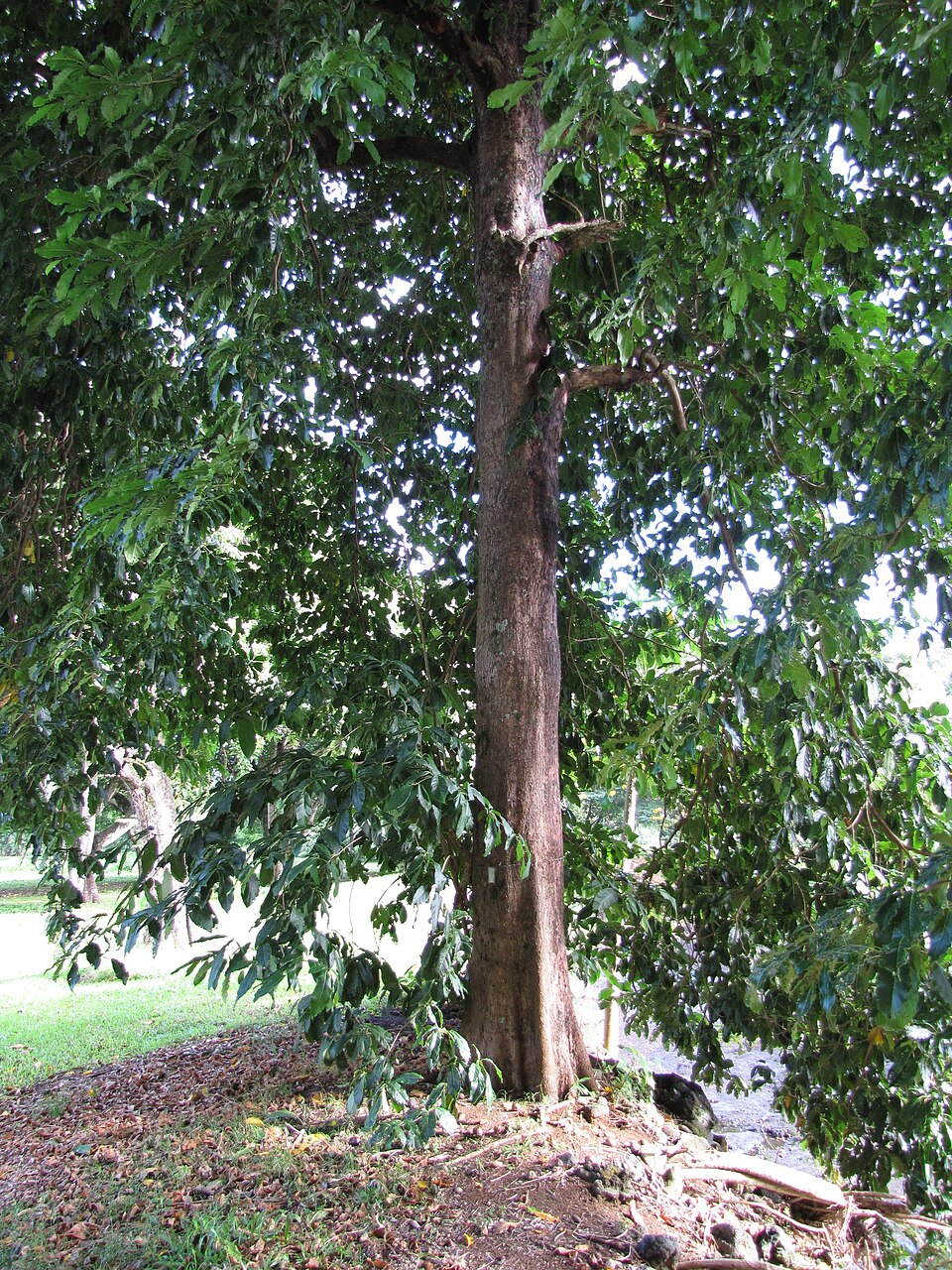
(c) Cheongweei Gan, some rights reserved (CC BY-NC), uploaded by Cheongweei Gan
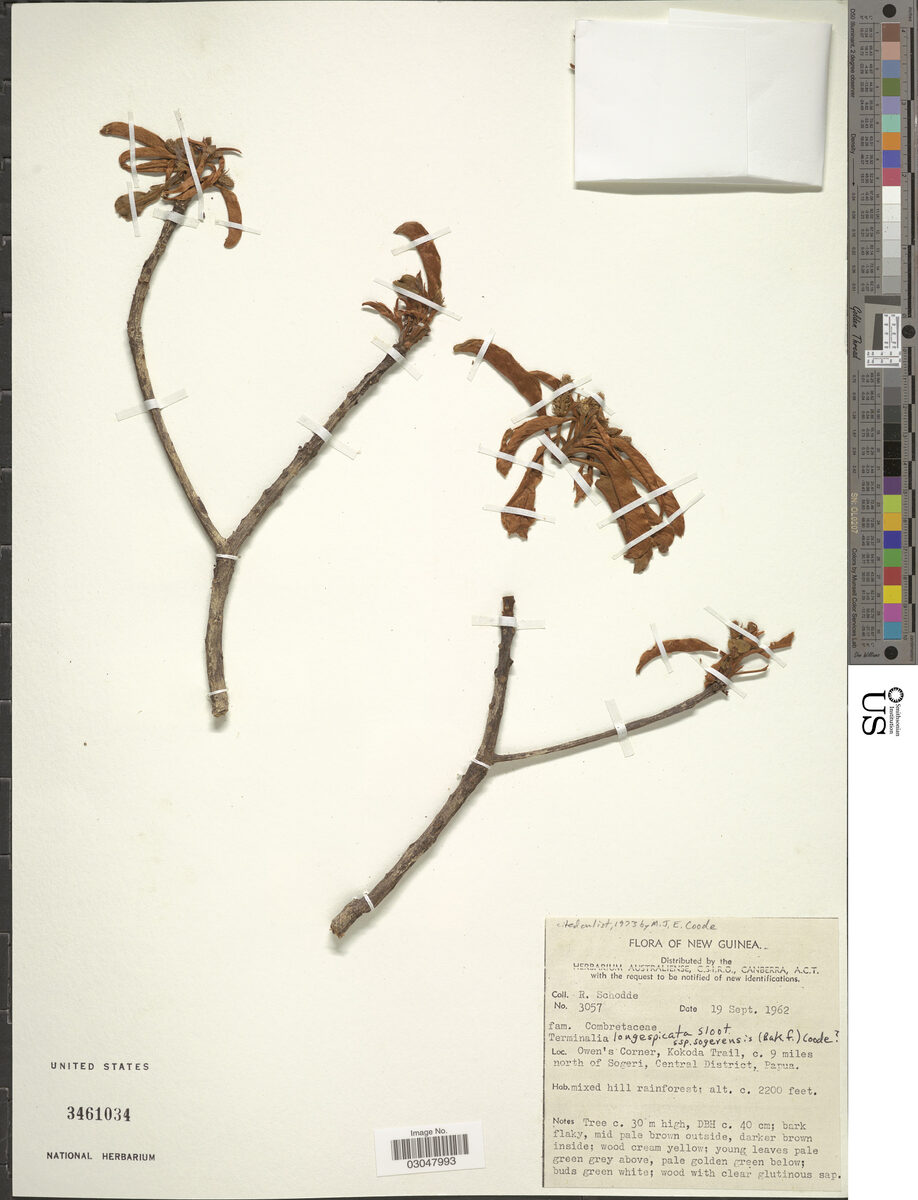
iNaturalist· cc-by-nc
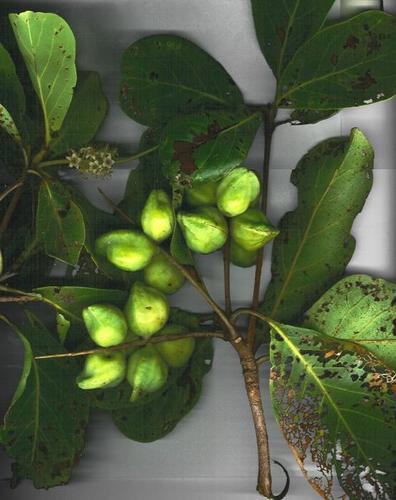
(c) thirty_legs, some rights reserved (CC BY-NC)
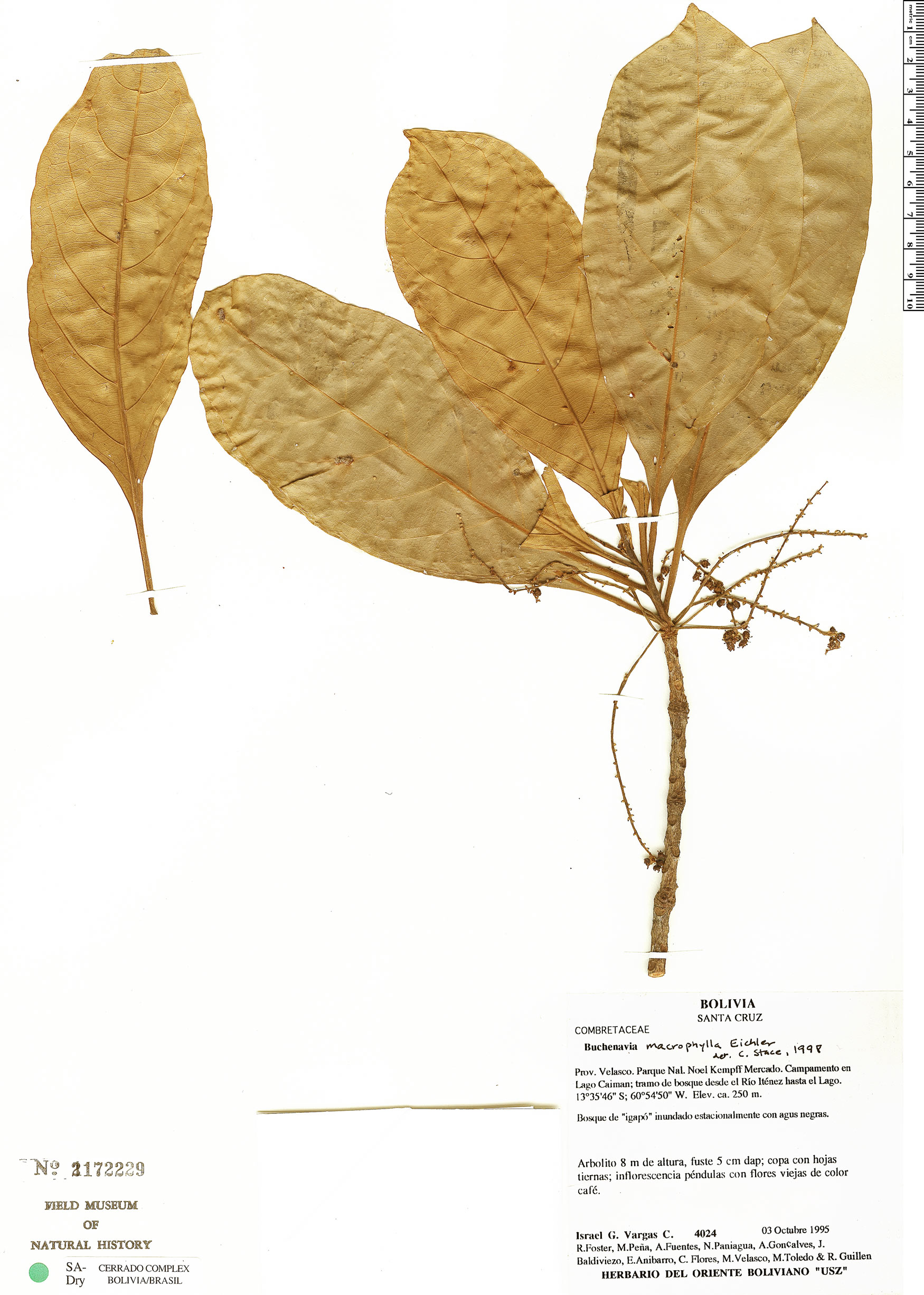
iNaturalist· cc-by-nc
(c) thirty_legs, some rights reserved (CC BY-NC)
Summary
Source: WikipediaTerminalia calamansanai, also spelled Terminalia calamansanay (unresolved name), is a species of plant in the family Combretaceae. It has a large range in SE Asia, from Bangladesh to New Guinea.
Description
A large tree. It grows up to 40 m tall. The tree has plank like buttresses which extend 10 m up the trunk. The small branches are often grouped in rings and thickened where they branch. The young tips of branches are ridged. The leaves are crowded near the ends of twigs and leave scars after they fall off. The leaves are hard and stiff. The leaves are oval and 8.5-16 cm long and 4-8 cm wide. They taper towards the base. Flowers are yellowish green to brown and easily fall off. They are very small. The fruit is flattened and has very broad wings. The fruit is more broad than long. It is 2-5 cm wide and 1-2 cm long. The fruit is dry and does not burst open. The seeds are brownish yellow and covered with fine short hairs and two wings up to 4 cm wide and less than 1 cm long.
Edible Uses
The fruit is eaten raw, and the seeds are eaten either raw or cooked.
Traditional Uses
The fruit are eaten raw. The seeds are eaten raw or cooked.
This uses section is brief — help expand it
Medicinal Uses
The bark is astringent and lithotriptic. It is used both internally and externally.
Distribution
A tropical plant. Occurs occasionally in most areas of the Philippines amongst trees near the sea. It grows in areas with a dry season and at low altitudes.
Where It Grows
Asia, Cambodia, Indochina, Indonesia, Laos, Malaysia, Myanmar, Pacific, Papua New Guinea, PNG, Philippines, SE Asia, Singapore, Solomon Islands, Thailand, Vietnam,
Cultivation
Plants can be grown from seeds.
Other Uses
The heartwood is whitish when freshly cut, becoming grayish yellow upon exposure; it is not clearly demarcated from the sapwood. The texture is rather coarse in appearance, but smooth; the grain is often finely wavy or curly, with a distinct figure formed by concentric bands of soft tissue. The wood is moderately heavy to heavy; moderately hard; not very durable and often attacked by shot-hole beetles. It is used for foundation piles, cheap or temporary construction; cheap furniture; paving blocks, ties, mine timbers; it is seldom sawn into lumber or used for construction because it is not durable. The tree is wind-firm.
Notes
There are about 200-250 Terminalia species. They are tropical.