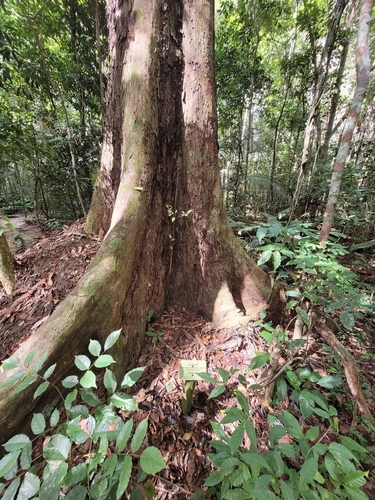
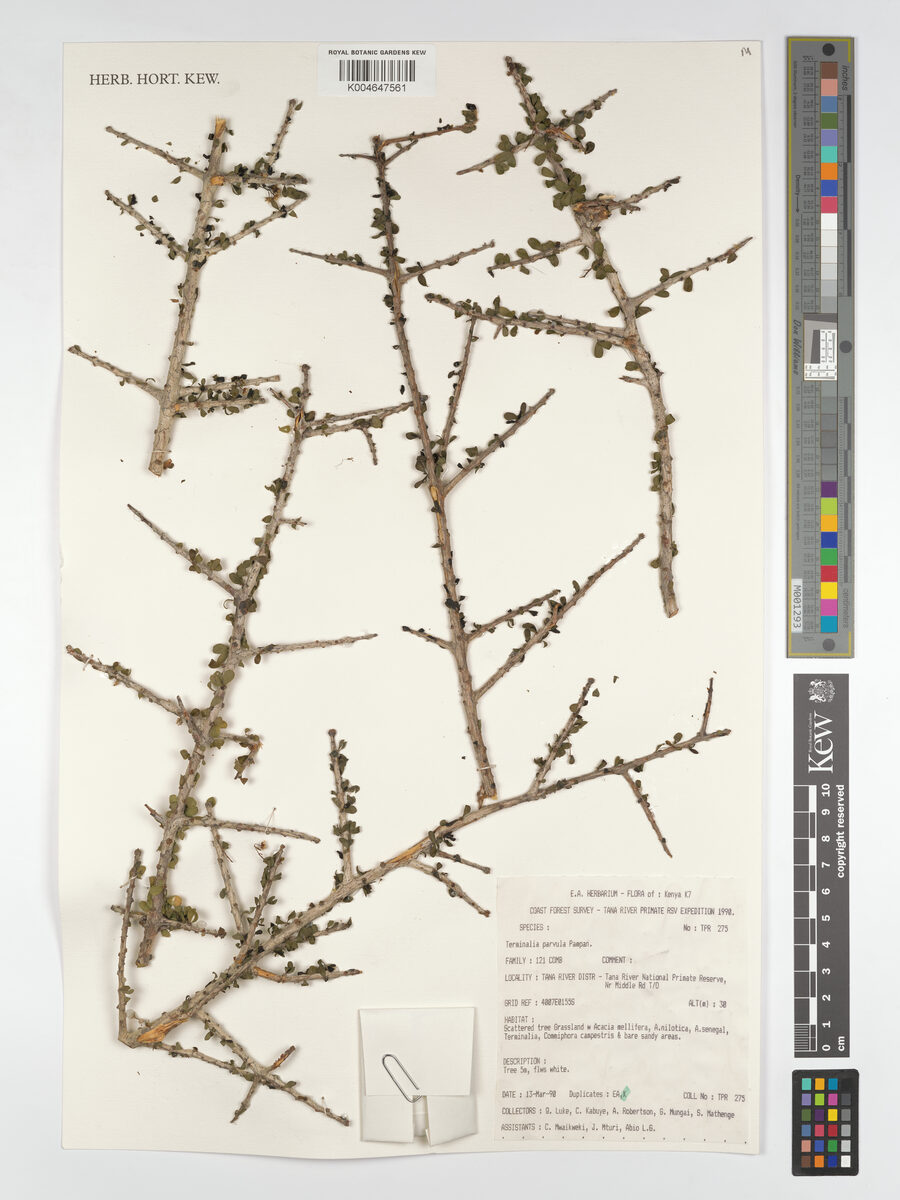
Terminalia platyphylla
F. Muell.
Wild plum, Durin
iNaturalist· cc-by
(c) coenobita, some rights reserved (CC BY), uploaded by coenobita
iNaturalist· cc-by
(c) coenobita, some rights reserved (CC BY), uploaded by coenobita
iNaturalist· cc-by
(c) coenobita, some rights reserved (CC BY), uploaded by coenobita
Summary
Source: WikipediaTerminalia platyphylla, commonly known as wild plum, is a tree of the family Combretaceae native to northern Australia. The tree typically grows to a height of 5 to 10 metres (16 to 33 ft) in height and is deciduous. It blooms between January and October producing white-cream flowers. It is found along creeks in the Kimberley region of Western Australia growing in sandy soils.
Description
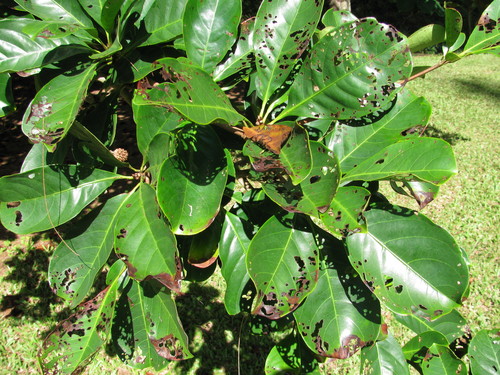
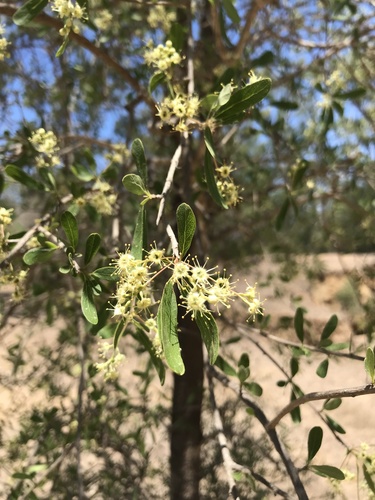
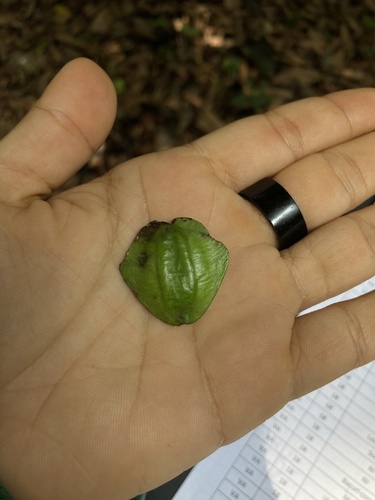
A large spreading tree. It grows to 10-20 m tall. The small branches are hairy and often hang downwards. It often loses many leaves during the year. The bark is rough and dark grey. It has a checkered appearance with cracks along its length. The leaves are arranged in spirals and often near the ends of small branches. They are oval or almost round. They are 7-19 cm long by 3-13 cm wide. They are somewhat leathery and grey-green. They are paler and more hairy underneath. The tip is rounded. The leaf stalk is hairy and 1.5-7 cm long. The flowers are cream and have a strong smell. They are small and occur on dense hairy spikes about 5-12 cm long. These are produced in the axils of leaves near the ends of small branches. The fruit is round or oval and is 2-4 cm long by 0.7-1.5 cm wide. It is fleshy with a hard stone inside. The fruit has a beak and is purple. The shape and size of fruit varies considerably.
Edible Uses
The fruit is edible. The sap is sucked.
Traditional Uses
The fruit is edible. The sap is sucked.
This uses section is brief — help expand it
Distribution
It is a tropical plant. It grows along creek banks in lowland country in northern Australia. It occurs on sandy soils. In tropical Australia it grows from sea level to 600 m altitude.
Where It Grows
Australia*,
Cultivation
It can be grown from fresh seed.
Production
In Australia the plants flower in January to May and fruit March to October.
Notes
There are about 200-250 Terminalia species. They are tropical.
Nutrition
| Part | Moisture | kJ | kcal | Protein | Vit A | Vit C | Iron | Zinc |
|---|---|---|---|---|---|---|---|---|
| Fruit | — | — | 2.3 | — | 2 | — | — | — |
Synonyms
Also Known As
Marntayang
References (17)
- Brock, J., 1993, Native Plants of Northern Australia, Reed. p 316
- Cherikoff V. & Isaacs, J., The Bush Food Handbook. How to gather, grow, process and cook Australian Wild Foods. Ti Tree Press, Australia p 201
- Cooper, W. and Cooper, W., 2004, Fruits of the Australian Tropical Rainforest. Nokomis Editions, Victoria, Australia. p 129
- FAO, 1995, Edible Nuts. Non Wood Forest Products 5.
- Hardwick, G., 2001, Economically Useful Plants for Northern Australia: Master Species List. Crusader eBooks.
Show all 17 references Hide references
- Hedrick, U.P., 1919, (Ed.), Sturtevant's edible plants of the world. p 645
- Kenneally, K.E., Edinger, D. C., and Willing T., 1996, Broome and Beyond, Plants and People of the Dampier Peninsula, Kimberley, Western Australia. Department of Conservation and Land Management. p 89
- Lazarides, M. & Hince, B., 1993, Handbook of Economic Plants of Australia, CSIRO. p 234
- Milson. J., 2000, Trees and Shrubs of north-west Queensland. DPI p 54531
- Paczkowska, G. & Chapman, A.R., 2000, The Western Australian Flora. A Descriptive Catalogue. Western Australian Herbarium. p 216
- Petheram, R.J. and Kok, B., 2003, Plants of the Kimberley Region of Western Australia. UWA Press p 531
- Smith, A.C., 1971, Studies of Pacific Island plants XXIV, the genus Terminalia (Combretaceae) in Fiji, Samoa, Tonga. Brittonia 23:394-371
- Smith, N. M., 1991, Ethnobotanical Field Notes from the Northern Territory, Australia, J. Adelaide Bot. Gard. 14(1): 1-65
- Townsend, K., 1994, Across the Top. Gardening with Australian Plants in the tropics. Society for Growing Australian Plants, Townsville Branch Inc. p 355
- Vigilante, T., et al, 2013, Island country: Aboriginal connections, values and knowledge of the Western Kimberley islands in the context of an island biological survey. Records of the Western Australian Museum Supplement 81: 145-182
- Wheeler, J.R.(ed.), 1992, Flora of the Kimberley Region. CALM, Western Australian Herbarium, p 557
- Wickens, G.E., 1995, Edible Nuts. FAO Non-wood forest products. FAO, Rome. p 117