Terminalia nitens
C. Presl
Sakat
iNaturalist· cc-by
(c) Forest and Kim Starr, some rights reserved (CC BY)
iNaturalist· cc-by-nc
(c) Royal Botanic Garden Edinburgh, some rights reserved (CC BY-NC)
Summary
Source: WikipediaTerminalia nitens is a species of plant in the Combretaceae family. It is native to the Philippines and Japan (Bonin Islands). It is threatened by habitat loss.
Description
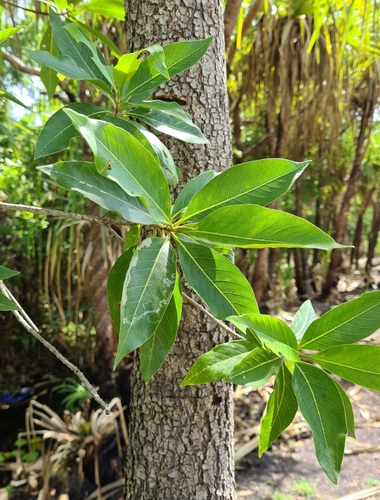
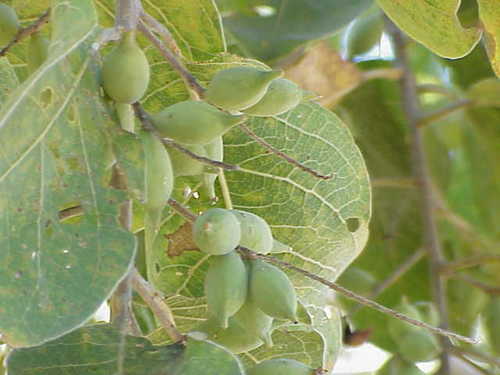
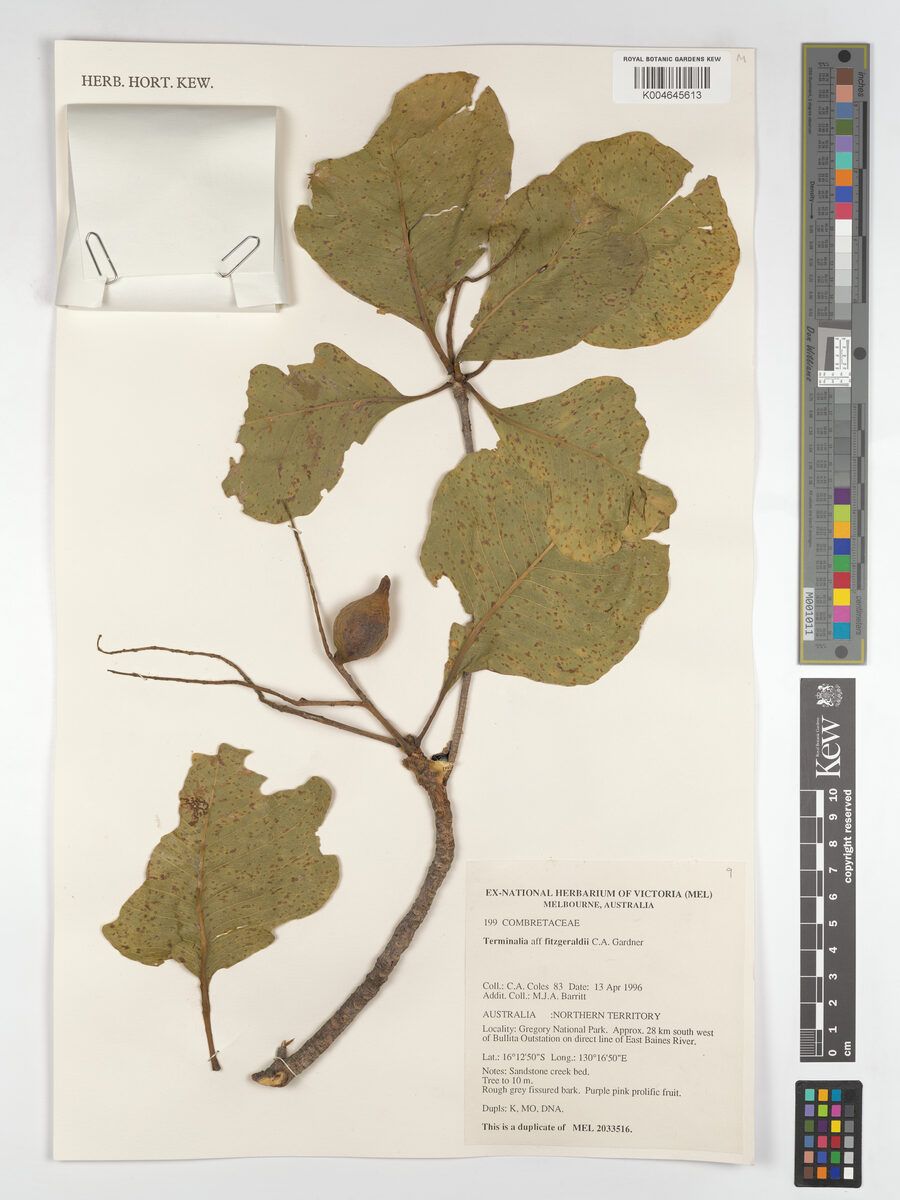
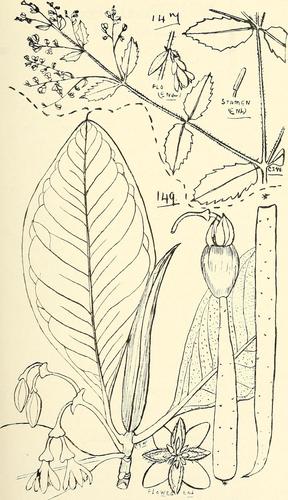
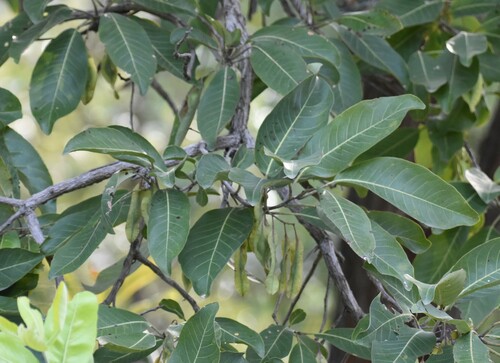
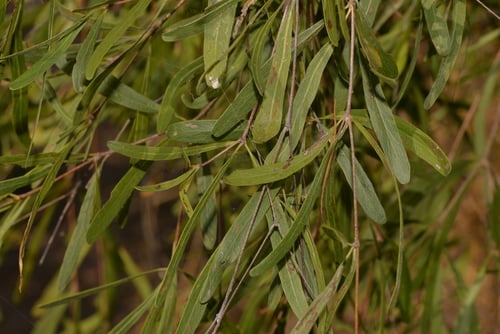
A large tree that loses most of its leaves at some times. The branches are free from hairs and fairly thick. The leaves are mostly near the ends of twigs. The leaves are smooth and oblong. The flowers are yellowish white. The fruit are oval, hard and heavy. They have a prominent point and are green.
Edible Uses
The fruit is eaten raw. The kernel and nuts are also edible.
Traditional Uses
The fruit are eaten raw.
This uses section is brief — help expand it
Distribution
A tropical plant. They are widely scattered throughout the Philippines at low and medium altitudes.
Where It Grows
Asia, Pacific, Philippines, SE Asia,
Cultivation
Plants are intolerant of shade.
Other Uses
The bark contains 9 - 33% tannins. It can be used directly in tanneries, but the tannin content is not high enough for the manufacture of tannin extract. The wood colours water yellow. The heartwood is yellowish brown; it is not clearly demarcated from the 5cm or more wide band of yellowish sapwood that often turns deep yellow upon exposure to the air. The texture is fairly fine; the grain generally straight, sometimes slightly crossed and curly. The wood is moderately heavy; moderately hard to hard; moderately durable. It seasons well and is easy to work. It is used in construction for purposes such as beams, joists, rafters; posts above stumps; flooring, sheathing, ceilings; as well as for making furniture and cabinetwork.
Notes
There are about 200-250 Terminalia species. They are tropical.
References (4)
- Abh. Koenigl. Boehm. Ges. Wiss. ser. 5, 6:574. 1851
- Monsalud, M.R., Tongacan, A.L., Lopez, F.R., & Lagrimas, M.Q., 1966, Edible Wild Plants in Philippine Forests. Philippine Journal of Science. p 453
- Reis, S. V. and Lipp, F. L., 1982, New Plant Sources for Drugs and Foods from the New York Botanical Garden herbarium. Harvard. p 211
- Wickens, G.E., 1995, Edible Nuts. FAO Non-wood forest products. FAO, Rome. p 117