Terminalia ferdinandiana
Exell
Billy Goat plum, Kakadu plum
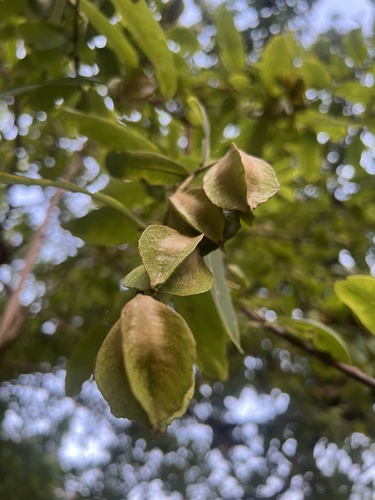
iNaturalist· cc-by-nc
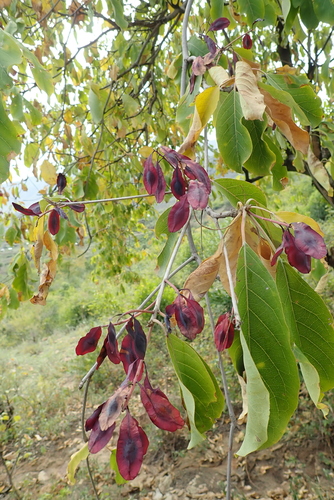
(c) Loxley Fedec, some rights reserved (CC BY-NC), uploaded by Loxley Fedec
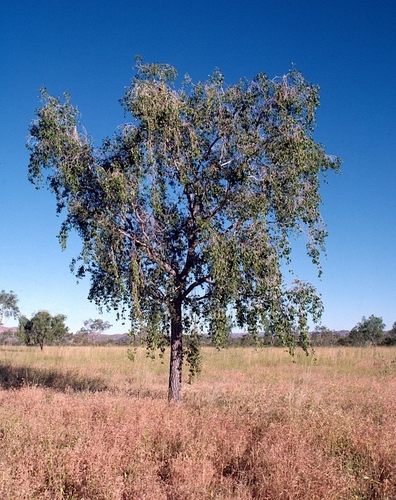
iNaturalist· cc-by-nc
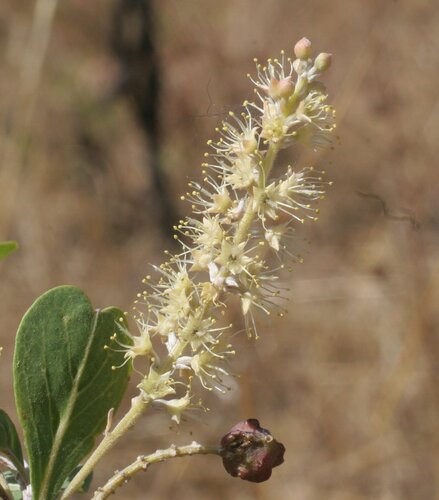
(c) Anthony Kurek EntSocVic, some rights reserved (CC BY-NC)
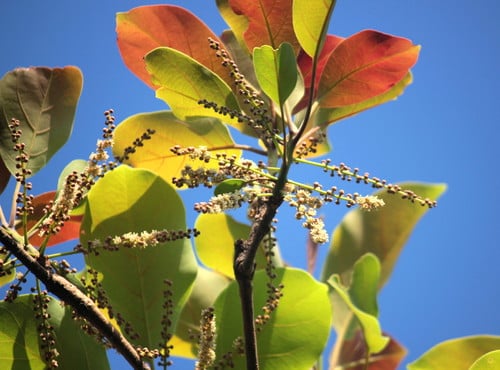
iNaturalist· cc-by-nc
(c) Anthony Kurek EntSocVic, some rights reserved (CC BY-NC)
Summary
Source: WikipediaTerminalia ferdinandiana, most commonly known as the Kakadu plum and also called the gubinge, billygoat plum, green plum, salty plum, murunga, mador and other names, is a flowering plant in the family Combretaceae, native to Australia, widespread throughout the tropical woodlands from north-western Australia to eastern Arnhem Land. Used as a traditional bush food and bush medicine for centuries, the fruit has especially high levels of vitamin C.
Description
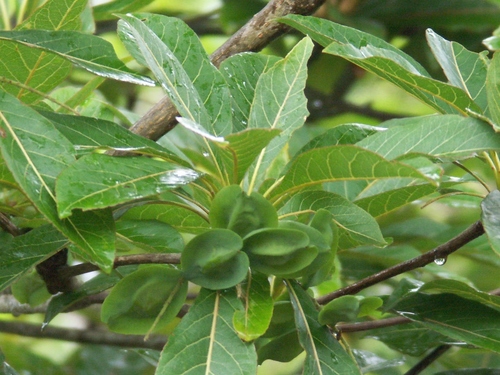
A small to medium sized tree. It grows 4-10 m tall. It is a spreading tree (3 m) with a rounded crown. It looses its leaves during the year. The bark is creamy grey and rough. It has a checkered pattern and is somewhat flaky. The leaves occur in spirals. They are crowded near the ends of small branches. The leaves are large and smooth. They are somewhat leathery and oval to round. They can be 5-25 cm long and 5-20 cm across. They are light green and the veins show up distinctly. The leaf stalk is 2-10 cm long. The leaf stalk and main vein are yellowish-green. The leaves turn to yellow before falling. The flowers are cream, have 5 petals and have a strong nectar smell. They are 0.5 cm across and occur on spikes. The spikes can be 10-20 cm long. They develop in the axils of leaves towards the ends of small branches. The fruit is smooth and fleshy. It is oval and 1.5-2.5 cm long by 1-2 cm across. They have a short beak. They are yellowish-green when ripe. The young fruit are ribbed. (The fruit look like an immature olive). The fruit are edible. They have a single seed in a woody shell. The seed is edible.
Edible Uses
The fruit can be eaten raw or cooked. Fresh, it can have a drying effect in the mouth. It is used for making preserves and jams, is about 3cm long with a slightly bitter flesh, and looks and tastes similar to a gooseberry. It is one of the world's richest natural sources of ascorbic acid, with some forms containing up to 3,150mg of ascorbic acid per 100g of fruit. When ripe, the fruit turns soft and yellow-green in colour. To harvest, simply shake the trunk and the ripe fruits fall to the ground.
Traditional Uses
The fruit are eaten raw. The fruit can be cooked and used for jams and chutneys. The gum is eaten. The seed is edible.
This uses section is brief — help expand it
Medicinal Uses
The pounded fruit is used as an antiseptic and as a soothing balm for aching limbs.
Distribution
It is a tropical plant. It occurs as an understorey tree in open forest in northern Australia. It prefers light sandy soil. The soil should be well drained. It suits an open sunny position. It is drought resistant. It is damaged by frost, being very frost sensitive. It suits seasonally dry tropical areas.
Where It Grows
Australia*,
Cultivation
It can be grown from fresh seed. Germination can take 6-12 weeks. It requires warm moist conditions. It is best to make a small cut in the seed to improve germination. It can re-grow from burnt stumps producing a low shrub that had been named Terminalia prostrata.
Propagation
Seed.
Other Uses
None known
Production
In Australia flowering occurs September to November and fruiting from March to July. The fruiting is related to rainfall and tends to be at the end of the wet season. A tree can yield 50 kg of fruit in a good season. Fruit will keep one week after harvest. They can be stored frozen. Fruit are generally collected from the ground but are easy to pick occurring in bunches near the ends of branches.
Other Information
This fruit is highly sought after. It has high Vitamin C value.
Notes
Fruit have very high Vitamin C. It can be 2-3,000 mg per 100 g of edible portion. This is 50 times citrus. There are about 200-250 Terminalia species. They are tropical.
Nutrition
| Part | Moisture | kJ | kcal | Protein | Vit A | Vit C | Iron | Zinc |
|---|---|---|---|---|---|---|---|---|
| Fruit | 76.2 | 247 | 59 | 0.8 | — | 2907 | 2.4 | 0.7 |
Synonyms
Also Known As
Gabindji, Gabing, Gobin, Gubinge, Kabing, Mador, Manmohpan, Mardangich, Menangbere, Menthem, Murunga, Nanka-bakarra, Pirlamunga, Wardabidji, Wild plum
References (31)
- Alice, L. & O'Quinn, T., Australian Bush Superfoods. Explore Australia p 74
- Barwick, M., 2004, Tropical and Subtropical Trees. A Worldwide Encyclopedic Guide. Thames and Hudson p 409
- Bodkin, F., 1991, Encyclopedia Botanica. Cornstalk publishing, p 971
- Bonney, N., 1997, Economic Native Trees and Shrubs for South Australia. Greening Australia (SA) inc. Campbelltown SA 5074 p 169
- Brock, J., 1993, Native Plants of Northern Australia, Reed. p 314, 315
Show all 31 references Hide references
- Cherikoff V. & Isaacs, J., The Bush Food Handbook. How to gather, grow, process and cook Australian Wild Foods. Ti Tree Press, Australia p 32, 201
- Dunlop, C.R., Leach, G.J. & Cowie, I.D., 1995, Flora of the Darwin Region. Vol 2. Northern Territory Botanical Bulletin No 20. p 147
- Facciola, S., 1998, Cornucopia 2: a Source Book of Edible Plants. Kampong Publications, p 80
- Hardwick, G., 2001, Economically Useful Plants for Northern Australia: Master Species List. Crusader eBooks.
- Hearne, D.A., & Rance, S.J., 1975, Trees for Darwin and Northern Australia. AGPS, Canberra p 112
- Hibbert, M., 2002, The Aussie Plant Finder 2002, Florilegium. p 297
- Hiddins, L., 1999, Explore Wild Australia with the Bush Tucker Man. Penguin Books/ABC Books. p 147
- INFOODS:FAO/INFOODS Databases
- Isaacs, J., 1987, Bush Food, Aboriginal Food and Herbal Medicine. Weldons. p 63
- Kenneally, K.E., Edinger, D. C., and Willing T., 1996, Broome and Beyond, Plants and People of the Dampier Peninsula, Kimberley, Western Australia. Department of Conservation and Land Management. p 88
- Lands, M., 1987, Mayi: Some Bush fruits of Dampierland. Magabala Books, Broome West Australia. p 11
- Lazarides, M. & Hince, B., 1993, Handbook of Economic Plants of Australia, CSIRO. p 234
- Norrington, L., & Campbell, C., 2001, Tropical Food Gardens. Bloomings Books. p 89, 95
- Pharm. J. 229:505 (1982) Reported 2300-3150 mg ascorbic acid per 100 g edible fruit.
- Robins, J., 1996, Wild Lime. Cooking from the Bush food garden. Allen & Unwin p 48
- Smith, K & I., 1999, Grow your own bushfoods. New Holland. Australia. p 43
- Smith, M & Kalotas, A. C., 1985, Bardi Plants: An Annotated List of Plants and Their Use by the Bardi Aborigines of Dampierland, in North-western Australia. Rec. West Aust. Mus. 1985, 12(3): 317-359
- Smith, N and Wightman, G.M., 1990, Ethnobotanical Notes from Belyuen Northern Territory Australia. Northern Territory Botanical Bulletin No 10. Parks and Wildlife Commission of the Northern Territory. p 25, 26.
- Smith, N. M., 1991, Ethnobotanical Field Notes from the Northern Territory, Australia, J. Adelaide Bot. Gard. 14(1): 1-65
- Tiwi Plants and Animals. 2001, Aboriginal flora and fauna knowledge from Bathurst and Melville Islands, northern Australia. Northern Territory Botanical Bulletin; No. 24 p 85
- Townsend, K., 1994, Across the Top. Gardening with Australian Plants in the tropics. Society for Growing Australian Plants, Townsville Branch Inc. p 354
- Vigilante, T., et al, 2013, Island country: Aboriginal connections, values and knowledge of the Western Kimberley islands in the context of an island biological survey. Records of the Western Australian Museum Supplement 81: 145-182
- Wightman, G. & Andrews, M., 1991, Bush Tucker Identikit. Common Native Food Plants of Australia’s top end. Conservation Commission Northern Territory. p 32
- Wightman, Glenn et al. 1992, Mangarrayi Ethnobotany: Aboriginal Plant Use from the Elsey Area Northern Australia. Northern Territory Botanical Bulletin No 15. Parks and Wildlife Commission of the Northern Territory. p 46, 45.
- Wightman, G. & Brown, J., 1994, Jawoyn Plant Identikit, Common Useful Plants in the Katherine Area of Northern Australia. Conservation Commission Northern Territory. p 34
- Yunupinu Banjgul, Laklak Yunupinu-Marika, et al. 1995, Rirratjinu Ethnobotany: Aboriginal Plant Use from Yirrkala, Arnhem Land, Australia. Northern Territory Botanical Bulletin No 21. Parks and Wildlife Commission of the Northern Territory. p 74. (As Terminalia prostrata)