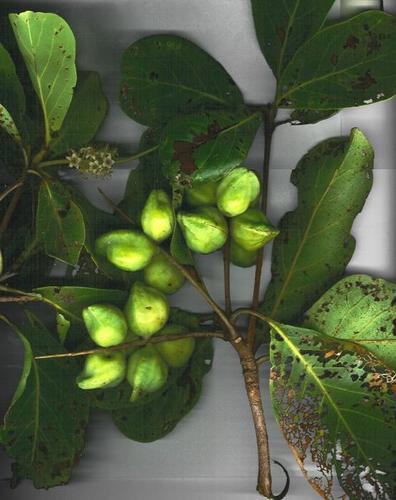
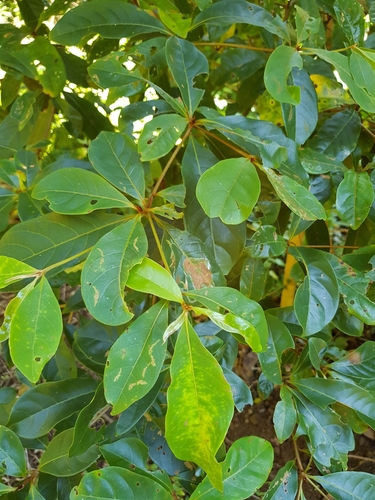
Terminalia latifolia
Sw.
iNaturalist· cc-by-nc
(c) Alan R. Franck, some rights reserved (CC BY-NC)
wikimedia· cc-by
Wikimedia Commons - Lalithamba
wikimedia· cc-by-sa
Wikimedia Commons - YVSREDDY
Summary
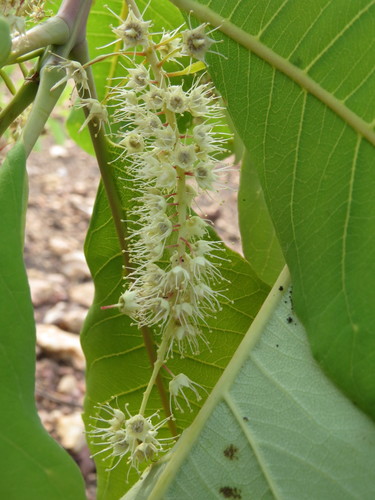
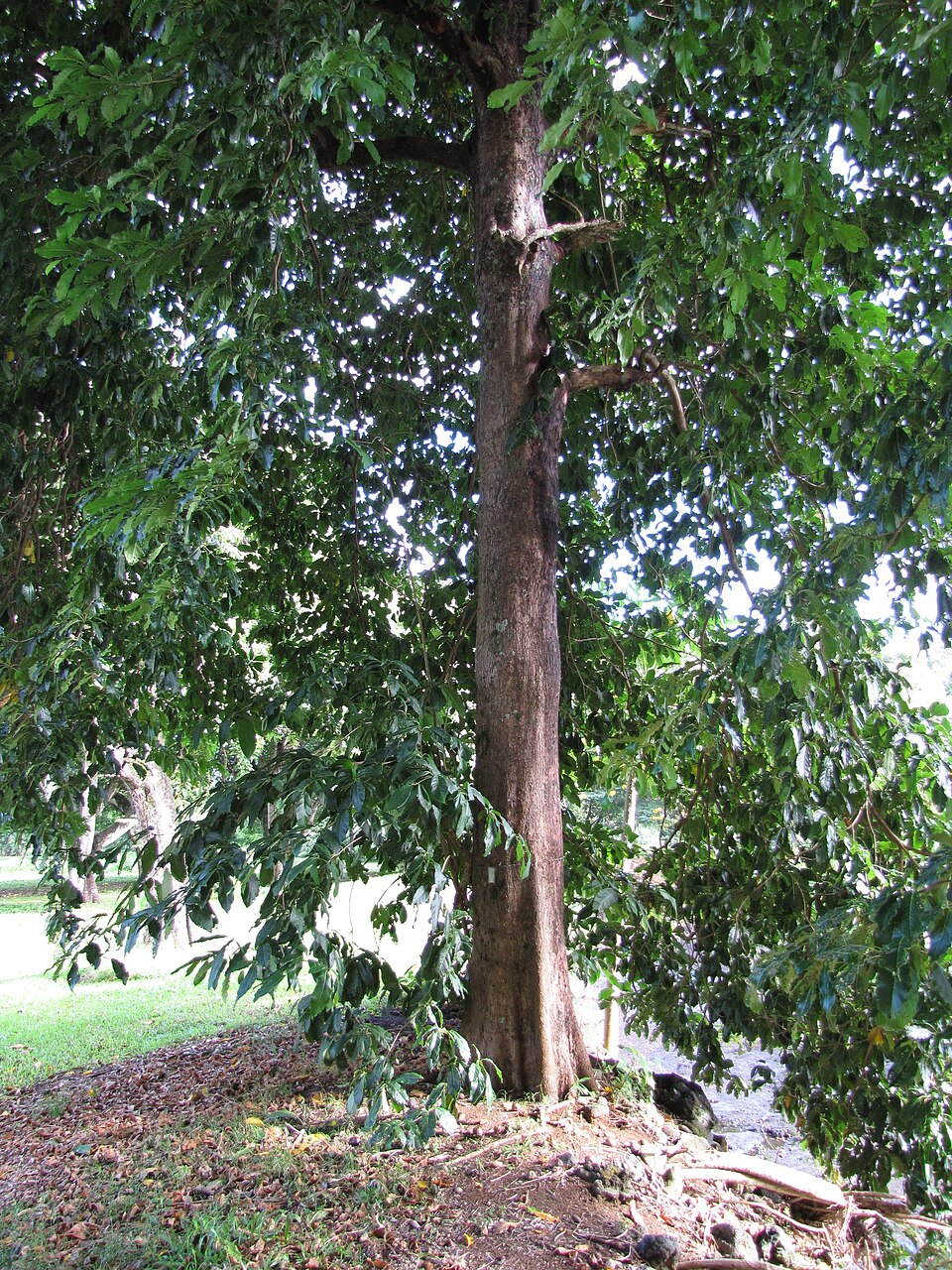
Source: WikipediaTerminalia latifolia is a species of plant in the Combretaceae family. It is found in Guatemala and Jamaica.
Description
A tropical tree of the Combretaceae family.
This description is brief — help expand it
Edible Uses
The kernels/nuts from the fruit are edible.
Distribution
A tropical plant.
Where It Grows
Central America, Guatemala, Jamaica, West Indies,
Cultivation
A plant of the moist tropics, where it is most commonly found at elevations from 300 - 600 metres. It is found in areas where the mean annual rainfall is 1,500mm or more.
Other Uses
The bark is used in Jamaican tanneries but has a relatively low tannin content. The light buff to gray wood is soft, straight grained, moderately heavy, medium hard, and splits rather easily. It is not very durable in contact with the ground but is durable when used above the ground or in interior work. No specific information is available regarding the timber’s resistance to termites and marine borers - however, other species of Terminalia vary from resistant to very susceptible to attack by dry-wood termites, and are generally not considered resistant to marine borers. The most important uses for the wood in Jamaica are in building boards, shingles, and barrel staves. It, is also used for flooring, rafters, lath, window frames, and doors. We do not have any more specific information on the wood from this species. However, all the Terminalia species from the tropical Americas are said to have similar woods, the following is a general description of that wood:- The heartwood is a light yellow to yellow brown, sometimes with reddish veins; it is clearly demarcated from the 3 - 8cm wide band of sapwood. The texture is medium; the grain is straight. The wood is heavy to very heavy; hard to very hard; elastic; moderately durable, being resistant to dry wood borers and moderately resistant to fungi and termites. It seasons slowly with a high risk of checking and distortion; once dry it is moderately stable to stable in service. It has a fairly high blunting effect, stellite-tipped and tungsten carbide tools are recommended; nailing and screwing are good if the holes are pre-bored; gluing is poor. A good quality wood, it is used for high quality furniture, cabinet making, arched goods, turnery, industrial flooring, ship building, joinery, tool handles, moulding, veneer etc.
Notes
There are about 200-250 Terminalia species. They are tropical.
Synonyms
References (5)
- FAO, 1995, Edible Nuts. Non Wood Forest Products 5.
- Hedrick, 1972,
- Hedrick, U.P., 1919, (Ed.), Sturtevant's edible plants of the world. p 645
- Menninger, E.A., 1977, Edible Nuts of the World. Horticultural Books. Florida p 62
- Wickens, G.E., 1995, Edible Nuts. FAO Non-wood forest products. FAO, Rome. p 116