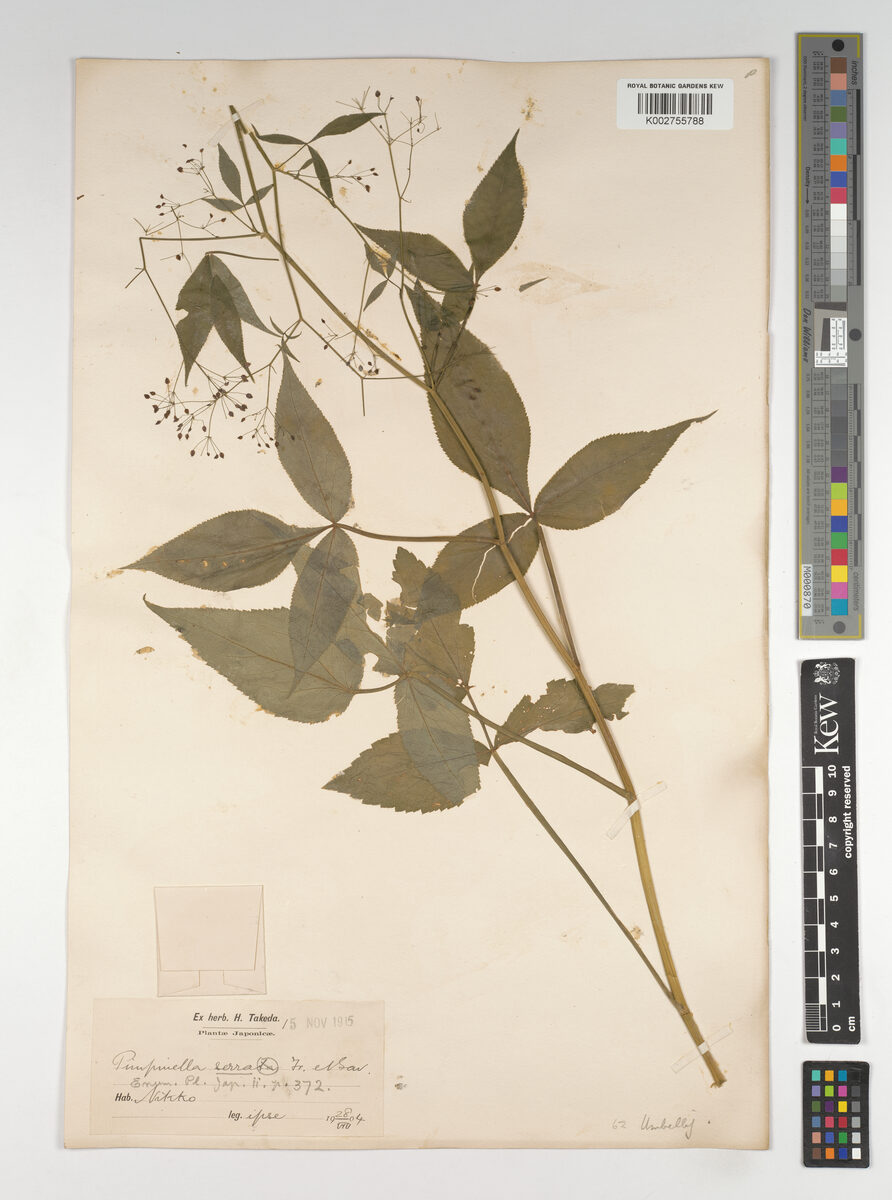
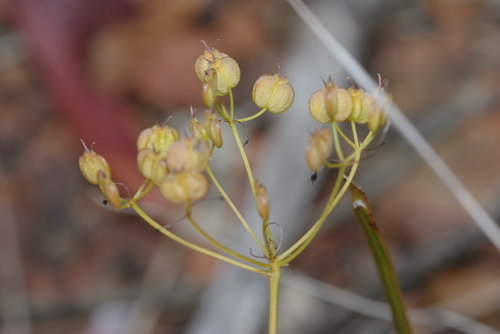
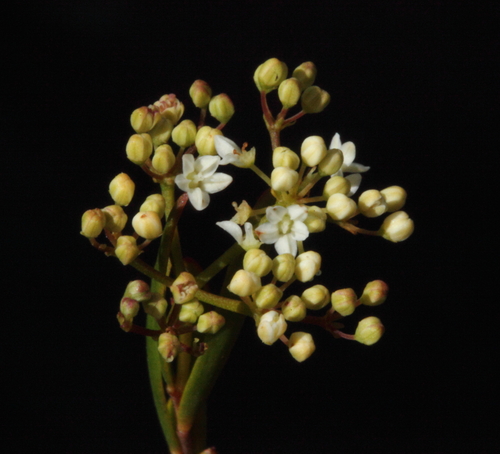
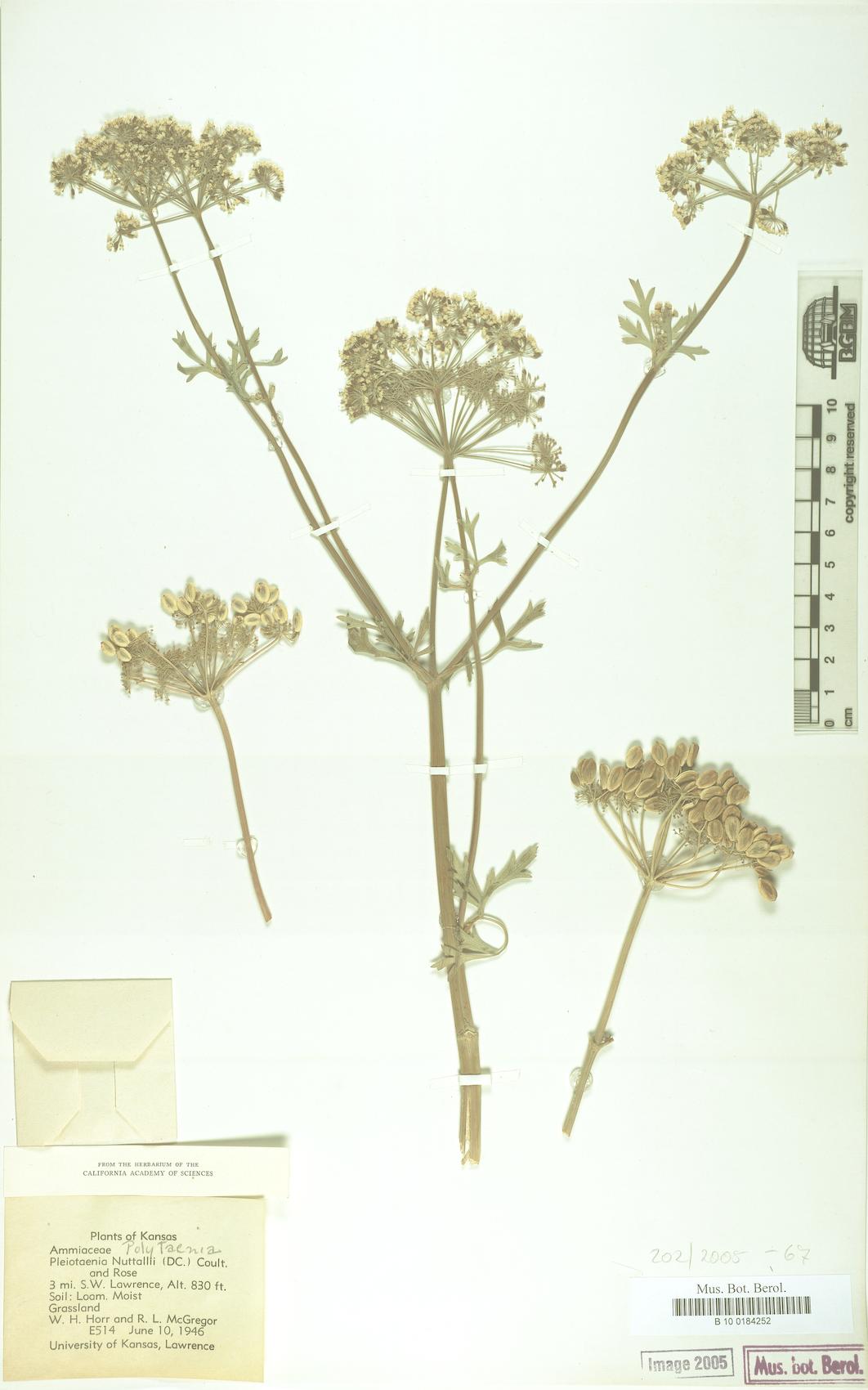
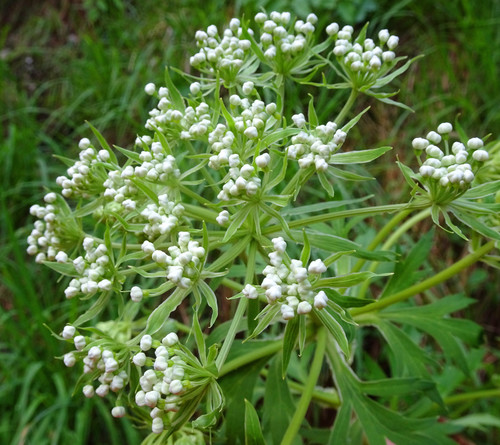
Arracacia xanthorrhiza
Bancroft
Peruvian parsnip, Arracacha
iNaturalist· cc-by-sa
(c) Franklin Checa,保留部分权利(CC BY-SA), 由 Franklin Checa 上传
iNaturalist· cc-by-sa
(c) Fibonacci,保留部分权利(CC BY-SA)
iNaturalist· cc-by
(c) Nicolás Baresch Uribe, some rights reserved (CC BY)
Summary
Source: WikipediaArracacia xanthorrhiza is a root vegetable that originates in the Andes, whose starchy taproot is a popular food item across South America where it is a major commercial crop.
Description
A stout herb. It grows about 1 m high. The above ground parts are somewhat like celery. The roots are long and like carrots. They have rings around them. There is a coarse central core. This grows 10 cm high. A number of parsnip-like side shoots develop. They look and smell like parsnips. These side roots are 5-25 cm long and 5 cm wide. The stems are coarse and leaves can be 0.6-1.2 m. The leaves are dark green or purple. They are deeply divided. They have long stalks. These are 15-30 cm long and sheath at the base. The flower head occurs at the end of the plant. The flowers are small. They are usually purple or yellow.
Edible Uses
Edible Parts: Leaves Root Stem Edible Uses: Condiment Tuber - cooked. Both long and fine roots and edible, tuberous and fusiform roots emerge from the stem. Very palatable and easily digested, the root is used as a staple food in some parts of S. America. The root contains 10 - 25% starch, it is high in calcium and vitamin A. It is used as a potato substitute, its flavour is between that of parsnips and sweet chestnuts with a hint of sweetness. The sweetness increases in storage. The root is also used as the source of starch used in other foods. The roots can be 5 - 25cm long and up to 8cm in diameter. The roots are harvested in the autumn and have a relatively short storage life. Leaves. Used as a flavouring. The leaves are used in the same way as celery in raw or cooked salads. Young stems - raw or cooked as a vegetable. The stems are sometimes blanched and used like celery in salads.
Traditional Uses
The roots are boiled and eaten. They can be fried or used in stews. The roots are also used for starch used in food. The young blanched stems can be used in salads or as a vegetable.
Medicinal Uses
None known
Distribution
A tropical plant. It does best with a temperature between 15-20°C throughout the year. It takes longer to grow in cooler places. Higher temperatures seem to reduce root size. It needs a moderate and even rainfall. It needs to be 60 cm or better 100 cm. It needs a deep friable, well drained soil. A pH of 5-5.5 is good. In Colombia it grows between 1800-2600 m altitude. In Peru it grows between 1,000-3,000 m above sea level. It needs short daylength.
Where It Grows
Africa, Andes*, Antilles, Australia, Bolivia, Brazil, Caribbean, Central Africa, Central America, Colombia, Congo DR, Costa Rica, Cuba, Dominican Republic, Ecuador, Haiti, Himalayas, India, Jamaica, Mexico, North America, Peru, Puerto Rico, South America, Sri Lanka, Venezuela, West Indies,
Cultivation
It can be grown from seed. Mostly it is grown from offshoots at the crown of the main rootstock. Pieces 2-3 cm long with buds and leaves is used. Some of the leaf area is reduced. The base of the cut end is cut several times to increase sprouting. The offsets are left to dry for 2-3 days before planting. Adding phosphorus normally increases yield, while adding nitrogen normally reduces yield. The offsets are planted so that the base is below ground and the top above ground. Sometimes the whole offset is covered with soil. A spacing of 0.8 m between plants is suitable. 20,000 sets are needed per hectare. Crops are harvested when leaves turn yellow. Harvesting needs to be done as soon as ready or roots become tough and develop a bad flavour.
Propagation
Seed - sow in a seedbed or containers and only just cover the seed. Do not allow the compost to dry out. Germination is often poor, less than 50%. Since this species is believed to be a hybrid it will probably not breed true from seed. Plant out when about 10cm tall. Division. The plant forms a clump of tubers around a central root, each tuber can be used to grow a new plant. Traditionally the base of the tuber is repeatedly slashed to stimulate shoots to form and encourage a uniform arrangement of lateral roots. They are then left for a few days to heal before planting them out.
Other Uses
None known Special Uses
Production
Tubers take 10-14 months for harvesting. Young roots can sometimes be harvested 4-8 months after planting. Tubers can normally only be stored for 5-7 days. Cold storage allows longer storage. Each plant can produce 6-10 side tubers weighing 2-3 kg. Yields can be 3-10 tonnes per hectare.
Other Information
It is a commercially cultivated vegetable. About 30,000 hectares are grown in South America.
Notes
The starch is easily digestible. There are about 20 Arracacia species.
Nutrition
| Part | Moisture | kJ | kcal | Protein | Vit A | Vit C | Iron | Zinc |
|---|---|---|---|---|---|---|---|---|
| Root | 13.9 | 1446 | 346 | 5 | — | — | — | — |
| Leaves | — | — | — | — | — | — | — | — |
Synonyms
Also Known As
Afio, Apio, Batata baroa, Batata cenoura, Batata salsa, Fecula, Lakachu, Lekachu, Maya, Paneme, Peruvian carrot, Pomme de terre-celeri, Racacha Virraca, Sonarca, White carrot, Zanhoria blanca
References (33)
- Arora, R. K., 2014, Diversity in Underutilized Plant Species - An Asia-Pacific Perspective. Bioversity International. p 24
- Bennett, B. C., 1990, Useful Plants of Amazonian Ecuador. US Agency for International Development. Fifth Progress Report. New York Botanical Gardens.
- Bircher, A. G. & Bircher, W. H., 2000, Encyclopedia of Fruit Trees and Edible Flowering Plants in Egypt and the Subtropics. AUC Press. p 41
- Caballero-Serrano, V., et al, 2019, Traditional ecological knowledge and medicinal plant diversity in Ecuadorian Amazon home gardens. Global Ecology and Conservation 17 (2019) e00524 p 7
- Castillo, R. O., 1995, Plant Genetic Resources in the Andes: Impact, Conservation, and Management. Crop Science 35:355-360
Show all 33 references Hide references
- Facciola, S., 1998, Cornucopia 2: a Source Book of Edible Plants. Kampong Publications, p 16
- Franquemont, C., et al, 1990, The Ethnobotany of Chinchero, an Andean Community in Southern Peru. Fieldiana Botany No. 24 p 103
- Hedrick, U.P., 1919, (Ed.), Sturtevant's edible plants of the world. p 73
- Hermandez Bermejo, J.E., and Leon, J. (Eds.), 1994, Neglected Crops. 1492 from a different perspective. FAO Plant Production and Protection Series No 26. FAO, Rome. p 20, 168
- Heywood, V.H., Brummitt, R.K., Culham, A., and Seberg, O. 2007, Flowering Plant Families of the World. Royal Botanical Gardens, Kew. p 37
- INFOODSUpdatedFGU-list.xls
- Jardin, C., 1970, List of Foods Used In Africa, FAO Nutrition Information Document Series No 2.p 11
- Kapelle, M., et al, 2000, Useful plants within a Campesino Community in a Costa Rican Montane Cloud Forest. Mountain Research and Development, 20(2): 162-171.
- Kay, D.E., 1973, Root Crops, Digest 2, Tropical Products Institute, London, p 7
- Kays, S. J., and Dias, J. C. S., 1995, Common Names of Commercially Cultivated Vegetables of the World in 15 languages. Economic Botany, Vol. 49, No. 2, pp. 115-152
- Kiple, K.F. & Ornelas, K.C., (eds), 2000, The Cambridge World History of Food. CUP p 1721
- Lim, T. K., 2015, Edible Medicinal and Non Medicinal Plants. Volume 9, Modified Stems, Roots, Bulbs. Springer p 12
- Macmillan, H.F. (Revised Barlow, H.S., et al), 1991, Tropical Planting and Gardening. Sixth edition. Malayan Nature Society. Kuala Lumpur. p 358
- Plants for a Future database, The Field, Penpol, Lostwithiel, Cornwall, PL22 0NG, UK. http://www.scs.leeds.ac.uk/pfaf/
- Plants of Haiti Smithsonian Institute http://botany.si.edu
- PROSEA handbook Volume 9 Plants yielding non-seed carbohydrates. p167
- Purseglove, J.W., 1968, Tropical Crops Dicotyledons, Longmans. p 650
- Schneider, E., 2001, Vegetables from Amaranth to Zucchini: The essential reference. HarperCollins. p 12
- Smith, N., Mori, S.A., et al, 2004, Flowering Plants of the Neotropics. Princeton. p 22
- Tapia, M. E., The role of under-utilised plant species with regard to increased food security and improved health of poor people, in mountain regions. IIAP-PNUD/Peru
- Terra, G.J.A., 1973, Tropical Vegetables. Communication 54e Royal Tropical Institute, Amsterdam, p 25
- Tindall, H.D., & Williams, J.T., 1977, Tropical Vegetables and their Genetic Resources, International Board for Plant Genetic Resources, Rome, p 114
- Tindall, H.D., 1983, Vegetables in the Tropics, Macmillan p 402
- Torre, de la L., et al, 2008, Enciclopedia de las Plantas Útiles del Ecuador. Herbario QCA. Pontificia Universidad Católica del Ecuador. p 168
- Trans. Agric. Soc. Jamaica 1825:5. 1825
- USDA, ARS, National Genetic Resources Program. Germplasm Resources Information Network - (GRIN). [Online Database] National Germplasm Resources Laboratory, Beltsville, Maryland. Available: www.ars-grin.gov/cgi-bin/npgs/html/econ.pl (10 April 2000)
- Wiersema, J. H. & Leon, B., 2013, World Economic Plants. A Standard Reference CRC Press. 2nd Ed. p 71
- World Checklist of Useful Plant Species 2020. Royal Botanic Gardens, Kew