Acacia murrayana
F.Muell. ex Benth.
Murray’s wattle, Colony wattle
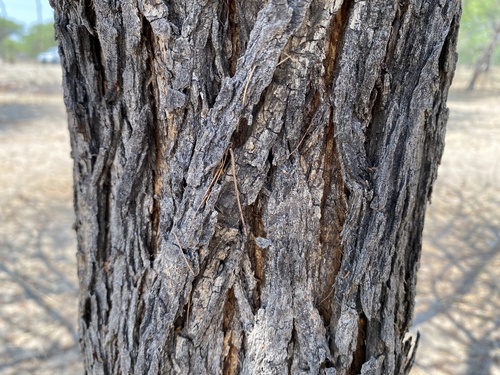
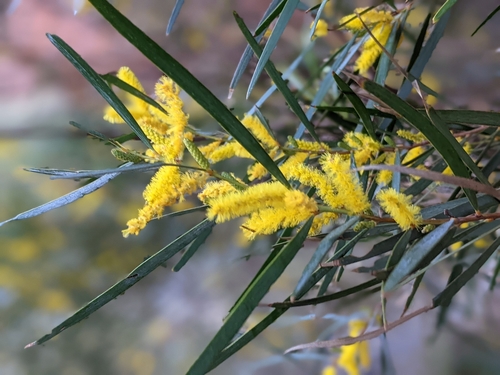
iNaturalist· cc-by-nc
(c) overlander (Gerald Krygsman), some rights reserved (CC BY-NC), uploaded by overlander (Gerald Krygsman)
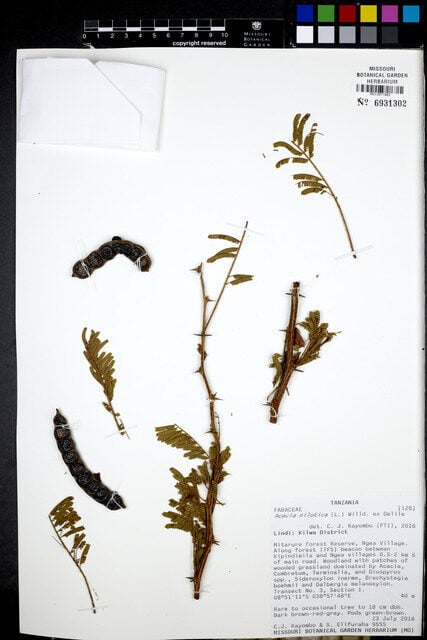
iNaturalist· cc-by-nc
(c) overlander (Gerald Krygsman), some rights reserved (CC BY-NC), uploaded by overlander (Gerald Krygsman)
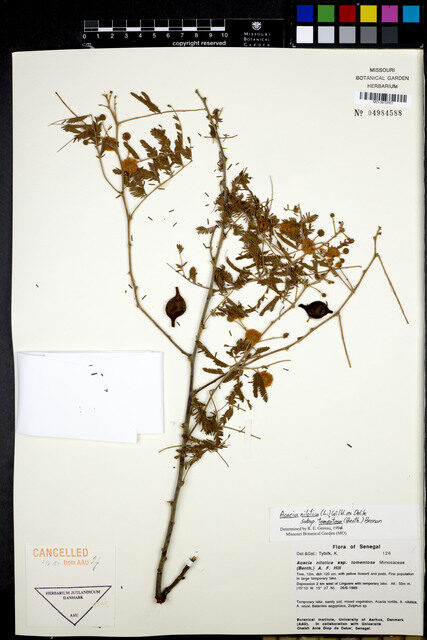
iNaturalist· cc-by-nc
(c) overlander (Gerald Krygsman), some rights reserved (CC BY-NC), uploaded by overlander (Gerald Krygsman)
Summary
Source: WikipediaAcacia murrayana is a tree in the family Fabaceae. It has numerous common names, including sandplain wattle, Murray's wattle, fire wattle, colony wattle and powder bark wattle, and is endemic to arid areas in every mainland state except Victoria.
Description
A shrub or small tree. It grows 5 m tall. There are prickles along the stem. The leaves are twice divided and there are 8-18 pairs of pinnae. There are up to 50 pairs of pinnules on each pinnae. The flowers are yellow. They are in large clusters at the ends of branches. The pods are flattened.
Edible Uses
Seeds are cooked and versatile — they can be prepared in the same ways as other small legume seeds, ground into a powder for use as a flavouring in desserts, or added as a nutritious supplement to pastries and breads. The pods grow up to 90mm long and 8–12mm wide and contain ovate black seeds measuring 4–5.5mm long. Acacia seeds are highly nutritious, containing around 26% protein, 26% available carbohydrate, 32% fibre, and 9% fat. The fat content exceeds that of most legumes, with the aril providing the bulk of the fatty acids, which are largely unsaturated. Energy content averages 1480 ± 270 kJ per 100g. As a low glycaemic index food, the starch is digested and absorbed very slowly, producing a small but sustained rise in blood glucose and delaying exhaustion during prolonged exercise. The ground seed can also be used to produce a high-quality, caffeine-free, coffee-like beverage. The plant possibly produces an edible gum. This species is noted as a protein staple crop in carbon farming contexts.
Traditional Uses
The seeds are softened by soaking in water, pounded to a paste then eaten raw. They can also be eaten green after roasting in the pod. An edible grub occurs in the roots and branches. The white gum is eaten. The mature seeds have also been roasted and ground as a coffee substitute.
Medicinal Uses
The bark of all Acacia species contains tannins in varying quantities and is astringent. Taken internally, astringent preparations are used to treat diarrhoea, dysentery, and internal bleeding. Applied externally — often as a wash — they are used on wounds, skin problems, haemorrhoids, perspiring feet, and some eye conditions, and as a mouthwash. Many Acacia trees also yield gum from the trunk and stems, which is sometimes taken internally in the treatment of diarrhoea and haemorrhoids.
Known Hazards
The seed of many Acacia species, including this one, is edible and highly nutritious, and can be eaten safely as a fairly major part of the diet. Not all species are edible, however, and some can contain moderate levels of toxins. Especially when harvesting from the wild, especial care should be taken to ensure correct identification of any plants harvested for food. Especially in times of drought, many Acacia species can concentrate high levels of the toxin Hydrogen cyanide in their foliage, making them dangerous for herbivores to eat.
Distribution
It is a warm temperate plant. It grows in arid and desert areas in Western Australia. It grows in sandhill country. It requires a sunny position. It needs well drained soil. It can grow in hot places. It can survive fires. It can grow in arid places.
Where It Grows
Australia*,
Cultivation
It grows best in areas where annual daytime temperatures are within the range 12 - 34°c, but can tolerate 5 - 42°c. When dormant, selected provenances of the plant can survive temperatures down to about -10°c, but young growth is more tender and can be severely damaged at -1°c. It prefers a mean annual rainfall in the range 200 - 400mm, but tolerates 100 - 500mm. Requires a sunny position and a well-drained soil. Succeeds in a range of soils from sands to clays and is very tolerant of low fertility. Prefers a pH in the range 5.5 - 7.5, tolerating 4.5 - 8.5. Established plants are drought tolerant. A fast-growing plant when young, but relatively short-lived, usually senescing when around 15 - 25 years old. The plant recovers well following fire - both by producing a flush of germinating seedlings and also by resprouting from the base. The main flowering period is from August to November with pods maturing several months later, between November and January (Maslin et al. 1998). Plants flower profusely, commencing at an early age and produce heavy pod crops during favourable seasons. The seeds of most acacia species can be quickly and efficiently harvested at full maturity without the need for any specialised equipment. Small seed-bearing branches can be cut and beaten on sheets, or bushes can be beaten or shaken directly onto large sheets. This species has a symbiotic relationship with certain soil bacteria; these bacteria form nodules on the roots and fix atmospheric nitrogen. Some of this nitrogen is utilized by the growing plant but some can also be used by other plants growing nearby. Acacia murrayana, together with Acacia gelasina, Acacia pachyacra, Acacia praelongata and Acacia subrigida comprise the Acacia murrayana group of closely related species. This group of species is not far removed from the Acacia victoriae and Acacia juncifolia groups. Some forms of this species may resemble Acacia dietrichiana. It can be pruned after flowering. It can be pruned after flowering. The edible insect larvae (Bardie grub) is pulled out of the bored holes using a hooked twig. The white gum normally exudes from sites of insect damage. Carbon Farming - Cultivation: historic wild staple, new crop. Management: standard, coppice.
Propagation
Most members of this genus produce seed with a hard coat that benefits from scarification before sowing. Pour a small amount of nearly boiling water over the seeds — taking care not to cook them — then soak in warm water for 12–24 hours. Seeds that have absorbed moisture will swell visibly; if they have not, carefully nick the seedcoat without damaging the embryo and soak for a further 12 hours before sowing. Fully matured and properly dried acacia seeds can be stored in closed containers for 5–10 years or more under dry conditions at ambient temperatures. It is advisable to remove the aril before storage, as it attracts weevils and can encourage mould. Arils are easily removed by placing seeds in water, rubbing them between the hands, then drying and winnowing.
Other Uses
The tree provides low shelter, serves as an ornamental planting, and is a pollen source for bees. The wood, though small in dimension, is suitable for posts and small turnery, and is highly valued as fuel and for making charcoal. An edible grub is found in the roots and branches. In carbon farming systems, this species is used for nitrogen fixation and as a windbreak, and features in FMAFS systems.
Production
The edible insect larvae (Bardie grub) is pulled out of the bored holes using a hooked twig. The white gum normally exudes from sites of insect damage.
Notes
There are about 1,350 Acacia species. Over 1,000 occur in Australia. Seeds 20% protein, 5 % fat and 64% carbohydrate. Also as Mimosaceae.
Nutrition
| Part | Moisture | kJ | kcal | Protein | Vit A | Vit C | Iron | Zinc |
|---|---|---|---|---|---|---|---|---|
| Seed | 8.1 | 1435 | 343 | 20.1 | — | — | 6.6 | 3.7 |
| Gum | — | — | — | — | — | — | — | — |
Synonyms
Also Known As
Colony wattle, Sandplain wattle, Tjuntjula, Utjanypa
References (20)
- Bindon, P., 1996, Useful Bush Plants. Western Australian Museum. p 24
- Bonney, N., 1997, Economic Native Trees and Shrubs for South Australia. Greening Australia (SA) inc. Campbelltown SA 5074 p 12
- Cancilla, D., 2018, Ethnobotanical and Ethnozoological Values Desktop Assessment - Eliwana Project. p 39
- Cherikoff V. & Isaacs, J., The Bush Food Handbook. How to gather, grow, process and cook Australian Wild Foods. Ti Tree Press, Australia p 42, 188
- Doran, J.C., & Turnbull, J.W. (Eds), 1997, Australian Trees and Shrubs: species for land rehabilitation and farm plantings in the tropics. ACIAR Monograph No 24. p 190
Show all 20 references Hide references
- Elliot, W.R., & Jones, D.L., 1982, Encyclopedia of Australian Plants suitable for cultivation. Vol 2. Lothian. p 87
- Fl. austral. 2:370. 1864
- Flora of Australia Volume 11A, Mimosaceae, Acacia part 1. Melbourne: ABRS/CSIRO, 2001, p 32
- Goddard, C. & Kalotas A. (Eds.), Punu, 2002, Yankunytjatjara plant use. Jukurrpa books. p 52
- House, A.P.N. & Harwood, C.E. ed., 1992, Australian dry-zone acacias for human food. East Melbourne:CSIRO Publications 145pp
- Lang, P. J., et al, 1986, Anangu Pitjantjatjara Lands Biological Survey. p 41, 44
- Latz, P., 1996, Bushfires and Bushtucker. IAD. p 110
- Latz, P & Wightman, G., 1995, Desert Bush Tucker Identikit. Common Native Food Plants of Central Australia. Parks & Wild Commission Northern territory. p 10
- Lazarides, M. & Hince, B., 1993, Handbook of Economic Plants of Australia, CSIRO. p 5
- Lister, P.R., P. Holford, T. Haigh, and D.A. Morrison, 1996, Acacia in Australia: Ethnobotany and potential food crop. p. 228-236. In: J. Janick (ed.), Progress in new crops. ASHS Press, Alexandria, VA.
- Maslin, B. R., et al, 1998, Edible Wattle Seeds of Southern Australia. CSIRO p 20
- Miers, G., 2004, Cultivation and sustainable wild harvest of Bushfoods by Aboriginal Communities in Central Australia. RIRDC report W03/124 p 19
- Paczkowska, G . & Chapman, A.R., 2000, The Western Australian Flora. A Descriptive Catalogue. Western Australian Herbarium. p 316
- Pennock, A., et al, Australian Dry-zone Acacias for Human Food: Proceedings of a Workshop.
- World Checklist of Useful Plant Species 2020. Royal Botanic Gardens, Kew