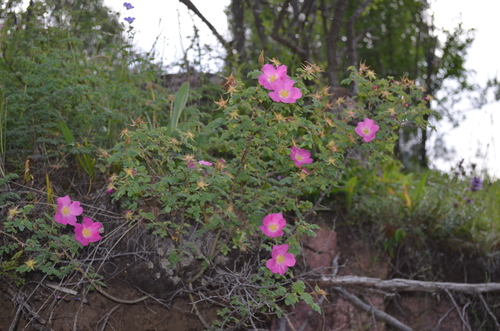
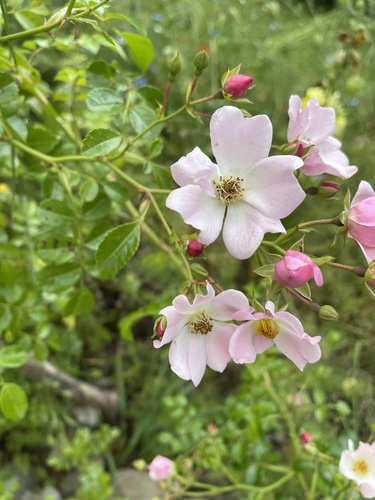
Aronia melanocarpa
(Michx.) Elliot.
Black chokeberry, Aronia berry
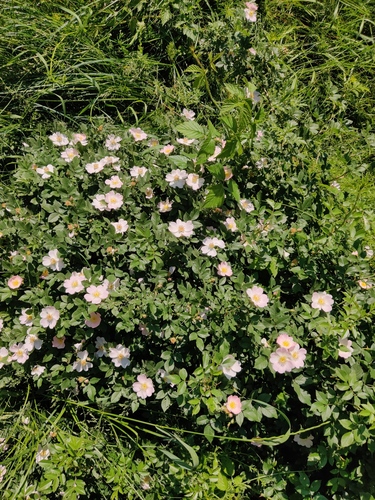
iNaturalist· cc-by-nc
(c) Greg Funka, some rights reserved (CC BY-NC), uploaded by Greg Funka
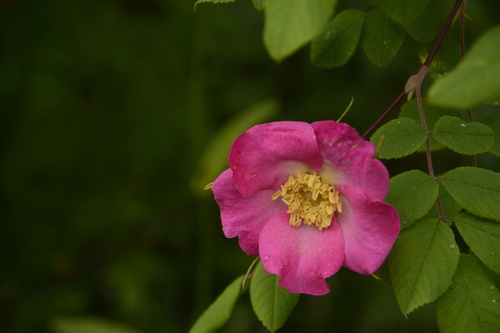
iNaturalist· cc-by-nc-sa
(c) gardentrek, some rights reserved (CC BY-NC-SA)
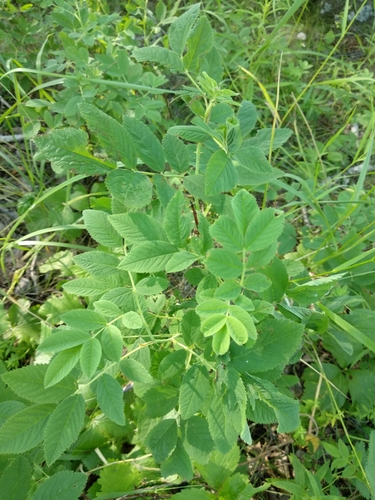
iNaturalist· cc-by-nc-sa
(c) dogtooth77, some rights reserved (CC BY-NC-SA)
Summary
Source: WikipediaAronia melanocarpa, called the black chokeberry, is a species of shrubs in the rose family native to eastern North America, ranging from Canada to the central United States, from Newfoundland west to Ontario and Minnesota, south as far as Arkansas, Alabama, and Georgia. This plant has been introduced and is cultivated in Europe. It is a branching shrub with glossy dark green leaves that take on a red color in the autumn; it grows well in the sun and part-shade, often to heights of six feet (1.8 m) or more, forming clumps by means of stems rising from the roots. Its flowers are white or pink, appearing at the end of spring and producing black fruits in September. The plants are relatively easy to clone and root, with summer being the optimal time to take cuttings. Some birds eat the berries. When raw, the fruits are astringent, but the flavor improves when used in recipes with added sugar.
Description
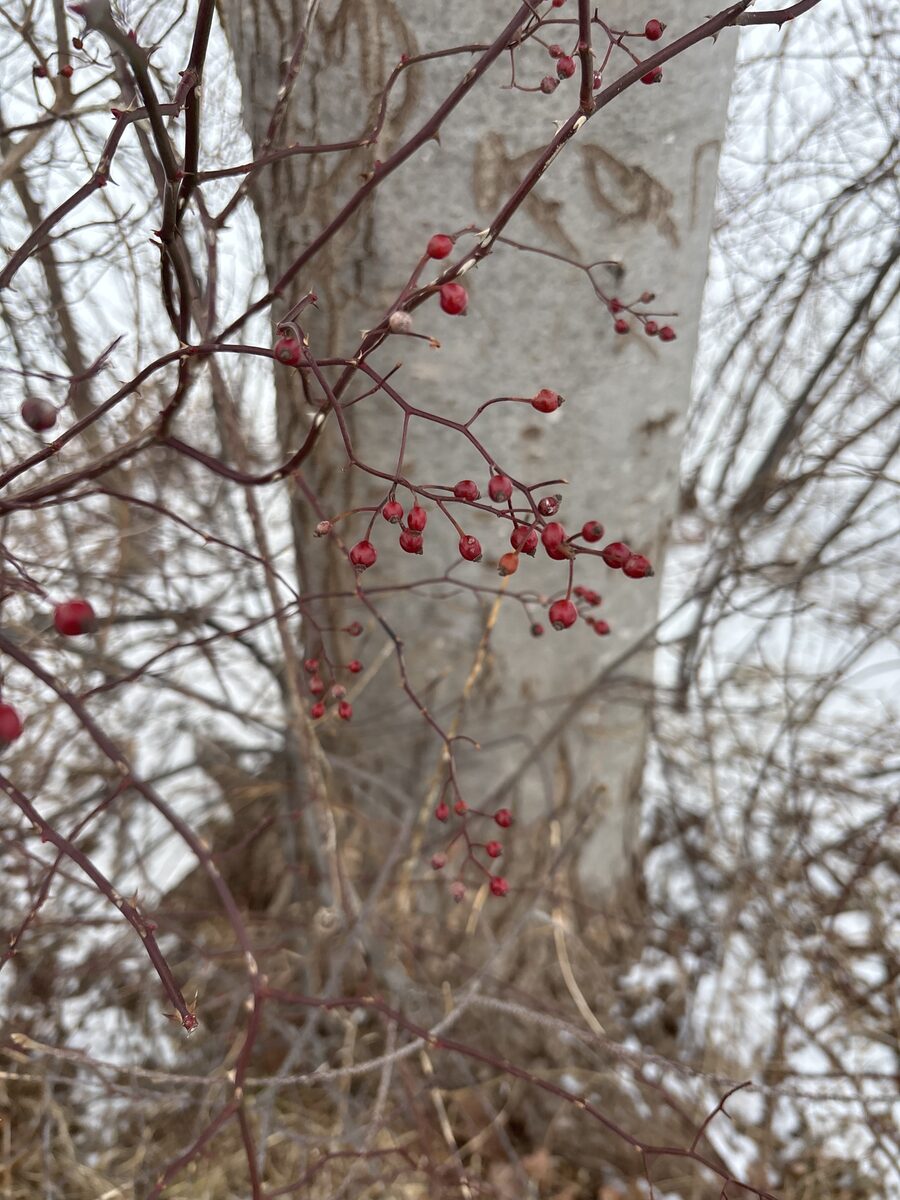
A shrub. It is similar to red chokeberry. It is a lower more spreading shrub. It grows 1-2 m high. The stems are more crowded. It has suckers and forms thickets. The leaves are less glossy. The leaves are bright green and smooth. They have small black glands along the upper midribs. The leaves turn orange in autumn. The flowers are small and white. They are produced in clusters or about 10. The fruit are berries which are black when ripe. They are 8-12 mm across. The flesh is red. They drop soon after they ripen.
Edible Uses
Edible Parts: Fruit Edible Uses: Pectin Pectin Fruit - cooked. A good flavour but very astringent. The fruit should be fully ripe before being eaten and is best after a frost or two. It makes a good jelly when sugar is added and is also dried and used for making pemmican. The fruit is rich in pectin and can be added to fruits that are low in this substance when making jams etc. Pectin is also said to protect the body against radiation. The fruit is about 9mm in diameter.
Traditional Uses
The fruit can be eaten raw but are astringent. They can be stewed with sugar or honey. They can be used for a sauce or jelly. Some sweeter kinds are used for juice.
Medicinal Uses
Miscellany An infusion of the berries has been used in the treatment of colds.
Distribution
It is a temperate plant. It can grow in most soils and most locations. It is very cold tolerant. It can tolerate dry soils. It probably needs a cold winter chill requirement. It suits hardiness zones 4-9.
Where It Grows
Australia, Belarus, Canada, Czech Republic, Denmark, Europe, Germany, Macedonia, North America*, Norway, Poland, Russia, Scandinavia, Slovenia, Tasmania, Ukraine, USA,
Cultivation
Plants can be grown from seed or cuttings. Stored seed need 2-3 months of cold stratification, then soaking for 18 hours before sowing. Old stems can be cut back near the ground to encourage new growth. Suckers can be divided off and allowed to root before replanting.
Propagation
Seed - best sown as soon as it is ripe in pots outdoors or in a cold frame. Pre-soak stored seed overnight and then cold stratify for 3 months at 2°c. The seed germinates in 1 - 3 months at 15°c. When large enough to handle, prick the seedlings out into individual pots and grow them on in a cold frame for their first winter. Plant out in late spring. Cuttings of half-ripe wood, July/August in a frame. Division of suckers in the dormant season. Very easy, they can be planted straight out into their permanent positions. Layering.
Other Uses
Miscellany Pectin Pectin Agroforestry uses: Black chokeberry can be used as a hedgerow plant, providing privacy and habitat for wildlife. Its fruits are also attractive to birds, and the plant can contribute to soil health due to its hardiness and ability to grow in various conditions. The fruit is a source of pectin, a substance that is used to thicken jams etc and as a culture medium in laboratories. 1. Nectary - Flowers rich in nectar and pollen: Yes – The flowers of black chokeberry produce nectar and pollen, attracting bees and other pollinators. 2. Wildlife - Food (Fruit, Seeds, Leaf litter, Shelter, Nesting, Roosting): Yes – The small, black berries are a valuable food source for birds and other wildlife. The shrub’s dense growth provides shelter, and the leaf litter contributes to the ecosystem. 3. Invertebrate Shelter (Overwintering sites, Leaf litter, Groundcover): Yes – The plant’s leaf litter and structure can support overwintering invertebrates and provide ground cover, creating habitats for beneficial insects. 4. Pest Confuser (Smell): No – Black chokeberry does not have a notable scent that confuses pests. Special Uses Food Forest
Production
Plants start producing some fruit 1 year after planting. Yields can be 10-16 kg per plant.
Notes
There are 3 Aronia species. They are rich in Vitamin C. They are rich in anti-oxidants.
Synonyms
Also Known As
Aronija, črnoplodna aronija, Svartsurbaer
References (28)
- Bodkin, F., 1991, Encyclopedia Botanica. Cornstalk publishing, p 103
- Cundall, P., (ed.), 2004, Gardening Australia: flora: the gardener's bible. ABC Books. p 188
- Etherington, K., & Imwold, D., (Eds), 2001, Botanica's Trees & Shrubs. The illustrated A-Z of over 8500 trees and shrubs. Random House, Australia. p 106
- Facciola, S., 1998, Cornucopia 2: a Source Book of Edible Plants. Kampong Publications, p 195
- Fisk, J. R. & Hoover, E., 2015, Wild Fruits of Minnesota. A Field Guide. University of Minnesota p 34
Show all 28 references Hide references
- Flowerdew, B., 2000, Complete Fruit Book. Kyle Cathie Ltd., London. p 76
- Girard, N. J., 2020, Sustainable Foraging of Wild Edible Plants in Norway. A Biocultural Approach. M. Sc. thesis Norwegian University. p 134
- Hibbert, M., 2002, The Aussie Plant Finder 2002, Florilegium. p 32
- Farvinen, R., et al, 2010, Cutin composition of selected northern berries and seeds. Food Chemistry 122: 137-144
- Girard, N. J., 2020, Sustainable Foraging of Wild Edible Plants in Norway. A Bioculutral Approach. M. Sc. thesis Norwegian University. p 37
- Jackes, D. A., Edible Forest Gardens
- Kermath, B. M., et al, 2014, Food Plants in the Americas: A survey of the domesticated, cultivated and wild plants used for Human food in North, Central and South America and the Caribbean. On line draft. p 643 (As Photinia melanocarpa)
- Kiple, K.F. & Ornelas, K.C., (eds), 2000, The Cambridge World History of Food. CUP p 1756
- Lord, E.E., & Willis, J.H., 1999, Shrubs and Trees for Australian gardens. Lothian. p 205
- Lyle, S., 2006, Discovering fruit and nuts. Land Links. p 78
- Pieroni, A. & Soukand, R., 2018, Forest as Stronghold of Local Ecological Practice: Currently Used Wild Food Plants in Polesia, Northern Ukraine. Economic Botany, XX(X) pp. 1-21
- Plants for a Future database, The Field, Penpol, Lostwithiel, Cornwall, PL22 0NG, UK. http://www.scs.leeds.ac.uk/pfaf/
- Rexhepi. B., et al, 2018, Three Ethnic groups, One Territory: Perspectives of an ethnobotanical study from Southwestern Macedonia. UNIVERSI - International Journal of Education, Science, Technology, Innovation, Health and Environment. Vol 4 (1) p 75
- Ryan, S., 2008, Dicksonia. Rare Plants Manual. Hyland House. p 8
- Salvi, J. et al, 2016, A review: Underutilized wild edible plants as a potential source of alternative nutrition. International Journal of Botany Studies. Volume 1; Issue 4; May 2016; Page No. 32-36
- Seidemann J., 2005, World Spice Plants. Economic Usage, Botany, Taxonomy. Springer. p 51
- Simkova, K. et al, 2014, Ethnobotanical review of wild edible plants used in the Czech Republic. Journal of Applied Botany and Food Quality 88, 49-67
- Sketch bot. S. Carolina 1:556. 1821
- Tozer, F., 2007, The Uses of Wild Plants. Green Man Publishing. p 36
- van Wyk, B., 2005, Food Plants of the World. An illustrated guide. Timber press. p 72
- Wiersema, J. H. & Leon, B., 2013, World Economic Plants. A Standard Reference CRC Press. 2nd Ed. p 70
- World Checklist of Useful Plant Species 2020. Royal Botanic Gardens, Kew
- Young, J., (Ed.), 2001, Botanica's Pocket Trees and Shrubs. Random House. p 105