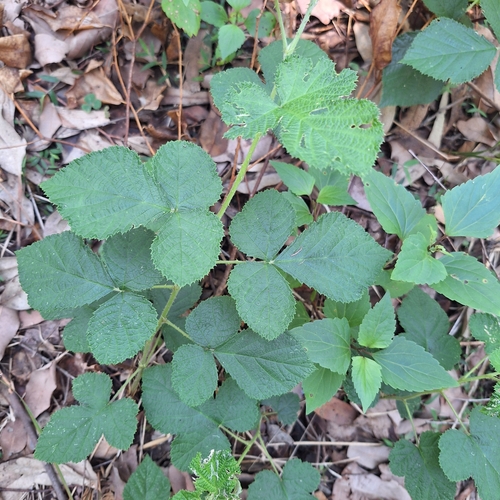
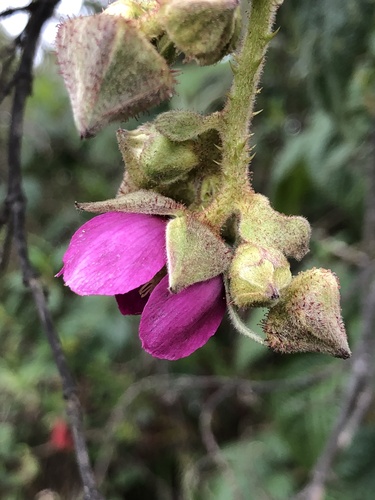
Crataegus crus-galli
L.
Cockspur hawthorn, Cockspurthorn, Hog-apple, Newcastle-thorn
iNaturalist· cc-by-nc
(c) Andrew Braun, some rights reserved (CC BY-NC), uploaded by Andrew Braun
iNaturalist· cc0
no rights reserved, uploaded by Étienne Lacroix-Carignan
iNaturalist· cc-by
(c) Étienne Léveillé-Bourret, some rights reserved (CC BY), uploaded by Étienne Léveillé-Bourret
Summary
Source: WikipediaCrataegus crus-galli is a species of hawthorn known by the common names cockspur hawthorn, cockspur thorn, Newcastle hawthorne, Newcastle thorn, hog apple. It is native to North America and is widely used in horticulture. It produces edible fruit.
Description
A very small deciduous tree. It grows 8-10 m high. It is wide spreading. The bark is dark brown and scaly. The leaves are 10 cm long by 4 cm wide. They usually have a rounded wide tip. The leaves are sharply toothed. There are many slender thorns. They are 5-7 cm long. The flowers are 1.5 cm across. They are white with 5 petals and pink anthers. They occur in rounded heads. The fruit are 6-10 mm across. They are deep orange-red when ripe.
Edible Uses
The fruit is about 1cm in diameter, borne in small clusters, with a dry flesh best suited to making jellies. It often persists on the tree right through to spring, which suggests it is not particularly good for fresh eating. Up to five fairly large seeds occupy the centre of each fruit and often fuse together, giving the eating experience of a cherry-like fruit with a single stone.
Traditional Uses
The fruit are eaten raw. They can be used in jellies and jams. The fruit can be dried.
This uses section is brief — help expand it
Medicinal Uses
No species-specific studies have been recorded, but hawthorn fruits and flowers are well established in herbal folk medicine as a heart tonic, with modern research confirming the use. They produce a hypotensive effect and act as a mild, direct cardiac tonic, most indicated for treating a weak heart combined with high blood pressure. Prolonged use is needed for efficacy, and it is normally taken as a tea or tincture.
Distribution
It is native to eastern North America. Temperate. It will grow in most soils. It is resistant to frost and drought. It suits hardiness zones 5-9.
Where It Grows
Australia, Canada, Slovenia, Mexico, North America*, USA,
Cultivation
A very easily grown plant, it prefers a well-drained moisture retentive loamy soil but is not at all fussy. Once established, it succeeds in excessively moist soils and also tolerates drought. It grows well on a chalk soil and also in heavy clay soils. A position in full sun is best when plants are being grown for their fruit, they also succeed in semi-shade though fruit yields and quality will be lower in such a position. Most members of this genus succeed in exposed positions, they also tolerate atmospheric pollution. A very hardy plant, tolerating temperatures down to about -18°c. A very ornamental plant. There are many named forms, selected for their ornamental value. Hybridizes freely with other members of this genus. Seedling trees take from 5 - 8 years before they start bearing fruit, though grafted trees will often flower heavily in their third year. The flowers have a foetid smell somewhat like decaying fish. This attracts midges which are the main means of fertilization. When freshly open, the flowers have more pleasant scent with balsamic undertones. Seedlings should not be left in a seedbed for more than 2 years without being transplanted. This plant is often confused in cultivation with C. prunifolia. 'Splendens'.
Propagation
Sow seed fresh in a cold frame in autumn; some will germinate the following spring, with most requiring a further year. Stored seed is slow and erratic to germinate — warm stratify for 3 months at 15°C, then cold stratify for 3 months at 4°C, and germination may still take another 18 months. Scarification before stratification may reduce this time, and fermenting the seed in its own pulp for a few days can also speed things up. Alternatively, harvest seed green — once the embryo is fully developed but before the seedcoat hardens — and sow immediately in a cold frame for possible spring germination. For small quantities, pot seedlings individually as soon as large enough to handle and plant out in late spring. For larger quantities, sow directly into a protected outdoor seedbed and undercut roots if plants are left undisturbed for more than two years.
Other Uses
This species responds very well to trimming and can be cut hard back into old wood, resprouting freely — making it well suited for use as a hedge. The wood is fine-grained, hard, and heavy, and is used for tool handles and similar purposes. The plant is also suitable for espalier training and is noted for its scent.
Notes
There are 200 or more Crataegus species.
Synonyms
Also Known As
Ostrogasti glog
References (21)
- Bodkin, F., 1991, Encyclopedia Botanica. Cornstalk publishing, p 295
- Brickell, C. (Ed.), 1999, The Royal Horticultural Society A-Z Encyclopedia of Garden Plants. Convent Garden Books. p 313
- Coombes, A.J., 2000, Trees. Dorling Kindersley Handbooks. p 240
- Cundall, P., (ed.), 2004, Gardening Australia: flora: the gardener's bible. ABC Books. p 432
- Duke, J.A., 1992, Handbook of Edible Weeds. CRC Press. p 78
Show all 21 references Hide references
- Elias, T.S. & Dykeman P.A., 1990, Edible Wild Plants. A North American Field guide. Sterling, New York p 238
- Esperanca, M. J., 1988. Surviving in the wild. A glance at the wild plants and their uses. Vol. 1. p 245
- Etherington, K., & Imwold, D., (Eds), 2001, Botanica's Trees & Shrubs. The illustrated A-Z of over 8500 trees and shrubs. Random House, Australia. p 239
- Farrar, J.L., 1995, Trees of the Northern United States and Canada. Iowa State University press/Ames p 392
- Hibbert, M., 2002, The Aussie Plant Finder 2002, Florilegium. p 75
- Little, E.L., 1980, National Audubon Society Field Guide to North American Trees. Alfred A. Knopf. p 468
- Lord, E.E., & Willis, J.H., 1999, Shrubs and Trees for Australian gardens. Lothian. p 52
- Morley, B. & Everard, B., 1970, Wild Flowers of the World. Ebury press. Plate 152
- Plants for a Future database, The Field, Penpol, Lostwithiel, Cornwall, PL22 0NG, UK. http://www.scs.leeds.ac.uk/pfaf/
- Ryan, S., 2008, Dicksonia. Rare Plants Manual. Hyland House. p 19
- Segura, S., et al, 2018, The edible fruit species in Mexico. Genet Resour Crop Evol (2018) 65:1767–1793
- Sp. pl. 1:476. 1753
- Toupal, R. S. & Hollenback, K., 2009, An Ethnobotany of Indiana Dunes National Lakeshore: Plant Uses of the Ojibwa People. Bureau of Applied Research in Anthropology. University of Arizona
- USDA, ARS, National Genetic Resources Program. Germplasm Resources Information Network - (GRIN). [Online Database] National Germplasm Resources Laboratory, Beltsville, Maryland. Available: www.ars-grin.gov/cgi-bin/npgs/html/econ.pl (10 April 2000)
- Wiersema, J. H. & Leon, B., 2013, World Economic Plants. A Standard Reference CRC Press. 2nd Ed. p 208
- World Checklist of Useful Plant Species 2020. Royal Botanic Gardens, Kew