Crataegus cuneata
Sieb. & Zucc.
Chinese Hill Haw, Chinese Hawthorn, Red haw
iNaturalist· cc-by-nc
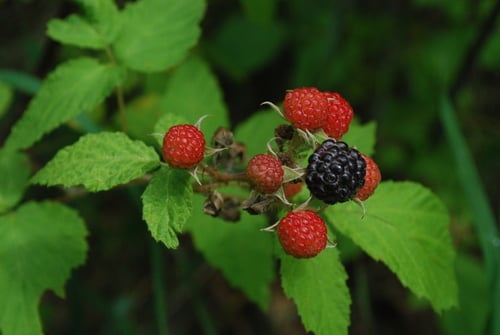
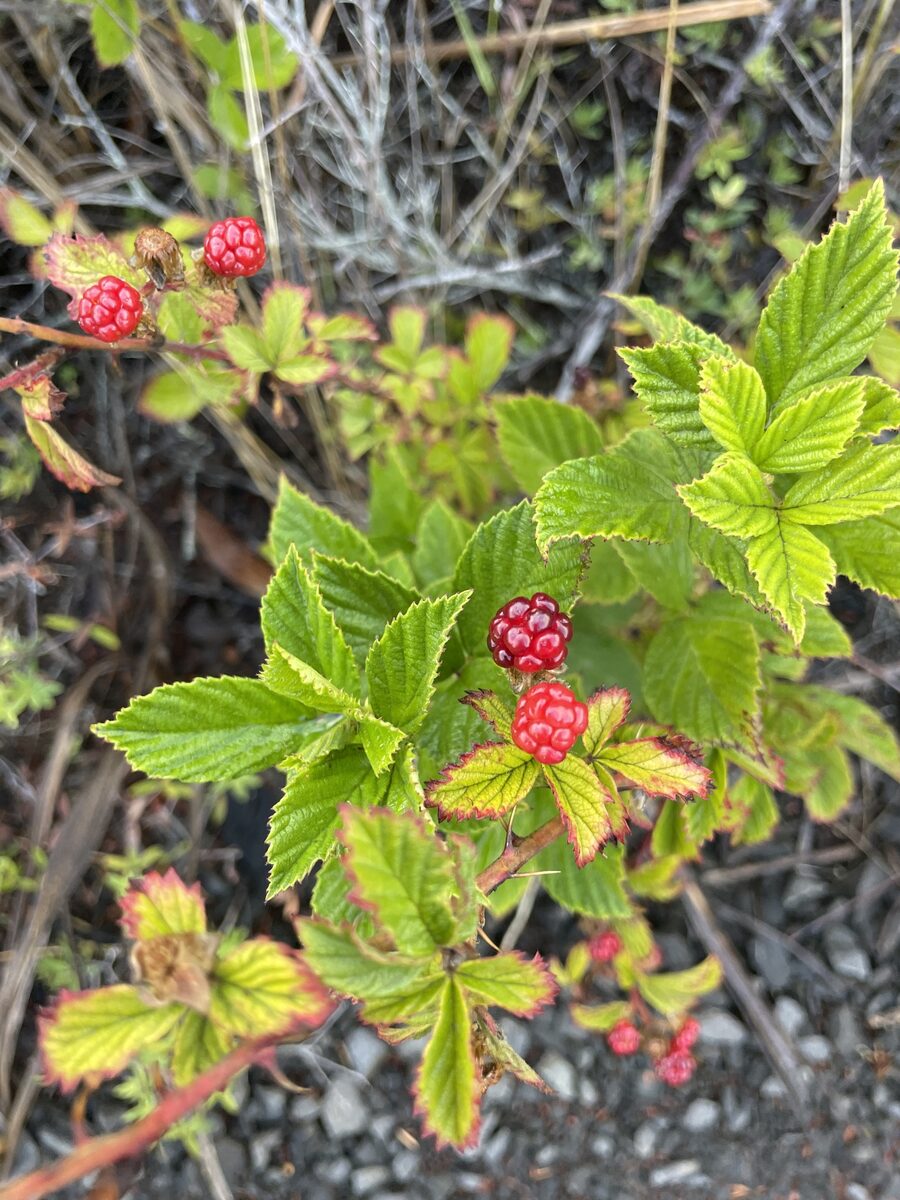
(c) silentree, some rights reserved (CC BY-NC)
iNaturalist· cc-by-nc
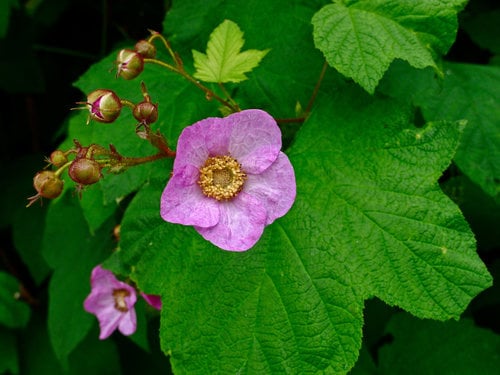
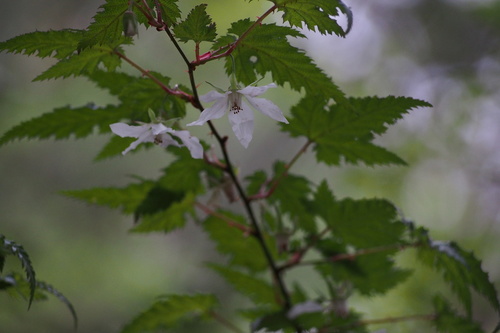
(c) 小铖/Smalltown, some rights reserved (CC BY-NC)
iNaturalist· cc-by-nc
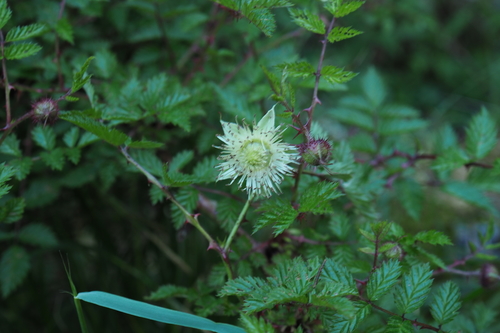
(c) 江国彬, some rights reserved (CC BY-NC)
Summary
Source: WikipediaCrataegus cuneata is a species of hawthorn known by the common names Chinese hawthorn (Chinese: 山楂; pinyin: Shan zha) or Japanese hawthorn. It is native to China, and is widely cultivated in Japan. It is used for bonsai. The fruit can be red or yellow. Its habitats include valleys and thickets.
Description
A shrub. It grows 1.5 m high. It spread 1.5 m wide. The young shoots are thorny. They are hairy and red. The leaves are egg shaped and smooth. They have lobes and are pale green above and slightly hairy underneath. The flowers are white. The fruit are red.
Edible Uses
The fruit can be eaten raw or cooked in pies, preserves, and similar preparations, and dries well for storage. It has a pleasant flavour and is sold in local markets in China and Japan. Nutritionally, it contains about 0.44% protein, 1% fat, 22.1% carbohydrate, and 0.8% ash, and is rich in vitamin C, fruit acids, and pectin. Up to five fairly large seeds occupy the centre of each fruit; they tend to stick together, giving the experience of eating a cherry-like fruit with a single stone.
Traditional Uses
The ripe fruit are eaten raw. It is used for an edible red colouring.
This uses section is brief — help expand it
Medicinal Uses
The fruits and flowers are well established in herbal folk medicine as a heart tonic, a use supported by modern research. Both parts exert a hypotensive effect and act as a direct, mild cardiotonic, making them particularly useful for weak heart combined with high blood pressure. Prolonged use is required for best results, and the plant is typically taken as a tea or tincture. The fruit is anodyne, anticholesterolemic, antidiarrhetic, antidysenteric, astringent, a blood tonic, cardiotonic, haemostatic, and stomachic. It is used to treat dyspepsia, stagnation of fatty food, abdominal fullness, retention of lochia, amenorrhoea, postpartum abdominal pain, hypertension, and coronary heart disease.
Distribution
Temperate. It grows in valleys between 200-2,000 m above sea level. It suits hardiness zones 6-9. In Yunnan.
Where It Grows
Asia, Australia, China, Japan, Korea,
Cultivation
A very easily grown plant, it prefers a well-drained moisture retentive loamy soil but is not at all fussy. Once established, it succeeds in excessively moist soils and also tolerates drought. It grows well on a chalk soil and also in heavy clay soils. A position in full sun is best when plants are being grown for their fruit, they also succeed in semi-shade though fruit yields and quality will be lower in such a position. Most members of this genus succeed in exposed positions, they also tolerate atmospheric pollution. Although perfectly cold-hardy in most of Britain when dormant, the young growth of this species might be susceptible to spring frosts. Hybridizes freely with other members of this genus. Seedling trees take from 5 - 8 years before they start bearing fruit, though grafted trees will often flower heavily in their third year. The flowers have a foetid smell somewhat like decaying fish. This attracts midges which are the main means of fertilization. When freshly open, the flowers have more pleasant scent with balsamic undertones. Seedlings should not be left in a seedbed for more than 2 years without being transplanted.
Propagation
Sow seed as soon as it is ripe in autumn in a cold frame; some will germinate the following spring, though most will likely take a further year. Stored seed is slow and erratic — warm stratify for 3 months at 15°C, then cold stratify for 3 months at 4°C, and even then germination may take another 18 months. Scarifying before stratification may shorten this period, as may fermenting the seed in its own pulp for a few days. Alternatively, harvest seed green — once the embryo is fully developed but before the seedcoat hardens — and sow immediately in a cold frame for possible spring germination. For small quantities, pot seedlings individually as soon as they are large enough to handle, grow on for their first year, then plant out in late spring into nursery beds or final positions. For larger quantities, sow direct into an outdoor seedbed with protection from mice and other seed-eaters, and undercut the roots if plants will remain in the seedbed for more than two years.
Other Uses
The wood is heavy, hard, tough, and close-grained, making it well suited for tool handles, mallets, and other small wooden items.
Notes
There are 200 or more Crataegus species. Chemical composition: Protein = 0.44%. Fat = 1.03%. Carbohydrate = 22.1%. Ash = 0.79%. Rich in Vitamin C and fruit acids.
Also Known As
Sanzashi
References (9)
- Abh. Math.-Phys. Cl. Koenigl. Bayer. Akad. Wiss. 4(2):130. 1843
- Arora, R. K., 2014, Diversity in Underutilized Plant Species - An Asia-Pacific Perspective. Bioversity International. p 65
- Bremness, L., 1994, Herbs. Collins Eyewitness Handbooks. Harper Collins. p 100
- Etherington, K., & Imwold, D., (Eds), 2001, Botanica's Trees & Shrubs. The illustrated A-Z of over 8500 trees and shrubs. Random House, Australia. p 239
- Flora of China. www.eFloras.org Volume 9
Show all 9 references Hide references
- Hu, Shiu-ying, 2005, Food Plants of China. The Chinese University Press. p 430
- Hui, Y. H., Handbook of Food Science, Technology, and Engineering. Volume 2. Table 98:6
- Plants for a Future database, The Field, Penpol, Lostwithiel, Cornwall, PL22 0NG, UK. http://www.scs.leeds.ac.uk/pfaf/
- READ,