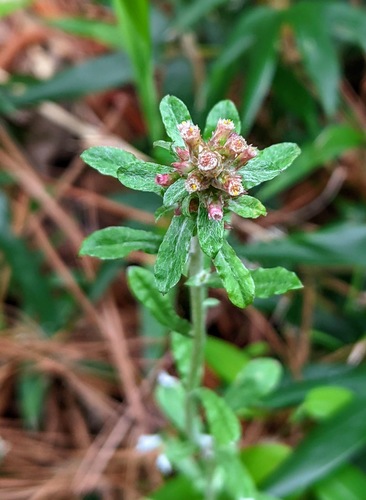
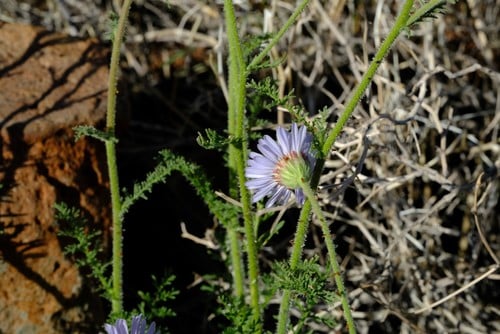
Taraxacum heterolepis
Nakai. & Koidz.
No photos yet for Taraxacum heterolepis
Sign in to contribute a photoSummary
A perennial taproot plant suited to sandy, loamy, or clay soils with good drainage. Hermaphroditic, self-fertile, and insect-pollinated. Grows in mildly acidic to mildly alkaline soils with a preference for consistent moisture. Tolerates semi-shaded woodland conditions as well as full sun.
Description
A perennial taproot plant suited to sandy, loamy, or clay soils with good drainage. Hermaphroditic, self-fertile, and insect-pollinated. Grows in mildly acidic to mildly alkaline soils with a preference for consistent moisture. Tolerates semi-shaded woodland conditions as well as full sun.
Edible Uses
Leaves can be eaten raw or cooked. The roasted root makes a coffee substitute. The following uses are also likely applicable to this species, though no specific records confirm them: roots can be cooked; flowers can be eaten raw or cooked, with unopened buds suitable for fritters; the whole dried plant makes a tea, as do the flowers, leaves, and roots individually.
Traditional Uses
The flowers are eaten raw or cooked. The unopened flower buds are used in fritters. The flowers are used for tea.
This uses section is brief — help expand it
Medicinal Uses
The stem has been used in the treatment of cancer. A decoction of the whole plant is used for treating abscesses, appendicitis, boils, liver problems, and stomach disorders. The plant has been used for over 1,000 years in Chinese medicine for treating breast cancer and other breast-related conditions, including poor milk flow.
Distribution
It is a temperate plant.
Where It Grows
Asia, Manchuria,
Cultivation
We have very little information on this species and do not know if it will be hardy in Britain, though judging by its native range it should succeed outdoors in many parts of the country. The following notes are based on the general needs of the genus. Prefers a well-drained humus-rich soil in full sun or light shade. Many species in this genus produce their seed apomictically. This is an asexual method of seed production where each seed is genetically identical to the parent plant. Occasionally seed is produced sexually, the resulting seedlings are somewhat different to the parent plants and if these plants are sufficiently distinct from the parents and then produce apomictic seedlings these seedlings are, in theory at least, a new species.
Propagation
Sow seed in spring in a cold frame, either surface-sowing or covering only very lightly, and keep the compost moist. Germination should occur within two weeks. Prick seedlings into individual pots — using relatively deep pots to accommodate the taproot — when large enough to handle, and plant out in early summer. Division can be done in early spring as the plant comes into growth.
Other Uses
None known.
Notes
There are 50-60 Taraxacum species.
References (2)
- Lim, T. K., Edible Medicinal and Non-Medicinal Plants Volume 7 Flowers
- Plants for a Future database, The Field, Penpol, Lostwithiel, Cornwall, PL22 0NG, UK. http://www.scs.leeds.ac.uk/pfaf/