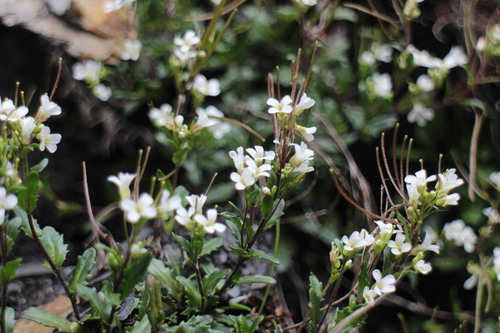
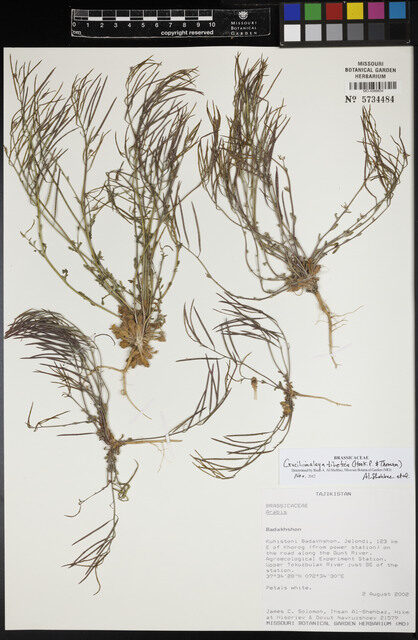
Armoracia rusticana
Gaertn.
Horseradish
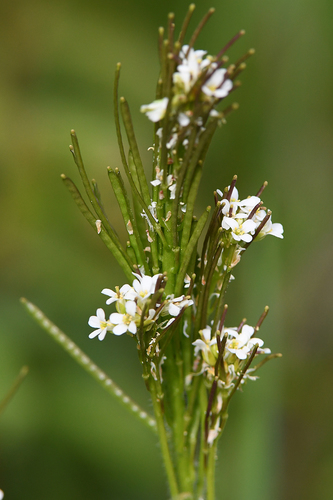
iNaturalist· cc-by-nc
(c) Eduard Garin, some rights reserved (CC BY-NC), uploaded by Eduard Garin
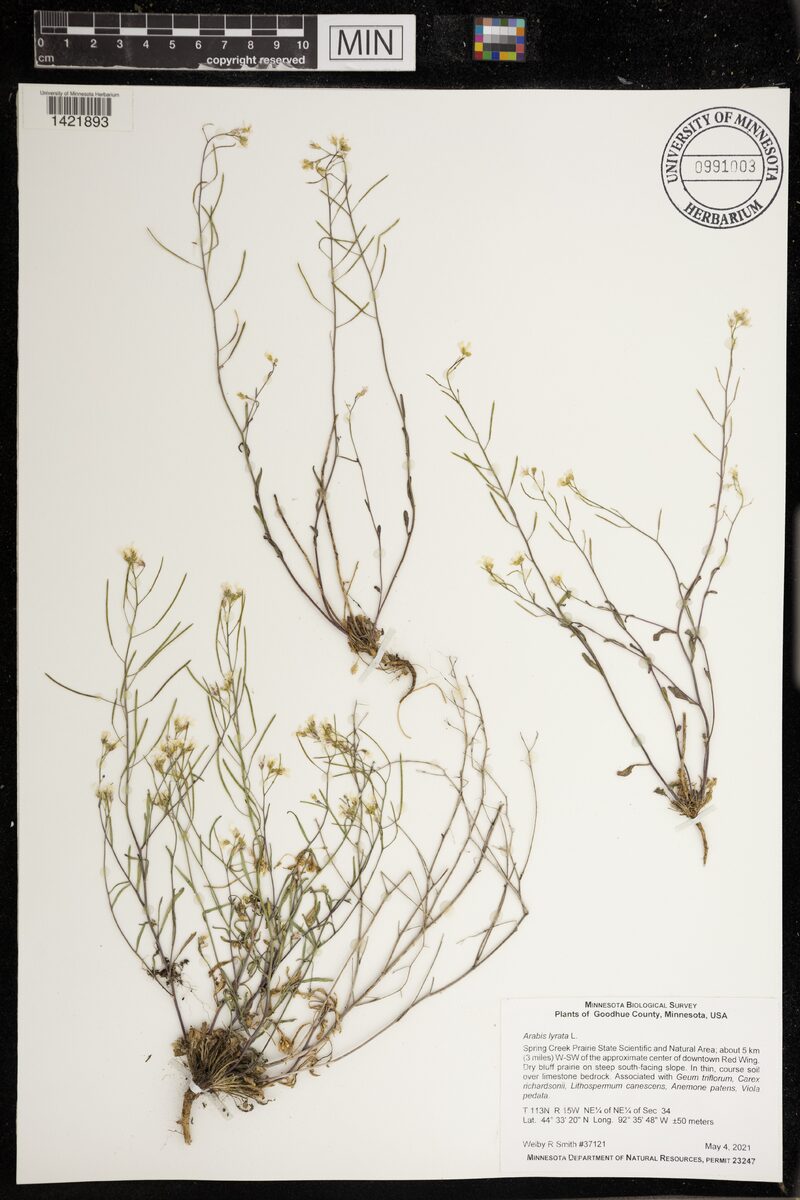
iNaturalist· cc-by-sa
(c) Andreas Rockstein, some rights reserved (CC BY-SA)
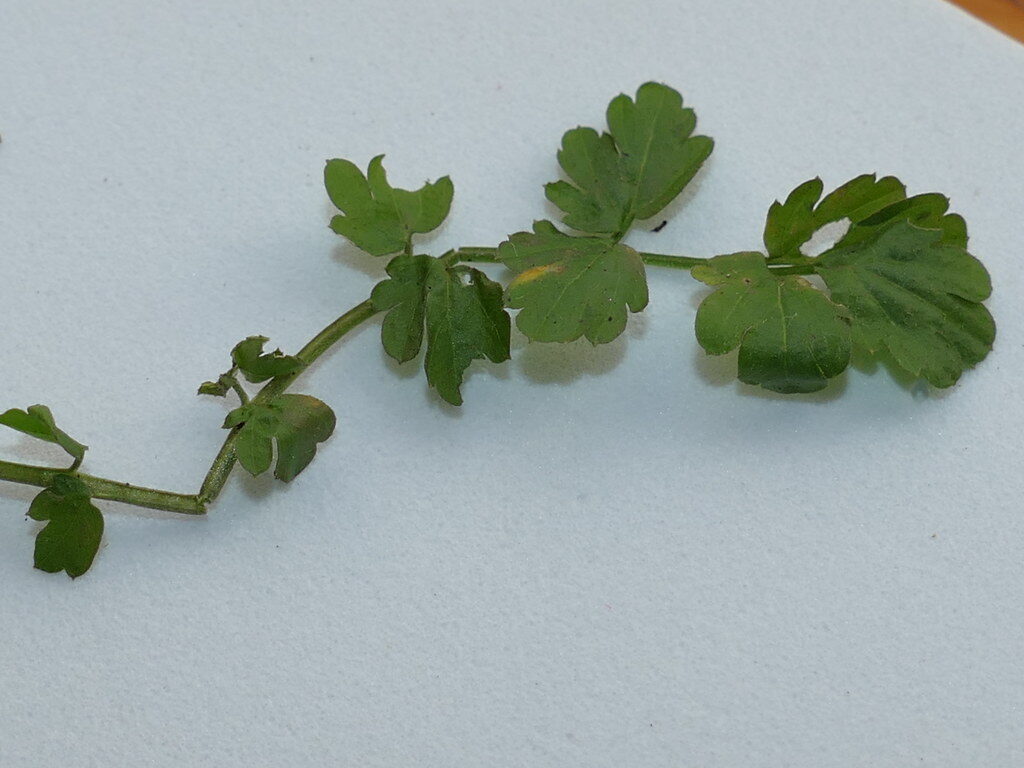
iNaturalist· cc-by-nc
(c) Lenka Janochova, some rights reserved (CC BY-NC), uploaded by Lenka Janochova
Summary
Source: WikipediaArmoracia rusticana is a fast-growing perennial reaching 0.7 m tall and spreading 0.8 m. Hardy to UK zone 5 and not frost tender. Flowers appear May to June. Hermaphrodite flowers are self-fertile and pollinated by bees, flies, and beetles. Adapts to light sandy, medium loamy, and heavy clay soils with good drainage, tolerating mildly acid, neutral, basic, and very alkaline pH. Grows in semi-shade or full sun and prefers moist soil.
Description
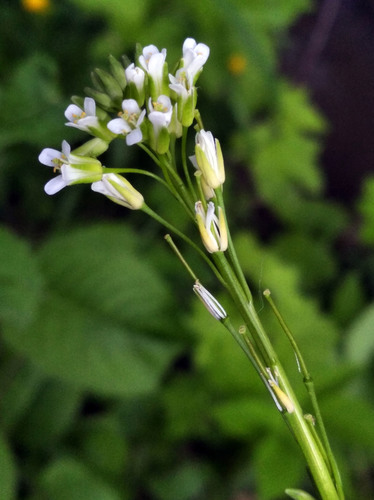
A cabbage family herb. It has stems up to 120 cm tall. It has fleshy roots. They are parsnip like with a spicy, bitter flavour. The taproot is 30 cm long and has smaller side roots. The roots are hairy and wrinkled and have a yellowish-brown skin. The flesh inside is white. The plant keeps growing from year to year. The leaves are 60 cm long. The flowers are small and have a smell. The fruit are oblong wrinkled pods. Usually the seeds do not grow.
Edible Uses
Edible Parts: Leaves Root Seed Edible Uses: Condiment Young root - raw or cooked. The grated root is used to make the condiment 'Horseradish sauce', this has a hot mustard-like flavour. The sauce is best used uncooked or gently warmed, heating it will destroy the volatile oils that are responsible for its pungency. It is said that in Germany the roots are sliced and cooked like parsnips - rather them than me!. The root is a rich source of sulphur. Fresh roots contain the glycoside sinigrin - this is decomposed in the presence of water by the enzyme myrosin, producing mustard oil which gives the root its hot flavour. The fleshy roots can be up to 60cm long and 5cm thick. The plant is fully hardy and can be left in the ground all winter to be harvested as required. Alternatively, the roots can be harvested in early winter and stored for later use, they will retain their juicy state for some time if stored in dry sand. Young leaves - raw or cooked. A very strong flavour, though nice when added in small quantities to the salad bowl[183, K]. A pleasant mild flavour according to another report. Seeds - sprouted and eaten in salads.
Traditional Uses
The root is processed to produce horseradish sauce. It is ground finely and added to whipped cream. It is not cooked but used cold like mustard with cold meats. The fresh roots are used to flavour meats, vegetables and pickles. The young leaves can be added to salads and used in soups and sauce. They are a spice. CAUTION: Horseradish is a flavouring and should only be eaten in small quantities.
Medicinal Uses
Antibacterial Antirheumatic Antiseptic Aperient Digestive Diuretic Expectorant Rubefacient Stimulant Urinary Horseradish is a very pungent stimulant herb that controls bacterial infections and can be used both internally and externally. The plant is a powerful stimulant, whether used internally as a spur for the digestive system or externally as a rubefacient. It should not be used internally by people with stomach ulcers or thyroid problems. The roots are antiseptic, aperient, digestive, diuretic, expectorant, rubefacient and stimulant. They should be used in their fresh state. An infusion is used in the treatment of colds, fevers and flu and is of value in the treatment of respiratory and urinary tract infections. A sandwich of the freshly grated root is a traditional remedy for hay fever. A tea made from the root is weakly diuretic, antiseptic and expectorant. The plant is antibiotic against gram-negative and gram-positive bacteria and also pathogenic fungi. It is experimentally antitumor. Externally, a poultice made from the roots is used to treat pleurisy, arthritis and infected wounds. It will also relieve the pain of chilblains. Some caution should be employed, however, because it can cause blistering. The German Commission E Monographs, a therapeutic guide to herbal medicine, approve Armoracia rusticana for internal & external use in catarrhs of the respiratory tract, internally as supportive therapy for urinary tract infections, externally for the hyperaemic treatment of minor muscles aches (see for critics of commission E).
Known Hazards
Large quantities of this plant can be poisonous due to its content of volatile oils. Traditional texts suggested possible thyroid function depression. Contraindicated with chronic nephritis, hepatitis, gastro-oesophageal reflux or hyperacidity conditions, and inflammatory bowel conditions. Avoid during pregnancy and lactation (moderate amounts with food ok).
Distribution
It suits temperate places. Plants grow readily in most soils. It suits moist semi-shaded conditions. In Hobart Botanical gardens. It suits hardiness zones 5-9. In the tropics it is cultivated in mountainous places.
Where It Grows
Albania, Armenia, Asia, Australia, Austria, Balkans, Belarus, Belgium, Bosnia and Herzegovina, Brazil, Britain, Bulgaria, Canada, Caucasus, Central Asia, China, Czech Republic, Denmark, Estonia, Europe, Falklands, Finland, France, Georgia, Germany, Hungary, Iceland, India, Indonesia, Ireland, Italy, Korea, Latvia, Lithuania, Macedonia, Malaysia, Mediterranean, Netherlands, New Zealand, North America, Norway, Pacific, Philippines, Poland, Romania, Russia*, SE Asia, Scandinavia, Serbia, Slovakia, Slovenia, Sweden, Switzerland, Tajikistan, Tasmania, Turkey, Türkiye, Ukraine*, USA, Uzbekistan, Western Asia, Yugoslavia,
Cultivation
A very easily grown plant, horseradish prefers a good deep moist well-drained soil and a sunny position. Plants require a good soil if they are to produce good roots, though once established they are very tolerant of neglect and will continue to produce a crop for many years. Plants do not thrive if they are in the shade of trees. Excess nitrogen causes heavy top growth and forking of the roots. Prefers a wet clay soil according to one report, whilst another says that it will not grow in wet clay. Tolerates a pH in the range 5.8 to 8.3. Horseradish has long been cultivated for its root which is used as a food flavouring and medicinally, there are some named varieties. If the roots are given some protection they will produce fresh young leaves for the salad bowl all through the winter. Digging up some roots and putting them into a greenhouse for the winter is the easiest method. If the young shoots are blanched they will produce white, tender, sweet leaves. A very invasive plant, it is considered to be a pernicious weed in some areas. Even quite small sections of root will regrow if they are left in the soil. The plant has yet to prove invasive on our Cornwall trial grounds, though it has survived and even prospered in a very overgrown site. The forms of this plant grown in gardens are almost sterile and seldom produce good seed. This is a good companion plant for potatoes since it is said to deter potato eelworm and the Colorado beetle. One plant at each corner of the potato patch is quite sufficient. When grown under apple trees it is said to prevent brown rot, powdery mildew and other fungal diseases.
Propagation
Seed - this is seldom produced on plants in cultivation. If seed is obtained then it is best sown in situ during the spring. Division is very easy and can be carried out at almost any time of the year, though it is probably best in spring. It s best to use sections of root about 20cm long, which can be planted out into their permanent positions in February or March, though even very small bits of root will grow away. Division should be carried out at least once every three years or the crop will deteriorate.
Other Uses
Fungicide Repellent Horseradish tea is effective against brown rot of apples and other fungicidal diseases. The growing plant deters potato eelworm. Special Uses Food Forest
Other Information
It is a commercially cultivated vegetable.
Notes
There are 3 Armoracia species. The glucoside sinigrin and an enzyme myrosin cause the stinging fumes when the roots are crushed.
Nutrition
| Part | Moisture | kJ | kcal | Protein | Vit A | Vit C | Iron | Zinc |
|---|---|---|---|---|---|---|---|---|
| Root - raw | 74.7 | 253 | 61 | 4.5 | 0 | 120 | 2 | — |
| Root - prepared | 85.1 | 201 | 48 | 1.2 | 0 | 24.9 | 0.4 | 0.8 |
| Leaves | — | — | — | — | — | — | — | — |
| Seed | — | — | — | — | — | — | — | — |
Synonyms
Also Known As
Creole mustard, German mustard, Hren, Hrin, Khren, Kren, La gen, Madaroigas, Maeroigas, Marrutki, Navadni hren, Pepperrot, P’irshushkha, Rafnt, Red cole, Torma, Tormalapu, Wasabi-daikon
References (71)
- Ali, A. M. S., 2005, Homegardens in Smallholder Farming Systems: Examples from Bangladesh. Human Ecology, Vol. 33, No. 2 pp. 245-270
- Ambasta S.P. (Ed.), 2000, The Useful Plants of India. CSIR India. p 53
- Arora, R. K., 2014, Diversity in Underutilized Plant Species - An Asia-Pacific Perspective. Bioversity International. p 100
- Bianchini, F., Corbetta, F., and Pistoia, M., 1975, Fruits of the Earth. Cassell. p 72
- Bremness, L., 1994, Herbs. Collins Eyewitness Handbooks. Harper Collins. p 148
Show all 71 references Hide references
- Brickell, C. (Ed.), 1999, The Royal Horticultural Society A-Z Encyclopedia of Garden Plants. Convent Garden Books. p 139
- Brouk, B., 1975, Plants Consumed by Man. Academic Press, London. p 306
- Brown, D., 2002, The Royal Horticultural Society encyclopedia of Herbs and their uses. DK Books. p 129
- Burkill, I.H., 1966, A Dictionary of the Economic Products of the Malay Peninsula. Ministry of Agriculture and Cooperatives, Kuala Lumpur, Malaysia. Vol 1 (A-H) p 602 (As Cochlearia armoracea)
- Burnie, G & Fenton-Smith, J., 1999, A Grower's Guide to Herbs. Murdoch Books. p 40
- Bussman, R. W., et al, 2016, A comparative ethnobotany of Khevsureti, Samtskhe-Javakheti, Tusheti, Svaneti, and Racha-Lechkhumi, Republic of Georgia (Sakartvelo), Caucasus. Journal of Ethnobiology and Ethnomedicine (2016) 12:4
- Bussman, R. W. et al, 2017, Ethnobotany of Samtskhe-Javakheti, Sakartvelo (Republic of Georgia), Caucasus. Indian Journal of Traditional Knowledge Vol. 16(1) pp 7-24
- Bussman, R. W., et al, 2021, Unity in diversity—food plants and fungi of Sakartvelo (Republic of Georgia), Caucasus. Journal of Ethnobiology and Ethnomedicine (2021) 17:72 p 7
- Cerne, M., 1992, Wild Plants from Slovenia used as Vegetables. Acta Horticulturae 318 (As Armoracia lapathifolia)
- Cheifetz, A., (ed), 1999, 500 popular vegetables, herbs, fruits and nuts for Australian Gardeners. Random House p 116
- Crawford, M., 2012, How to grow Perennial Vegetables. Green Books. p 117
- Cundall, P., (ed.), 2004, Gardening Australia: flora: the gardener's bible. ABC Books. p 188
- Denes, A., et al, 2012, Wild plants used for food by Hungarian ethnic groups living in the Carpathian Basin. Acta Societatis Botanicorum Poloniae 81 (4): 381-396
- Esperanca, M. J., 1988. Surviving in the wild. A glance at the wild plants and their uses. Vol. 2. p 17
- Facciola, S., 1998, Cornucopia 2: a Source Book of Edible Plants. Kampong Publications, p 52
- Flora of China @ efloras.org Volume 8
- Girard, N. J., 2020, Sustainable Foraging of Wild Edible Plants in Norway. A Biocultural Approach. M. Sc. thesis Norwegian University. p 129
- Gouldstone, S., 1983, Growing your own Food-bearing Plants in Australia. Macmillan p 189 (As Cochlearia armoracia)
- Hedrick, U.P., 1919, (Ed.), Sturtevant's edible plants of the world. p 206 (As Cochlearia armoracia)
- Hemphill, I, 2002, Spice Notes. Macmillan. p 205
- Heywood, V. H. & Zohary, D.,1995, A Catalogue of the Wild Relatives of Cultivated Plants Native to Europe. Flora Mediterranea 5 - 1995, p 388
- Hibbert, M., 2002, The Aussie Plant Finder 2002, Florilegium. p 32
- Hu, Shiu-ying, 2005, Food Plants of China. The Chinese University Press. p 403
- Irving, M., 2009, The Forager Handbook, A Guide to the Edible Plants of Britain. Ebury Press p 77
- Kalle, R. & Soukand, R., 2012, Historical ethnobotanical review of wild edible plants of Estonia (1770s-1960s) Acta Societatis Botanicorum Poloniae 81(4):271-281
- Kasper-Pakosz, R., et al, 2016, Wild and native plants and mushrooms sold in the open-air markets of south- eastern Poland. Journal of Ethnobiology and Ethnomedicine 12:45
- Kays, S. J., and Dias, J. C. S., 1995, Common Names of Commercially Cultivated Vegetables of the World in 15 languages. Economic Botany, Vol. 49, No. 2, pp. 115-152
- Kiple, K.F. & Ornelas, K.C., (eds), 2000, The Cambridge World History of Food. CUP p 433, 1787
- Kybal, J., 1980, Herbs and Spices, A Hamlyn Colour Guide, Hamlyn Sydney p 42
- Lim, T. K., 2015, Edible Medicinal and Non Medicinal Plants. Volume 9, Modified Stems, Roots, Bulbs. Springer p 12
- Łukasz Łuczaj and Wojciech M Szymański, 2007, Wild vascular plants gathered for consumption in the Polish countryside: a review. J Ethnobiol Ethnomedicine. 3: 17
- Luczaj, L., 2012, Ethnobotanical review of wild edible plants of Slovakia. Acta Societatis Botanicorum Poloniae 81(4):245-255
- Lukasz, L., et al, 2013, Wild edible plants of Belarus: from Rostafiński’s questionnaire of 1883 to the present. Journal of Ethnobiology and Ethnomedicine 2013, 9:21
- Luczaj, L., et al, 2015, Wild food plants and fungi used by Ukrainians in the western part of the Maramureş region in Romania. Acta Soc Bot Pol 84(3):339–346
- Luczaj, L. et al, 2017, Comfrey and Buttercup Eaters: Wild Vegetables of the Imereti Region in Western Georgia, Caucasus. Economic Botany, 71(2), 2017, pp. 188–193
- Mabey, R., 1973, Food for Free. A Guide to the edible wild plants of Britain, Collins. p 61
- Martin, F.W. & Ruberte, R.M., 1979, Edible Leaves of the Tropics. Antillian College Press, Mayaguez, Puerto Rico. p 188 (As Cochlearia armoracea)
- Michael, P., 2007, Edible Wild Plants and Herbs. Grub Street. London. p 129
- Mulherin, J., 1994, Spices and natural flavourings. Tiger Books, London. p 54
- Oekon. Fl. Wetterau 2:426. 1800
- Peter, K. V. (Ed.), 2004, Handbook of Herbs and Spices Vol. 2 Woodhead Publishing and CRC Press. p
- Pieroni, A., et al, 2005, Food for two seasons: Culinary uses of non-cultivated local vegetables and mushrooms in a south Italian village. International Journal of Food Sciences and Nutrition, 56(4): 245-272
- Pieroni, A. & Soukand, R., 2017, Are Borders more Important than Geographical Distance: The Wild Food Ethnobotany of the Boykos and its Overlap with that of the Bukovinian Hutsuls in Western Ukraine. Journal of Ethnobiology 37(2): 326–345
- Pieroni, A., et al, 2020, Wild food plants traditionally gathered in central Armenia: archaic ingredients or future sustainable foods? Environment, Development and Sustainability. Springer p 7
- Plants for a Future database, The Field, Penpol, Lostwithiel, Cornwall, PL22 0NG, UK. http://www.scs.leeds.ac.uk/pfaf/
- Prakofjewa, J., et al, 2023, Boundaries Are Blurred: Wild Food Plant Knowledge Circulation across the Polish-Lithuanian-Belarusian Borderland. Biology 2023, 12, 571.
- Pruse, B., et al, 2021, Active Wild Food Practices among Culturally Diverse Groups in the 21st Century across Latgale, Latvia. Biology 2021, 10, 551.
- Purseglove, J.W., 1968, Tropical Crops Dicotyledons, Longmans. p 90
- Redzic, S., 2010, Use of Wild and Semi-Wild Edible Plants in Nutrition and Survival of People in 1430 Days of Siege of Sarajevo during the War in Bosnia and Herzegovina (1992–1995). Coll. Antropol 34 (2010) 2:551-570
- Romanowski, N., 2007, Edible Water Gardens. Hyland House. p 83
- Sansanelli, S., et al, 2017, Ethnobotanical survey of wild food plants traditionally collected and consumed in the Middle Agri Valley (Basilicata region, southern Italy). Journal of Ethnobiology and Ethnomedicine (2017) 13:50
- Schunko, C., et al, 2010, Organic farmers use of wild food plants and fungi in a hilly area in Styria (Austria). Journal of Ethnobiology and Ethnomedicine 6:17
- Seidemann J., 2005, World Spice Plants. Economic Usage, Botany, Taxonomy. Springer. p 50
- Smith, P.M., 1979, Horseradish, in Simmonds, N.W., (ed), Crop Plant Evolution. Longmans. London. p 305
- Soukand, R., et al, 2017, Multi-functionality of the few: current and past uses of wild plants for food and healing in Liubań region, Belarus. Journal of Ethnobiology and Ethnomedicine (2017) 13:10
- Terra, G.J.A., 1973, Tropical Vegetables. Communication 54e Royal Tropical Institute, Amsterdam, p 25 (As Armoracia lapathifolia)
- Tindall, H.D., 1983, Vegetables in the tropics. Macmillan p. 138
- Tozer, F., 2007, The Uses of Wild Plants. Green Man Publishing. p 34
- Tronickova, E. & Krejcova, Z., 1987, Ortaggi, Instituto Geografico de Agostini, Cecoslovacchia. p 174
- Tyagi, R. K., et al, 2004, Conservation of Spices Germplasm in India. Indian J. Plant Genet. Resour. 17(3): 163-174
- Upson, R., & Lewis R., 2014, Updated Vascular Plant Checklist and Atlas for the Falkland Islands. Falklands Conservation and Kew.
- van Wyk, B., 2005, Food Plants of the World. An illustrated guide. Timber press. p 71
- Vickery, M.L. and Vickery, B., 1979, Plant Products of Tropical Africa, Macmillan. p 84 (As Armoracia lapathifolia)
- Wiersema, J. H. & Leon, B., 2013, World Economic Plants. A Standard Reference CRC Press. 2nd Ed. p 69
- World Checklist of Useful Plant Species 2020. Royal Botanic Gardens, Kew
- Zhou Taiyan, Lu Lianli, Yang Guang; Ihsan A. Al-Shehbaz, BRASSICACEAE (CRUCIFERAE), Flora of China.