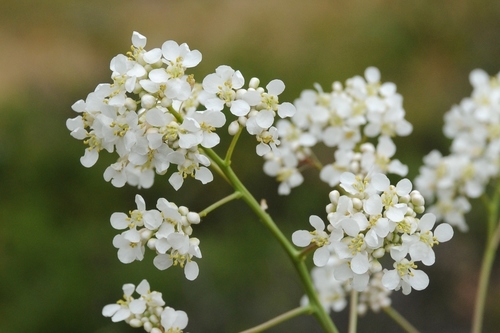
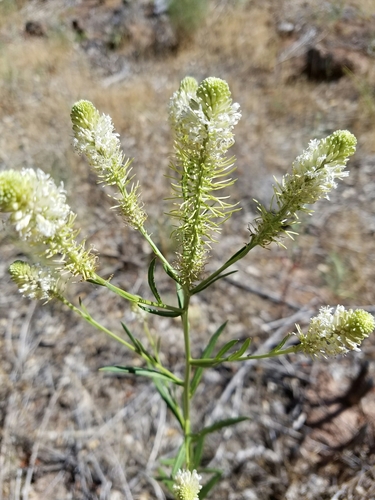
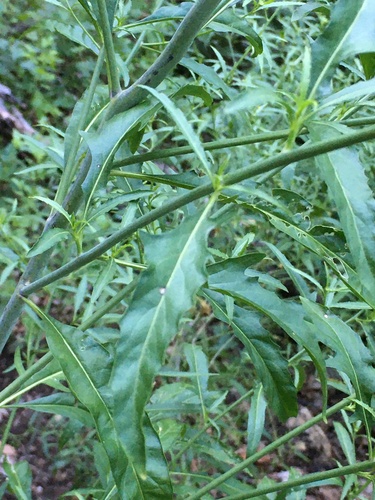
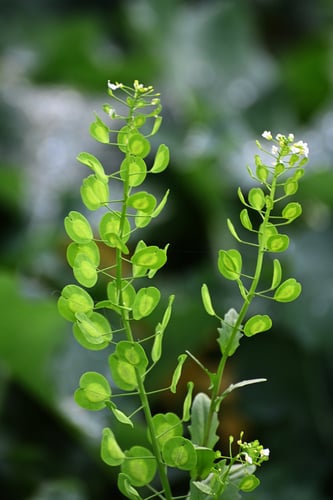
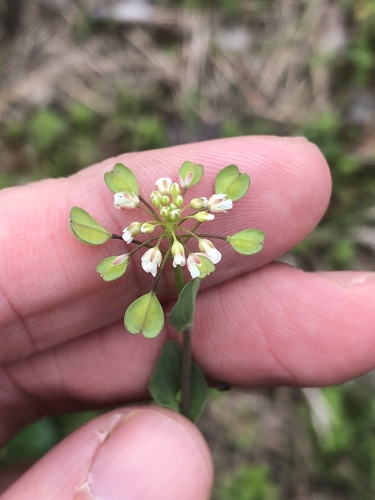
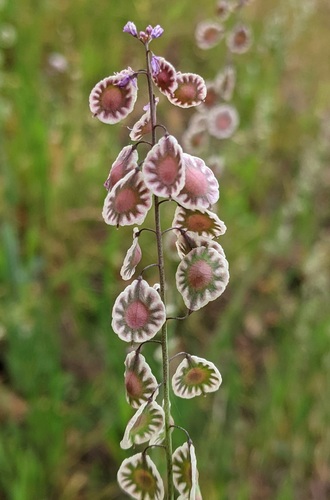
Cardamine kitaibelii
Bech.
iNaturalist· cc-by-nc
(c) Alberto Colatore, some rights reserved (CC BY-NC), uploaded by Alberto Colatore
Description
Cardamine kitaibelii is a PERENNIAL growing to 0.2 m (0ft 8in) by 0.5 m (1ft 8in). See above for USDA hardiness. It is hardy to UK zone 6. It is in flower from April to May. The species is hermaphrodite (has both male and female organs) and is pollinated by Bees, flies, Lepidoptera (Moths & Butterflies). The plant is self-fertile. Suitable for: light (sandy), medium (loamy) and heavy (clay) soils. Suitable pH: mildly acid, neutral and basic (mildly alkaline) soils. It can grow in semi-shade (light woodland) or no shade. It prefers moist or wet soil.
Edible Uses
Leaves - raw or cooked. A mild cabbage flavour with a hint of cress. Flowers - raw. A mild cabbage flavour with a hint of cress.
Distribution
Europe - southern Switzerland, northern Italy and Yugoslavia.
Where It Grows
Coming Soon
Cultivation
Prefers a moist humus rich soil in shade or semi-shade but succeeds in most soils that are not dry. This species was seen growing and thriving in well-drained soil in a lightly shaded position at Kew.
Propagation
Seed - sow spring in a cold frame. Germination usually takes place within 1 - 3 weeks at 15°c. When large enough to handle, prick the seedlings out into individual pots and grow them on in light shade in a greenhouse or cold frame for the first two years, planting them out when dormant in late summer. Division in early spring or after the plant dies down in the summer. Larger clumps can be replanted direct into their permanent positions, though it is best to pot up smaller clumps and grow them on in a cold frame until they are rooting well. Plant them out in the spring.