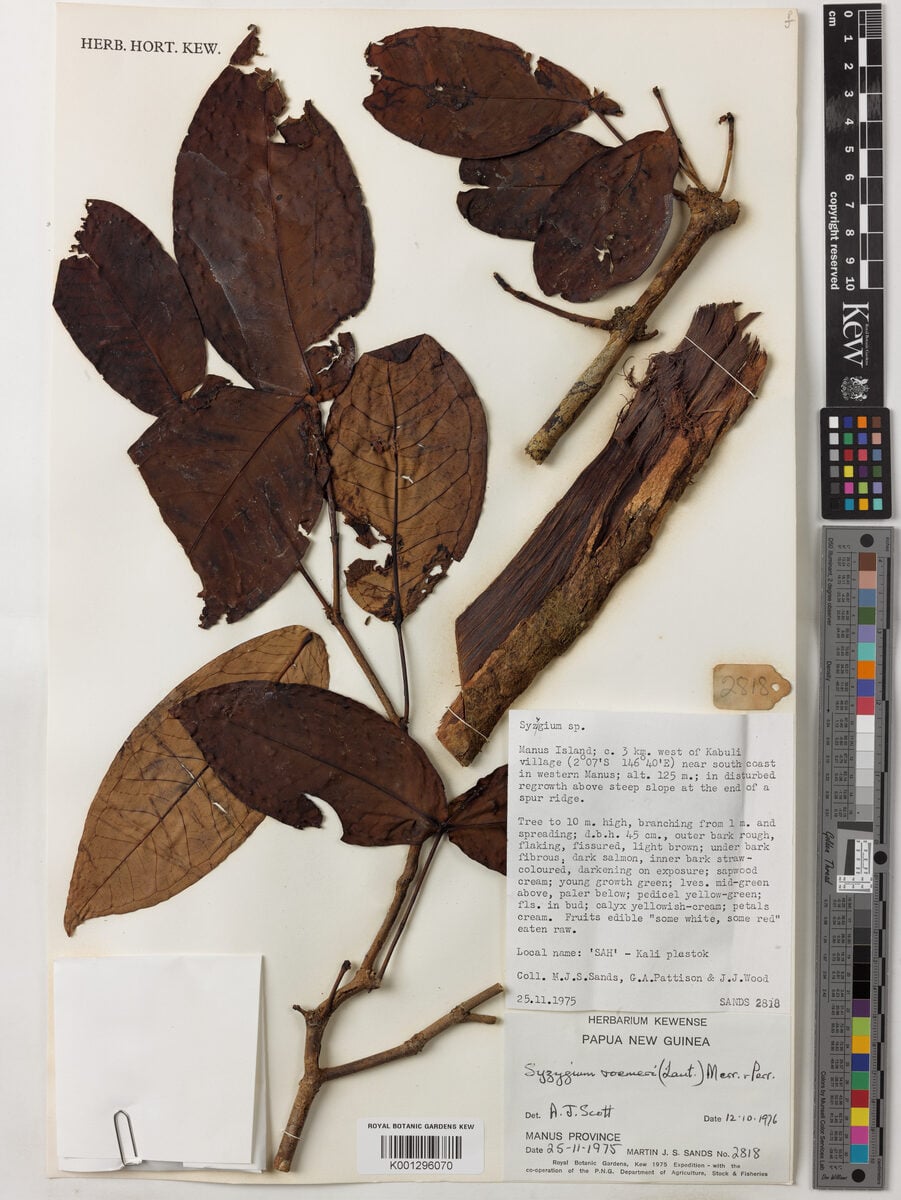
Syzygium minutuliflorum
(F. Muell.) B. Hyland
Gove satinash
gbif· cc-by
Royal Botanic Gardens, Kew
gbif· cc-by
GBIF
gbif· cc-by
GBIF
Description
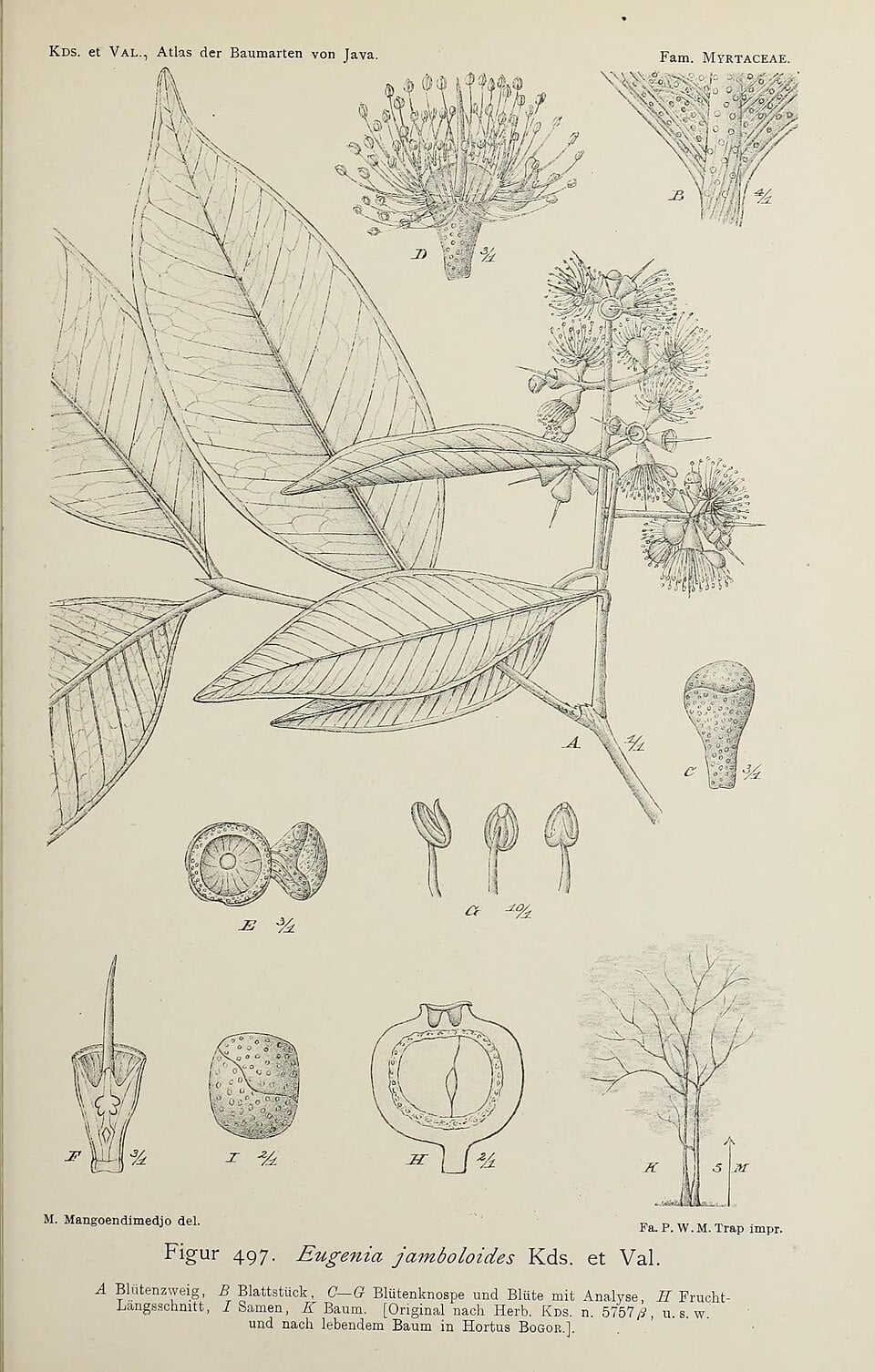
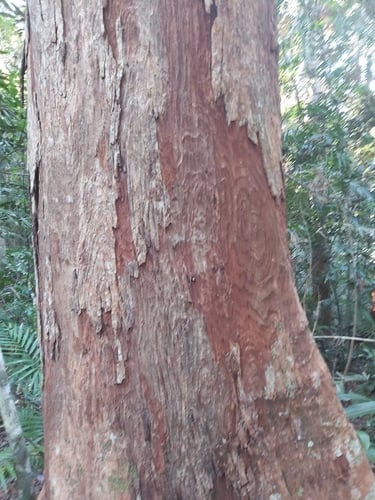
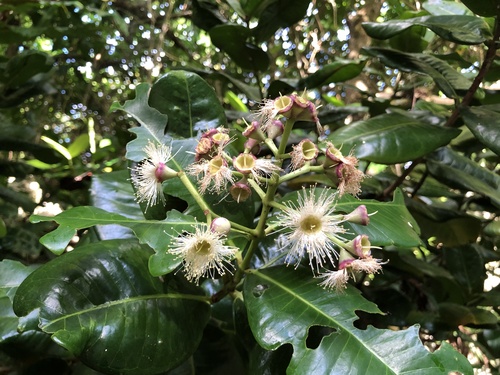
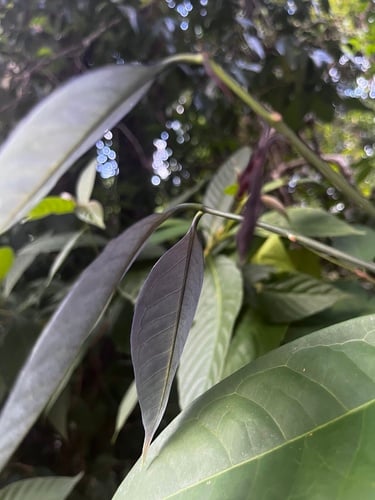
An evergreen tree. It grows to 10-25 m tall. It has a spreading crown of leaves. The bark is rough and flaky. It is cream-brown to grey. Larger trees may have buttresses. The leaves are simple and broadest above the middle and have a blunt tip. The leaves are produced opposite each other along the branch and are smooth and leathery. They are 8-13 cm long by 3-5 cm wide. The upper surface is dark green but dull and the lower surface is more pale. The midrib is raised underneath the leaf. The flowers are white. They have many stamens about 1 cm long. The flowers occur in clusters at the ends of small branches or amongst the upper leaves. The fruit are round, white and fleshy. They are about 1.5 cm across. The fruit have one seed inside. The fruit are edible.
Edible Uses
We have no specific information on edibility for the fruit of this species, but the fruits of many members of this genus are edible. The depressed globular or depressed obovoid fruit is about 10 - 21mm long and 10 - 15mm wide; the succulent flesh surrounding a solitary seed about 8mm in diameter.
Traditional Uses
The ripe fruit are eaten raw.
This uses section is brief — help expand it
Distribution
A tropical monsoon forest species. It occurs in the northern parts of the Northern Territory in Australia. It grows on seasonally waterlogged soils. Plants require plenty of water. It is best grown in deep well drained soils. As the ripe fruit float in water this helps the fruit and tree get dispersed naturally.
Where It Grows
Australia*,
Cultivation
Plants are grown from fresh seed.
Propagation
Seed - best sown as soon as it is ripe.
Other Uses
A structural timber. We do not have any more specific information for the wood of this species, but the various species of Syzygium tend to have somewhat similar timber. The general description of syzygium timber is as follows:- The heartwood is a golden brown, greyish brown or brown, with pink or purplish glints; it is not clearly demarcated from the 1 - 4cm wide band of sapwood. The texture is fine; the grain slightly interlocked, sometimes wavy or irregular; there are resin deposits. The wood is heavy; moderately hard; somewhat durable, being moderately resistant to fungi and termites, but susceptible to dry wood borers. It seasons slowly, with a high risk of checking and distortion; once dry it is moderately stable in service. It works well with ordinary tools, nailing and screwing are good so long as the wood is pre-bored; gluing is correct. The wood is used for musical instruments, tool handles, furniture components, ship building, heavy carpentry, flooring, joinery etc.
Production
The flowers occur in October to November and the fruit are ripe November to January.
Synonyms
References (6)
- Brock, J., 1993, Native Plants of Northern Australia, Reed. p 308
- Cherikoff V. & Isaacs, J., The Bush Food Handbook. How to gather, grow, process and cook Australian Wild Foods. Ti Tree Press, Australia p 201
- Jones D, L, 1986, Ornamental Rainforest Plants in Australia, Reed Books, p 80, 340
- Lazarides, M. & Hince, B., 1993, Handbook of Economic Plants of Australia, CSIRO. p 233
- Tiwi Plants and Animals. 2001, Aboriginal flora and fauna knowledge from Bathurst and Melville Islands, northern Australia. Northern Territory Botanical Bulletin; No. 24 p 82
Show all 6 references Hide references
- Townsend, K., 1994, Across the Top. Gardening with Australian Plants in the tropics. Society for Growing Australian Plants, Townsville Branch Inc. p 348