Myrcianthes fragrans
(Sw.) McVaugh
Twinberry, Simpson's stopper
iNaturalist· cc0
no rights reserved, uploaded by Diego Blanco
iNaturalist· cc-by-nc
(c) Kurt Miller, some rights reserved (CC BY-NC)
iNaturalist· cc-by-nc-sa
(c) Patrick Coin, some rights reserved (CC BY-NC-SA)
Summary
Source: WikipediaMyrcianthes fragrans, commonly known as twinberry or Simpson's stopper, is a tree in the family of Myrtaceae, native to Florida, the United States Virgin Islands, other countries within the Caribbean, Central America and northern South America. It is a common tree in moist tropical forests of the region.
Description
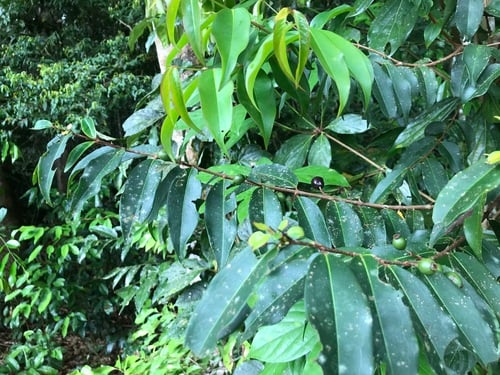
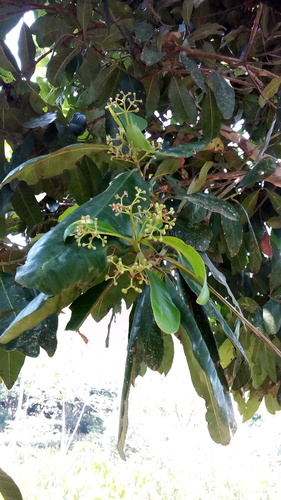
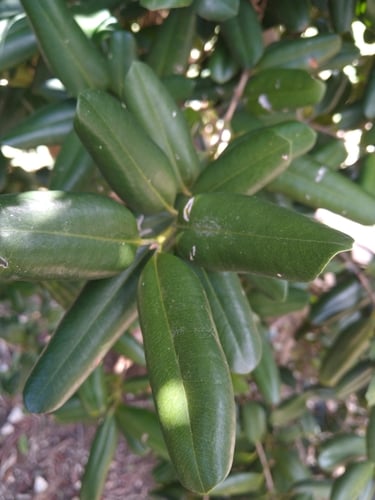
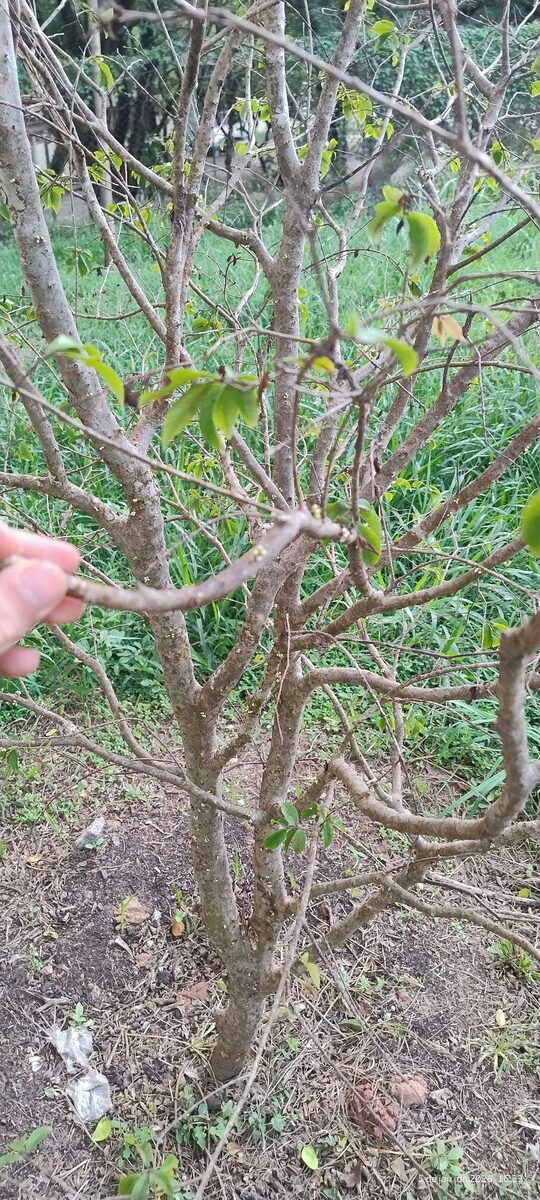
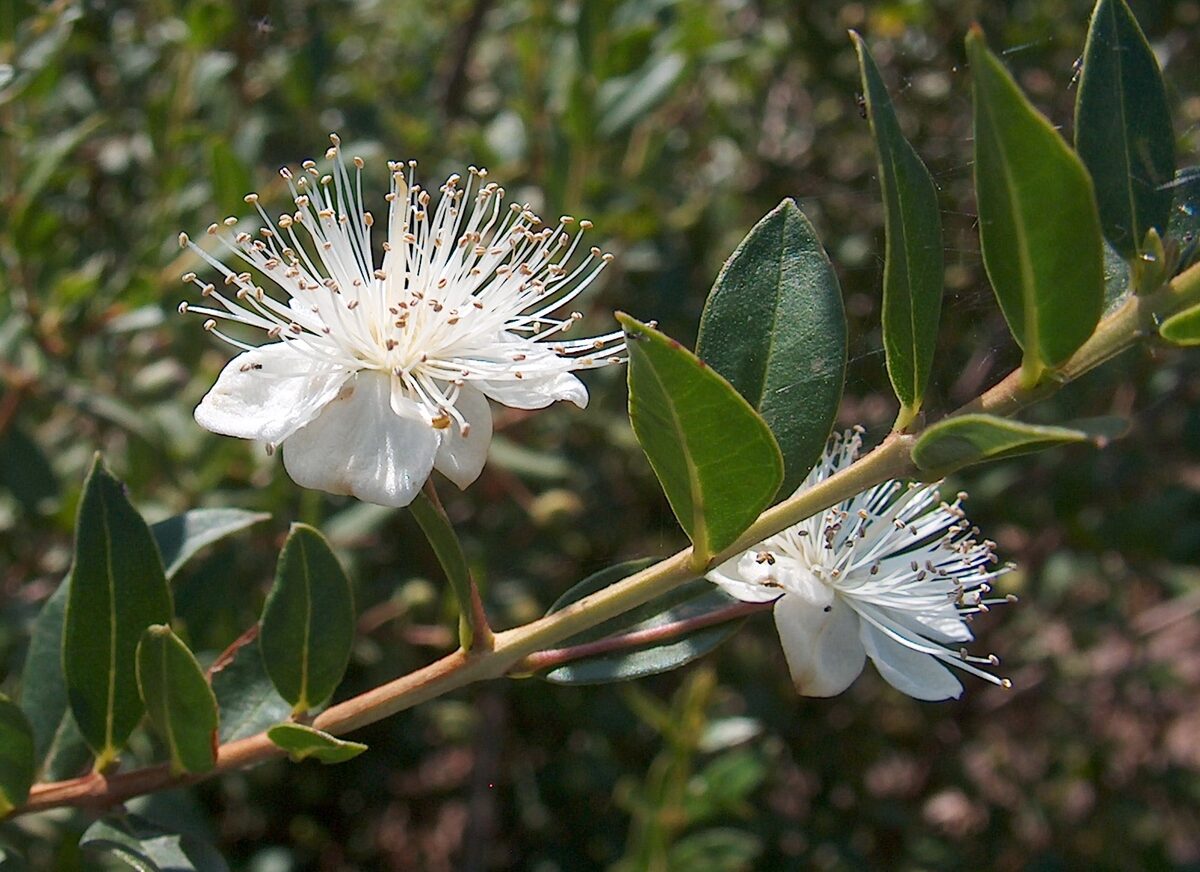
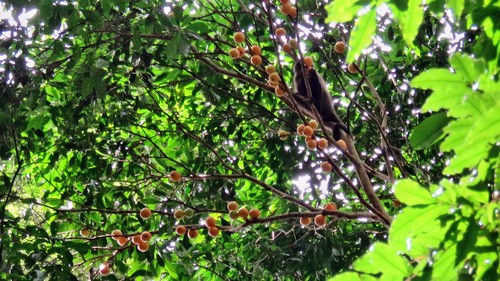
A small tree. It grows 6 m tall. The bark is smooth. The leaves are narrowly oval and 8 cm long. The leaves are dark green. They have a nutmeg scent. The flowers are small and white. The fruit are red. They are 1 cm across.
Edible Uses
Fruit - raw. An agreeable, aromatic flavour. The small, round, orange to red berries are highly variable in flavour, ranging from bitter to pleasantly tart with an unusual turpentine-like aftertaste, to sweet with little aftertaste when fully ripe. The fruits are also used in making a brandy. The globose fruit is around 6 - 15mm in diameter, containing 2 or more seeds. The leaves are used to make a fragrant tea.
Traditional Uses
The fruit are eaten raw.
This uses section is brief — help expand it
Medicinal Uses
The plant is used in Peru in the treatment of rheumatic pain and for flu and labour pains in the Bahamas and the Caicos Islands, where it is also used to treat fevers. An extract of the leaves has shown promising antibacterial activity.
Distribution
It is a tropical plant. It grows in moist forests. It suits USDA hardiness zone 9B.
Where It Grows
Andes, Bahamas, Caribbean, Cayman Islands, Central America*, Colombia, Cuba, Dominican Republic, Ecuador, Guatemala, Haiti, Jamaica, Lesser Antilles, Martinique, Mexico*, Nicaragua, North America, Panama, Peru, Puerto Rico, South America*, USA, Venezuela, West Indies,
Cultivation
Myrcianthes fragrans is found from subtropical to tropical habitats and is known to tolerate some frost, surviving unharmed with occasional short-lived drops in temperature to around -4°c. Succeeds in full sun to fairly deep shade. Succeeds in a range of soils from mildly acid to alkaline, it is tolerant of some salt in the soil, very tolerant of drought and also able to withstand occasionally waterlogged soils. The flowers are aromatic. Plants can flower and produce fruit all year round.
Other Uses
The tiny, deep green leaves contain aromatic oils with the fragrance of nutmeg. The plant is aromatic and is used as a perfume. The heartwood is light brown or red, the sapwood is yellow. The wood is close-grained, compact, hard and very heavy. It is used for construction and tools, such as pestles, blown darts and axe handles.
Synonyms
Also Known As
Arrayan, Bwa denn, Bwa dinn, Bwa milat, Bwa rogou, Coquillo, Gauguel, Guayabacon, Guayabillo, Guayabito, Mit fey lorie, Ozia, Peralejo, Pimienta, Pimientilla, Wawall, Zebra wood
References (8)
- Beckstrom-Sternberg, Stephen M., and James A. Duke. "The Foodplant Database." http://probe.nalusda.gov:8300/cgi-bin/browse/foodplantdb.(ACEDB version 4.0 - data version July 1994) (As Eugenia dichotoma)
- Grandtner, M. M. & Chevrette, J., 2013, Dictionary of Trees, Volume 2: South America: Nomenclature, Taxonomy and Ecology. Academic Press p 435
- Hedrick, U.P., 1919, (Ed.), Sturtevant's edible plants of the world. p 297 (As Eugenia dichotoma and Eugenia fragrans)
- Kermath, B. M., et al, 2014, Food Plants in the Americas: A survey of the domesticated, cultivated and wild plants used for Human food in North, Central and South America and the Caribbean. On line draft. p 559
- Plants of Haiti Smithsonian Institute http://botany.si.edu/antilles/West Indies
Show all 8 references Hide references
- Roa, J. A. G. & Boada, D. S. G., 2018, Fundación para el Fortalecimiento de la Fruticultura y Plantas Alimenticias no Convencionales en Colombia.
- Torre, de la, L., et al, 2008, Enciclopedia de las Plantas Útiles del Ecuador. Herbario QCA. Pontificia Universidad Católica del Ecuador. p 468
- Van den Eynden, V., et al, 2003, Wild Foods from South Ecuador. Economic Botany 57(4): 576-603