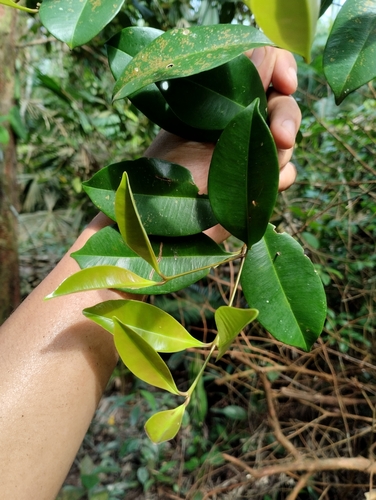
Syzygium angophoroides
(F. Muell.) B. Hyland
Swamp satinash
iNaturalist· cc-by
(c) Unknown, some rights reserved (CC BY)
iNaturalist· cc-by-nc
(c) ryanthughes, some rights reserved (CC BY-NC)
iNaturalist· cc-by-nc
(c) ryanthughes, some rights reserved (CC BY-NC)
Summary
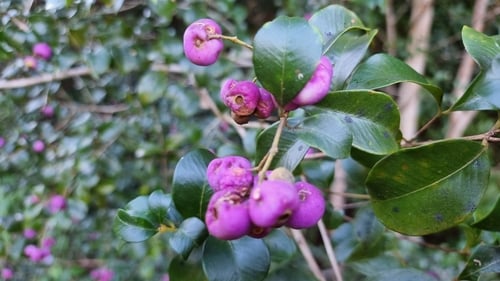
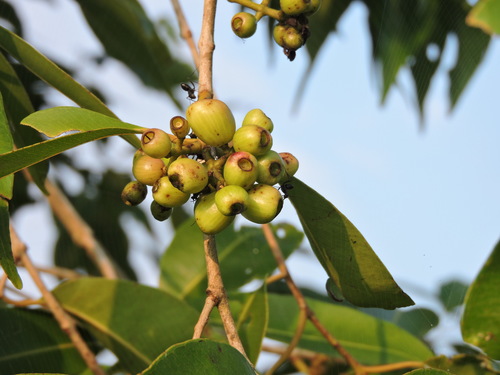
Source: WikipediaSyzygium angophoroides, commonly known as bark in wood, Yarrabah satinash, or swamp satinash (amongst other names), is a tree of the family Myrtaceae native to Western Australia, the Northern Territory and Queensland in Australia, which grows to a height of 6 to 35 m. It blooms between July and November producing cream flowers, followed by small fruits about 9 mm long by 13 mm wide, which turn dark purple or blackish when ripe.
Description
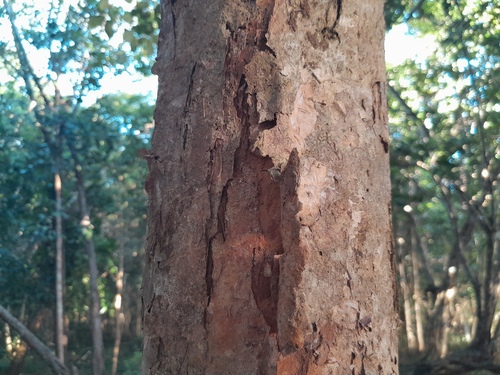
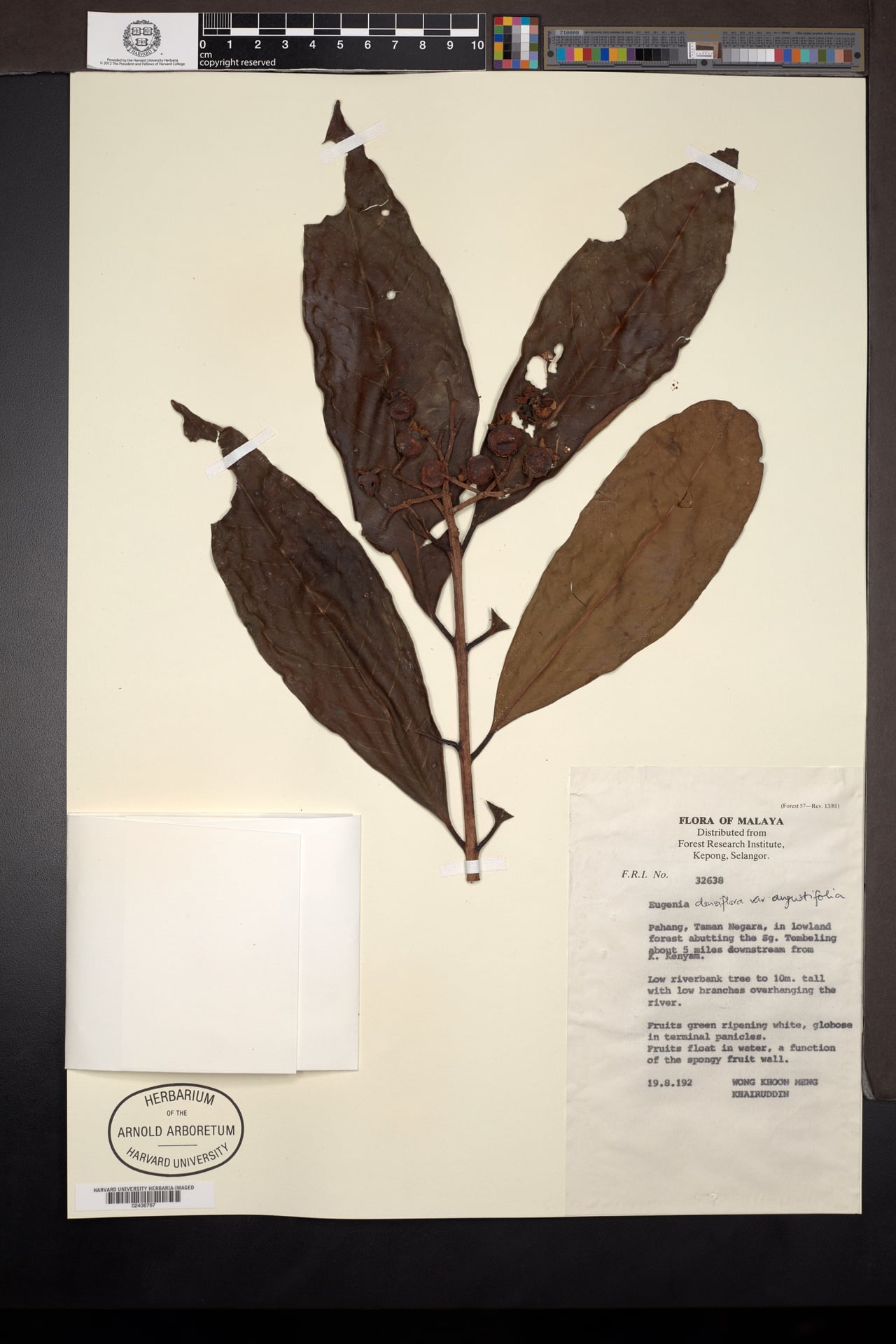
A straggly tree up to 10-20 m tall. Trees can be up to 30 m tall and have buttresses. Often small shoots occur on the trunk. The bark is brown, rough and papery. The young twigs are four angled and have short wings. The leaves are sword shaped and 8-16 cm long by 3-5.5 cm wide. They are dark green on the upper surface and paler green underneath. They are smooth and leathery. They have a pointed tip. The veins in the leaf are easy to see. The leaf stalk is less than 1 cm long. The flowers are cream coloured and occur as clusters on the ends of small branches. They have many stamens and are 0.8-1 cm across. The flowers are towards the ends of branches. The fruit is fleshy and dark purple. They are 1.3 cm across. They hang in clusters. They are edible. There is one seed in the fruit.
Edible Uses
The fleshy, dark purple fruit are eaten.
Traditional Uses
The fruit are eaten.
This uses section is brief — help expand it
Distribution
It is a tropical plant and occurs in northern Australia. It is found in monsoon forest. It occurs near swamps on land that is occasionally flooded. They require a sheltered position. They are sensitive to frost. They do best with soils with a high organic matter.
Where It Grows
Australia*, SE Asia, Singapore,
Cultivation
They are grown from seed. The seed needs to be fresh.
Production
Seedlings are fairly slow growing. The flowers occur from July to November and fruit are ripe October to February.
Synonyms
Also Known As
Roly poly satinash, Yarrabah Satinash
References (12)
- Brock, J., 1993, Native Plants of Northern Australia, Reed. p 304
- Cherikoff V. & Isaacs, J., The Bush Food Handbook. How to gather, grow, process and cook Australian Wild Foods. Ti Tree Press, Australia p 201
- Cooper W & Cooper W T, 1994, Fruits of the Rain Forest. RD Press p 268
- Cooper, W. and Cooper, W., 2004, Fruits of the Australian Tropical Rainforest. Nokomis Editions, Victoria, Australia. p 358
- Hibbert, M., 2002, The Aussie Plant Finder 2002, Florilegium. p 296
Show all 12 references Hide references
- Jones D, L, 1986, Ornamental Rainforest Plants in Australia, Reed Books, p 74
- Lazarides, M. & Hince, B., 1993, Handbook of Economic Plants of Australia, CSIRO. p 232
- Paczkowska, G . & Chapman, A.R., 2000, The Western Australian Flora. A Descriptive Calatogue. Western Australian Herbarium. p 402
- Radke, P & A, Sankowsky, G & N., 1993, Growing Australian Tropical Plants. Frith & Frith, Australia. p 57
- Townsend, K., 1994, Across the Top. Gardening with Australian Plants in the tropics. Society for Growing Australian Plants, Townsville Branch Inc. p 342
- Vigilante, T., et al, 2013, Island country: Aboriginal connections, values and knowledge of the Western Kimberley islands in the context of an island biological survey. Records of the Western Australian Museum Supplement 81: 145-182
- Wheeler, J.R.(ed.), 1992, Flora of the Kimberley Region. CALM, Western Australian Herbarium, p 541