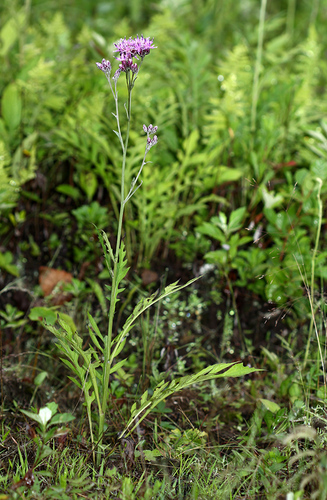
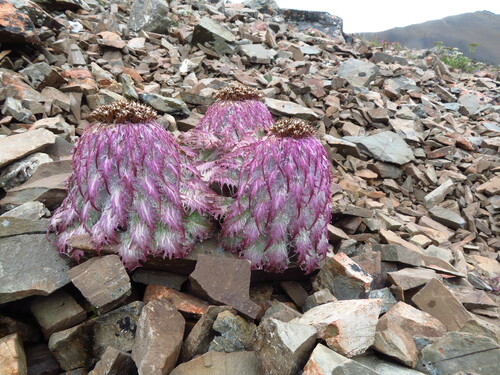
Synurus deltoides
(Aiton) Nakai
Surich'wi
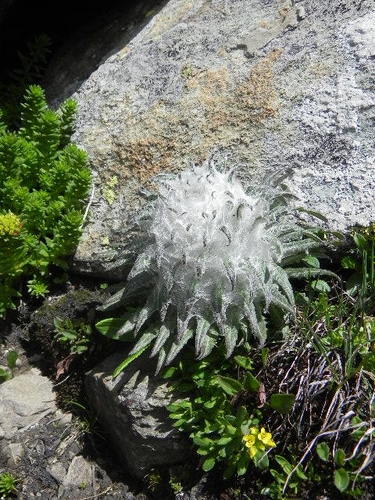
iNaturalist· cc-by-nc
(c) Keita Watanabe, some rights reserved (CC BY-NC), uploaded by Keita Watanabe
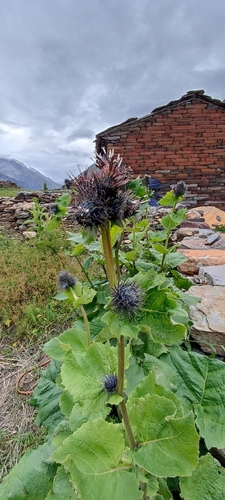
iNaturalist· cc-by-nc
(c) kugusheva_anastasia, some rights reserved (CC BY-NC)
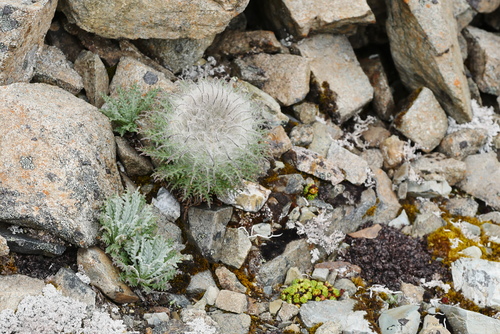
iNaturalist· cc-by-nc
(c) Daba, some rights reserved (CC BY-NC)
Summary
Source: WikipediaPerennial herb reaching 1 m tall with flowers and mature seeds both appearing July to October. Hermaphroditic and insect-pollinated. Adapts to light sandy through heavy clay soils with good drainage and prefers moist conditions. Tolerant of mildly acid, neutral, and mildly alkaline pH. Requires full sun. Hardy to UK zone 7.
Description
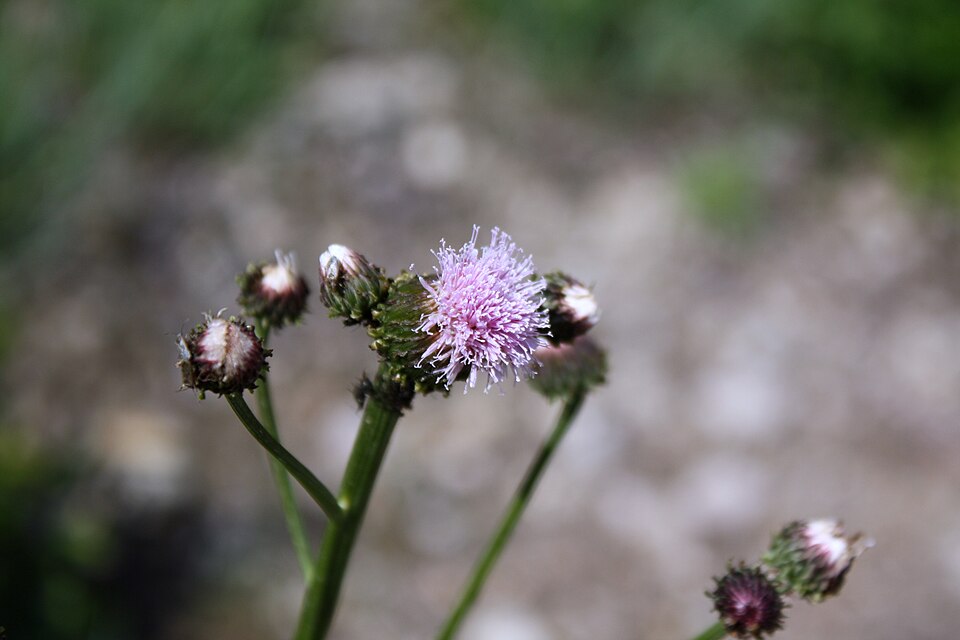
A herb. It grows 0.7-1.5 m tall. It has a stout rootstock. The stem occurs singly and is stout. It can be felted at the base and in ribbed. The leaves are grey and felted underneath. The lower leaves have narrowly winged leaf stalks 30 cm long. The leaves are oval or heart shaped and 10-26 cm long by 12-20 cm wide. Leaves higher up are smaller.
Edible Uses
The tender parts of this plant are eaten cooked.
Traditional Uses
The young leaves are used in rice cakes and with seasoned vegetable.
This uses section is brief — help expand it
Medicinal Uses
None known
Distribution
It is a temperate plant. It grows on the edges of forests and in meadows between 500-2,200 m above sea level in north China. In Yunnan.
Where It Grows
Asia, China, Japan, Korea, Manchuria, Mongolia, Russia,
Propagation
No specific information is available for this species, but sowing seed in a cold frame in spring is recommended. Surface sow or barely cover the seed, keeping the compost consistently moist. Once seedlings are large enough to handle, prick them out into individual pots and grow on in a greenhouse through their first winter. Plant out into permanent positions in late spring or early summer, after the last expected frosts. Division can also be carried out in spring.
Other Uses
None known
Synonyms
Also Known As
Surichwi
References (5)
- Heo, B., et al., 2009, Antiproliferative Activity of Korean Wild Vegetables on Different Human Tumor Cell Lines. Plant Foods for Human Nutrition. 64:257-263
- Hwang, HS, et al, 2014, Distribution characteristics of plant in the Ungseokbong Mountain, Gyeongsangnam-do, Korea. Journal of Asia-Pacific Biodiversity. 7(2014) e164-e178
- Kim, H. & Song, M., 2013, Ethnobotanical analysis for traditional knowledge of wild edible plants in North Jeolla Province (Korea). Genetic. Resour. Crop Evol. (2013) 60:1571-1585
- Pemberton, R. W. & Lee, N. S., 1996, Wild Food Plants in South Korea: Market Presence, New Crops, and Exports to the United States. Economic Botany, Vol. 50, No. 1, pp. 57-70
- Plants for a Future database, The Field, Penpol, Lostwithiel, Cornwall, PL22 0NG, UK. http://www.scs.leeds.ac.uk/pfaf/ (Also as Synurus palmatopinnatifidus)