Rhododendron cinnabarinum
Hook. f.
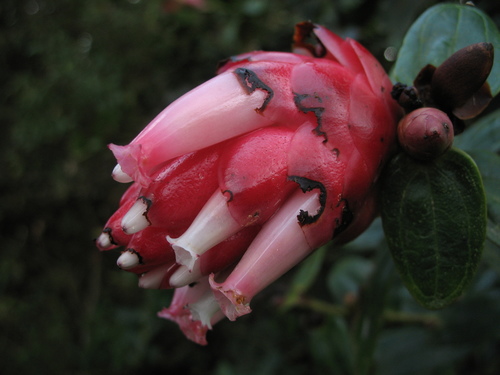
iNaturalist· cc-by
(c) Morten Ross, some rights reserved (CC BY)
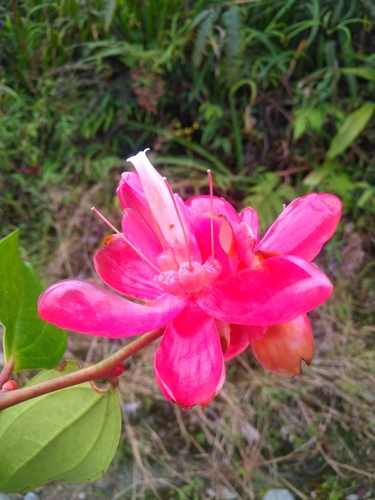
iNaturalist· cc-by
(c) Morten Ross, some rights reserved (CC BY)
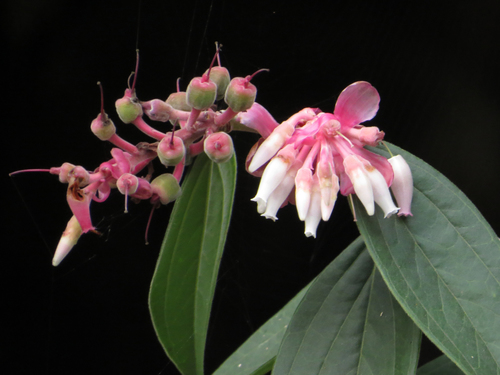
iNaturalist· cc-by-nc
(c) aasisbidari, some rights reserved (CC BY-NC)
Summary
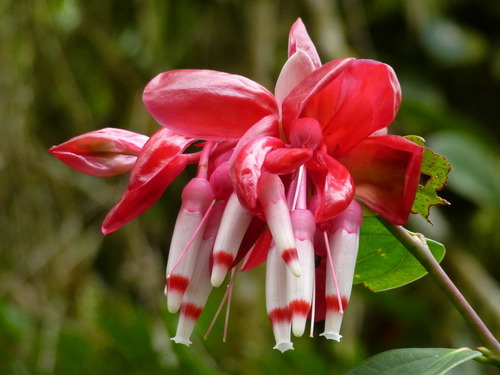
Source: WikipediaRhododendron cinnabarinum (朱砂杜鹃) is a rhododendron species native to eastern Nepal, Bhutan, Sikkim, southeastern Tibet, and southwest China, where it grows at altitudes of 1,900–4,000 m (6,200–13,100 ft). It is a straggling evergreen shrub that grows to 1–3 m (3.3–9.8 ft) in height, with leathery leaves that are broadly elliptic, oblong-elliptic to oblong-lanceolate or ovate, 3–6 by 1.5–2.5 cm in size. The flowers are yellow to cinnabar red, sometimes ranging to plum colors.
Description
An evergreen shrub. It grows 3 m high and spreads 2 m wide. It can be straggling. The leaves are round and waxy. They are 3-6 cm long by 2-3 cm wide. They are green. The flowers are at the ends of the branches. The flowers are bell shaped and red or orange and waxy. There are 3-9 flowers in a group.
Edible Uses
The flowers are used to prepare jam.
Traditional Uses
The flowers are used to prepare a jam. CAUTION: The plant contains a poison andromedotoxin which affects even honeymade from the flowers.
This uses section is brief — help expand it
Known Hazards
The plant contains andromedotoxin, a poison that affects even honey made from the flowers.
Distribution
A temperate plant. In SW China they are in open woodlands and on the edges of forests between 1,900-4,000 m above sea level. It suits hardiness zones 6-9. In Rhodo gardens. In Yunnan.
Where It Grows
Asia, Australia, Bhutan, Himalayas*, India, Myanmar, Nepal, Northeastern India, SE Asia, Sikkim, Tasmania, Tibet,
Also Known As
Balu, Kechung, Kema, Labre gurans, Sanu chimal, Ye jiu
References (4)
- Ambasta S.P. (Ed.), 2000, The Useful Plants of India. CSIR India. p 522
- Cundall, P., (ed.), 2004, Gardening Australia: flora: the gardener's bible. ABC Books. p 1147
- Guo, C., et al, 2022, An Ethnobotany Survey of Wild Plants Used by the Tibetan People of the Yadong River Valley, Tibet, China. Journal of Ethnobiology and Ethnomedicine p 24
- Rhododendr. Sikkim-Himalaya t. 8. 1849